
Direct private lending in most states
Call us anytime at 512-617-9400
Apply now
Program 10

SBA Financing in Arnold

SBA loans for Arnold business owners buying commercial real estate.

SBA 7(a) and 504 loans finance the purchase, construction or expansion of owner-occupied commercial real estate in Arnold, Missouri, with financing up to 90% of the project and terms up to 25 years, placed through our network of more than 20 SBA lenders. A business buying its own building inside the city of Arnold also has to clear the city's occupancy inspection before closing, not just the loan's own underwriting. USA Mortgage is not itself an SBA lender; we match your file to the partner lender and terms that fit the deal, subject to underwriting.
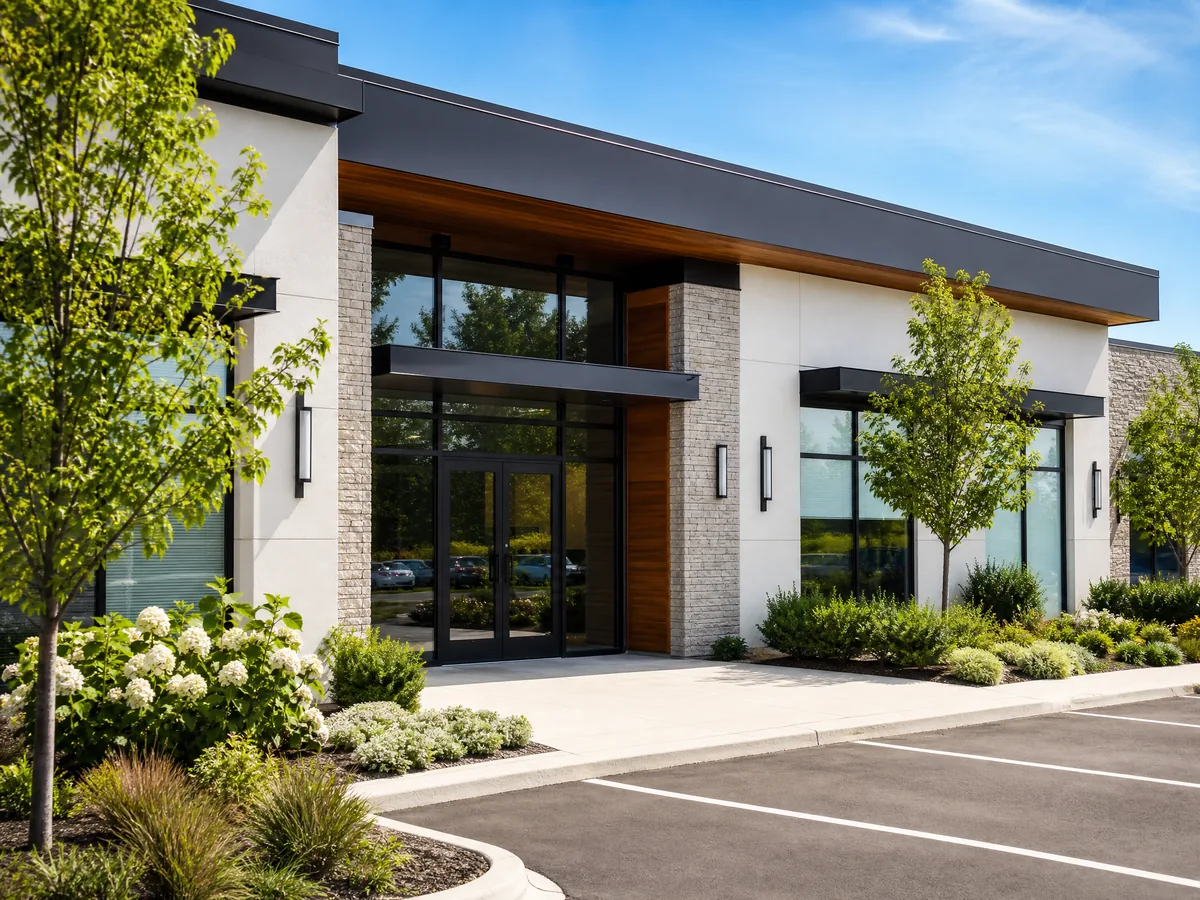
SBA Financing in Arnold, MO from USA Mortgage
7(a) & 504
programs
90%
financing
25-yr
terms
20+
SBA lenders

Typical figures, subject to underwriting and market conditions. Not a commitment to lend.

How it works

SBA loans offer low down payments and long amortizations for owner-occupied property and business acquisition. USA Mortgage arranges and places SBA financing through our network of partner lenders; we are not ourselves an SBA lender. We shop your file across that network so you get the strongest approval.

Who it's for
Owner-occupied commercial RE
Business acquisition
Real estate plus equipment
Partner or stock buyout
Typical terms
Loan amount$350K to $5M+
FinancingUp to 90%
TermUp to 25 years
RateMarket SBA rates
PropertyOwner-occupied CRE
Programs7(a) and 504
Apply now

*Typical terms, subject to underwriting and market conditions.

Run your SBA Financing numbers.

Pressure-test the deal in seconds with our free sba loan calculator, no sign-up required.

Open the SBA Loan calculator
Local FAQ

SBA Financing in Arnold, answered.

If I use an SBA loan to buy my building in Arnold, does the city's occupancy inspection apply to a commercial purchase?
Yes. Arnold's Code of Ordinances Section 500.090 makes it unlawful to sell, transfer, mortgage, lease or otherwise dispose of any structure until a Certificate of Compliance is secured, and the city sets a separate $75 inspection fee for commercial property against $50 for residential, so the ordinance is written to reach a commercial sale directly. The certificate covers exterior property, premises, plumbing, mechanical and electrical systems, fire and life safety, light and ventilation, and general sanitation, and it is valid only until the sooner of six months or a change of occupancy. Build that inspection and its timeline into your SBA closing schedule; a certificate that lapses before closing needs a re-inspection before the sale can proceed.
How is my Arnold building taxed differently once it's commercial property instead of a rental?
At a higher assessment ratio, plus a surtax residential property never pays. Missouri assesses commercial real estate at 32% of market value against 19% for residential, and Jefferson County's 2025 levy sheet also carries a 'Surtax (Real Property Only)' line of 0.2400 per $100 assessed that applies only to commercial, subclass (3), property. On Arnold's full tax stack of 7.0854 per $100 assessed, that combination runs roughly 2.27% of market value a year on commercial property against about 1.35% on a comparable residential parcel (7.0854 x 0.32 = 2.2673 versus 7.0854 x 0.19 = 1.3462). Underwrite your SBA project on the commercial rate, not a residential comp.
If the building I'm buying with an SBA loan sits in Arnold's floodplain, does that affect the project?
Yes, if any work is planned inside a mapped Special Flood Hazard Area. Arnold participates in the National Flood Insurance Program, and the city requires a Floodplain Development Permit before work begins on a structure in a Special Flood Hazard Area, with an Elevation Certificate sometimes required as well. Arnold sits where the Meramec meets the Mississippi and is one of the country's original repetitive-loss flood buyout communities, so this is not a rare edge case here. Confirm flood zone status and permit requirements with Arnold's Floodplain Administrator before your SBA project schedule assumes an as-is close.
Does my business owe a city earnings tax on its profits if I locate it in Arnold instead of St. Louis?
No Jefferson County, Missouri city levies one, and the statute closed the door on new ones. RSMo 92.111.1 bars a Missouri city from adopting an earnings tax after December 31, 2011 unless it is a constitutional charter city that already levied one as of November 2, 2010, and no city in this county qualifies. St. Louis city does levy a 1% earnings tax, and a business located in or performing work inside those city limits files a business earnings-tax return on its net profits. Whether your specific operation would owe it there is a question for your CPA; the point here is simply that the line does not exist on this side of the county boundary.
If I renovate my Arnold building after closing an SBA loan, when does the higher value hit my tax bill?
Not until the 2027 general reassessment. Missouri counties, including Jefferson County, reassess property on an odd-year cycle, so a 2026 purchase and renovation is picked up at the 2027 valuation date rather than immediately. Between general reassessments, an owner can still appeal a value: the Board of Equalization hears appeals through the second Monday in July, and the State Tax Commission through September 30 or thirty days after the Board's decision. Budget your project on the current assessed value through 2026 and plan for the reassessed number to land in 2027.
What does Jefferson County, Missouri's business economy look like for an owner relocating or expanding here?
A steadily growing bedroom and light-industrial county along the I-55 corridor, without one dominant private employer. County population grew 2.3% from 2020 to 2024 while both St. Louis County and St. Louis city shrank over the same window, and the two named institutional anchors are Mercy Hospital Jefferson, a 251-bed acute care facility in Festus, and Jefferson College, a public two-year school in Hillsboro with 3,775 total enrollment. No current county-level employer ranking exists from the county or the state, so we do not cite one; the population and lending trend are the sourced signal that the area is growing steadily rather than concentrated around a single employer.
FAQ

SBA Financing questions, answered.

What is the difference between an SBA 7(a) and a 504 loan?
The 7(a) is the flexible, all-purpose SBA loan: owner-occupied real estate, business acquisition, partner buyouts, equipment, and working capital under one note. The 504 is purpose-built for owner-occupied commercial real estate and heavy equipment, with a long-term fixed rate and a low down payment. We place both and match your scenario to the right one.
How much can I borrow, and how much do I put down?
SBA loans go up to $5M, with larger total project sizes possible on the 504 since a bank funds part of the deal. Down payments are low, often around 10%, rising to 15% to 20% for startups or special-purpose properties. On the right deal we finance up to 90%.
What are the terms and rates?
Terms run up to 25 years for real estate, which keeps payments low. 7(a) rates are usually variable and tied to the Prime rate, while the 504 carries a long-term fixed rate on the CDC portion. Because we place your file across 20+ SBA lenders, we shop your scenario for the strongest terms.
Do I have to occupy the property?
Yes. SBA real estate loans require owner-occupancy, at least 51% of an existing building or 60% of new construction. That requirement is what separates SBA-eligible deals from pure investment property, which fits our other programs.
Do I have to personally guarantee an SBA loan?
Yes. The SBA requires a personal guarantee from anyone who owns 20% or more of the business, and on real-estate deals the loan is also secured by the property. This is standard on every SBA loan, not a sign of a weak file, and it is part of why SBA financing offers low down payments and long terms. We will walk you through exactly what you are signing before you commit.
How long does an SBA loan take to close?
SBA loans are slower than our bridge products, typically 30 to 90 days, because of the documentation and approval process. The tradeoff is a much lower long-term cost. If you need speed now, we can bridge the deal and refinance into SBA later.
What do you need to get started?
Generally two to three years of business and personal tax returns, business financials, a personal financial statement, and details on the property or business. We will tell you exactly what is needed and place your file with the best-fit lender in our network.
See all frequently asked questions
Resources

Guides for SBA Financing

Browse all guides
Compare

SBA Financing vs. other options

More in Arnold

Other programs in Arnold

All Arnold loan programs
About the local figures on this page

Local rules move. Every tax rate, fee, ordinance and market figure here comes from a primary source and carries the date we read it, and we correct them as the rules change. Where a number is mid-change or we could not verify it, we say so rather than guess. Before you commit a budget, confirm anything that drives it with the city or county, and talk to your attorney or CPA on questions of law or tax.

Funding Arnold deals fast.

Get real terms, usually same day. No obligation, no hard credit pull to start.

Apply nowTalk to us