
Direct private lending in most states
Call us anytime at 512-617-9400
Apply now
Program 10

SBA Financing in Columbia

SBA loans for business owners across Columbia, Missouri.

USA Mortgage places SBA 7(a) and 504 financing for owner-occupied commercial real estate through relationships with more than 20 SBA lenders, with loan amounts from $350,000 to $5 million or more, up to 90% financing, and terms out to 25 years. We're not ourselves an SBA lender, so we shop your file across that network to find the program and lender that fit a Columbia, Missouri business buying or building the real estate it operates from. Business-purpose only, and every structure is subject to underwriting.
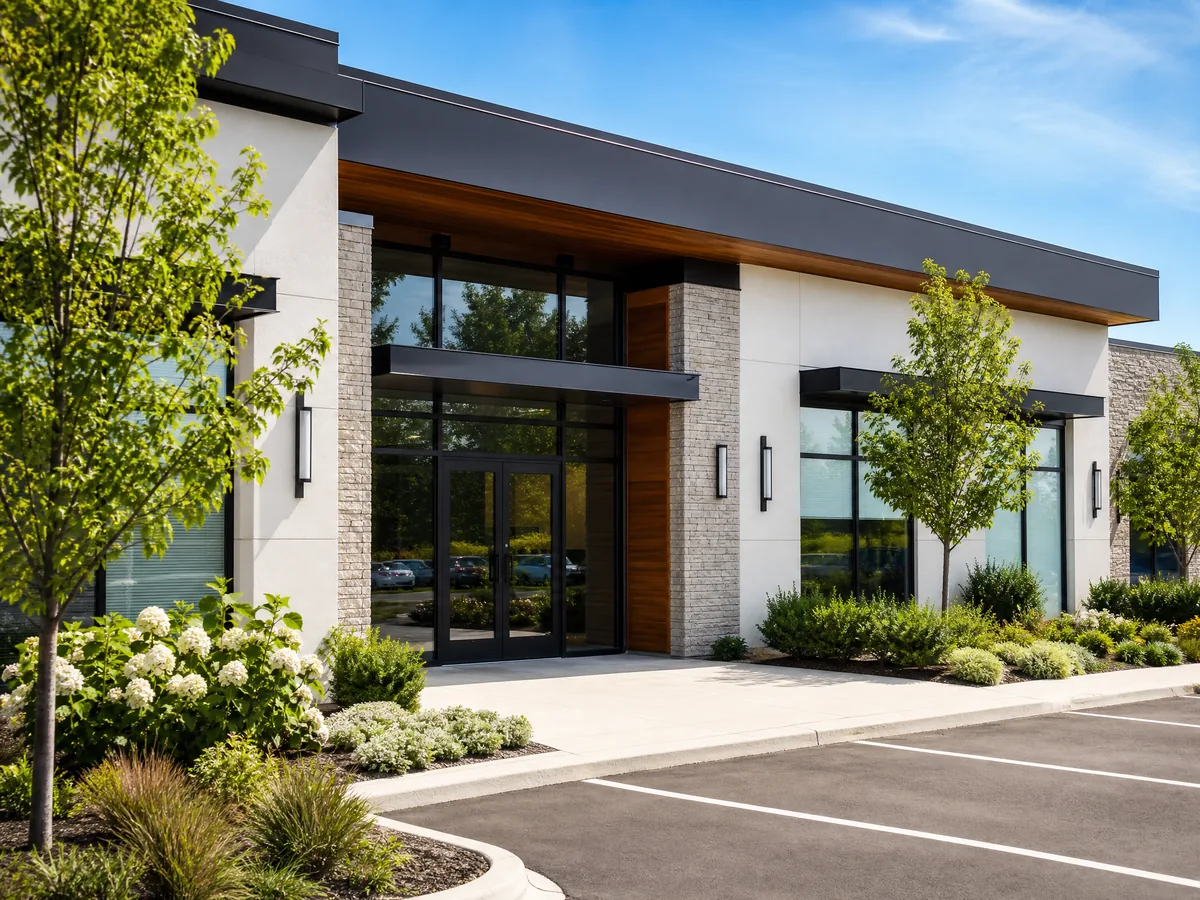
SBA Financing in Columbia, MO from USA Mortgage
7(a) & 504
programs
90%
financing
25-yr
terms
20+
SBA lenders

Typical figures, subject to underwriting and market conditions. Not a commitment to lend.

How it works

SBA loans offer low down payments and long amortizations for owner-occupied property and business acquisition. USA Mortgage arranges and places SBA financing through our network of partner lenders; we are not ourselves an SBA lender. We shop your file across that network so you get the strongest approval.

Who it's for
Owner-occupied commercial RE
Business acquisition
Real estate plus equipment
Partner or stock buyout
Typical terms
Loan amount$350K to $5M+
FinancingUp to 90%
TermUp to 25 years
RateMarket SBA rates
PropertyOwner-occupied CRE
Programs7(a) and 504
Apply now

*Typical terms, subject to underwriting and market conditions.

Run your SBA Financing numbers.

Pressure-test the deal in seconds with our free sba loan calculator, no sign-up required.

Open the SBA Loan calculator
Local FAQ

SBA Financing in Columbia, answered.

If my Columbia business buys its own building, how much of it do I actually have to occupy to use SBA financing?
At least 51% for an existing building, or a 60% floor if you're building new. SBA rules under 13 CFR 120.131 require an owner-occupant business to occupy at least 51% of an existing building financed with SBA 7(a) or 504 proceeds. For new construction the floor is higher: your business must occupy at least 60% at closing, and no more than 20% of the space may be permanently leased to others, with the remaining space carrying an absorption plan running three to ten years. That rule applies the same way whether your building sits near the University of Missouri, MU Health Care, or the Harry S. Truman Memorial Veterans' Hospital, the university and health care anchors that Boone County's employment base is built on.
Does building a medical office near MU Health Care or Boone Health change my SBA down payment requirement?
It can, if the building is single-purpose or your business is under two years old. The SBA 504 program's standard borrower contribution is 10% of project cost, but that rises to 15% if your business has been operating less than two years or if the building is a single-purpose property, and to 20% if both apply. A limited-use clinical building near MU Health Care, Boone Health, or the Truman VA Hospital, the health-care employers that make up Boone County's second-largest anchor after the university, is a common candidate for the single-purpose classification, so plan financing around 15% down rather than 10% before you commit to a design. If a 504 approval is going to take a while and the seller won't wait, a bridge loan can carry you to that closing.
What's the most I can borrow on an SBA 504 loan for a Columbia building?
$5 million in most cases, $5.5 million only if you qualify as a small manufacturer or a qualifying energy project. Under 13 CFR 120.931, the standard SBA 504 debenture caps at $5 million; the higher $5.5 million ceiling is reserved for small manufacturers (NAICS 31-33) and qualifying energy-efficiency or renewable-energy projects. Boone County's private-sector base includes Hubbell Power Systems and Solventum (formerly 3M), both manufacturers that could fall inside that carve-out; most other owner-occupied purchases in Columbia fall under the standard $5 million cap. The 504 structure itself finances up to 40% of the project through the debenture, with a bank or other lender typically funding the rest.
Are SBA loan fees still waived the way they were in 2025?
No, fees were reinstated for FY2026. Loans approved between October 1, 2025 and September 30, 2026 carry SBA upfront fees again: 7(a) upfront fees run 2% to 3.5%-plus depending on loan size, up from 0% under $1 million during FY2025, and 504 upfront fees are back to 0.50% with the annual fee cut to 0.209%. Small manufacturers get relief again here too, with 7(a) fees waived on loans up to $950,000 and 504 fees waived outright. If you priced a Columbia deal off last year's fee-waived numbers, rebuild the cost stack with FY2026 fees before you sign a term sheet.
Will my SBA-financed Columbia building get the same low property tax treatment as a rental?
No. Owner-occupied commercial real estate is assessed as commercial property, not residential. A Columbia rental assesses at Missouri's 19% residential ratio, which on the 2025 City of Columbia levy stack of 6.5484 per $100 of assessed value works out to about 1.2442% of market value (6.5484 x 0.19 = 1.2442). A building your business occupies and operates from instead falls into the 32% commercial ratio, plus a Boone County commercial surcharge under RSMo 139.600 listed at 0.6100, for a combined 7.1584 per $100 of assessed value at the higher ratio, or about 2.2907% of market value (7.1584 x 0.32 = 2.2907). That is roughly 84% higher than the residential effective rate on the same market value (2.2907 / 1.2442 = 1.84). Budget your SBA project's carrying costs on the commercial ratio and the surcharge, not a residential rate you may have seen quoted for a rental deal in the same county.
Does Columbia's tax structure change the math on buying versus leasing for a local business?
It removes a tax line that hits business owners in Missouri's two largest cities. Kansas City and St. Louis City each charge a 1% earnings tax on business profits earned inside city limits. Columbia has no city earnings, profits, or payroll expense tax. For a Columbia business weighing an SBA-financed purchase against a long-term lease, that is one less entity-level tax to model into either side of the comparison, and one Columbia carries that Missouri's two largest metros do not. Talk to your CPA about how that fits your specific structure before you close.
FAQ

SBA Financing questions, answered.

What is the difference between an SBA 7(a) and a 504 loan?
The 7(a) is the flexible, all-purpose SBA loan: owner-occupied real estate, business acquisition, partner buyouts, equipment, and working capital under one note. The 504 is purpose-built for owner-occupied commercial real estate and heavy equipment, with a long-term fixed rate and a low down payment. We place both and match your scenario to the right one.
How much can I borrow, and how much do I put down?
SBA loans go up to $5M, with larger total project sizes possible on the 504 since a bank funds part of the deal. Down payments are low, often around 10%, rising to 15% to 20% for startups or special-purpose properties. On the right deal we finance up to 90%.
What are the terms and rates?
Terms run up to 25 years for real estate, which keeps payments low. 7(a) rates are usually variable and tied to the Prime rate, while the 504 carries a long-term fixed rate on the CDC portion. Because we place your file across 20+ SBA lenders, we shop your scenario for the strongest terms.
Do I have to occupy the property?
Yes. SBA real estate loans require owner-occupancy, at least 51% of an existing building or 60% of new construction. That requirement is what separates SBA-eligible deals from pure investment property, which fits our other programs.
Do I have to personally guarantee an SBA loan?
Yes. The SBA requires a personal guarantee from anyone who owns 20% or more of the business, and on real-estate deals the loan is also secured by the property. This is standard on every SBA loan, not a sign of a weak file, and it is part of why SBA financing offers low down payments and long terms. We will walk you through exactly what you are signing before you commit.
How long does an SBA loan take to close?
SBA loans are slower than our bridge products, typically 30 to 90 days, because of the documentation and approval process. The tradeoff is a much lower long-term cost. If you need speed now, we can bridge the deal and refinance into SBA later.
What do you need to get started?
Generally two to three years of business and personal tax returns, business financials, a personal financial statement, and details on the property or business. We will tell you exactly what is needed and place your file with the best-fit lender in our network.
See all frequently asked questions
Resources

Guides for SBA Financing

Browse all guides
Compare

SBA Financing vs. other options

More in Columbia

Other programs in Columbia

All Columbia loan programs
About the local figures on this page

Local rules move. Every tax rate, fee, ordinance and market figure here comes from a primary source and carries the date we read it, and we correct them as the rules change. Where a number is mid-change or we could not verify it, we say so rather than guess. Before you commit a budget, confirm anything that drives it with the city or county, and talk to your attorney or CPA on questions of law or tax.

Funding Columbia deals fast.

Get real terms, usually same day. No obligation, no hard credit pull to start.

Apply nowTalk to us