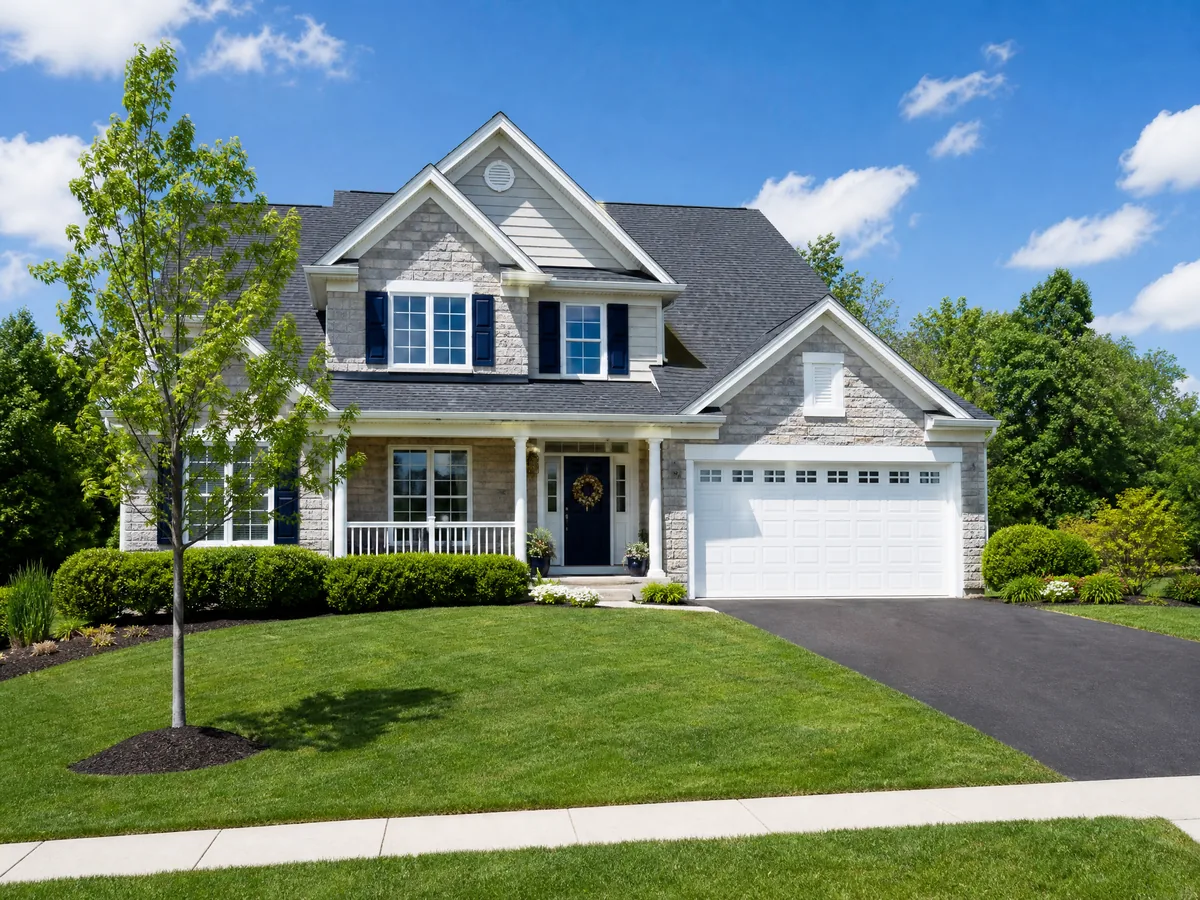
Conventional investment property loans across the Dallas metro.
Standard, competitively priced financing for non-owner-occupied investment property when your file fits the box. Often the lowest-cost option for a long-term hold, in exchange for full documentation. A Dallas ISD address and a Frisco ISD address carry very different escrow lines. We'll compare it against DSCR so you take the structure that fits; business-purpose only, subject to underwriting.
Typical figures, subject to underwriting and market conditions. Not a commitment to lend.
How it works
For investors who qualify conventionally, this is usually the lowest-cost long-term money on a buy-and-hold. We help you weigh it against our DSCR and bank-statement programs so the loan matches your file and your goals.
What do property taxes actually run on a Dallas-area investment property?
Between about 1.63% and 2.36% of assessed value a year, depending on where the address sits. On tax year 2025 rates, a property in the City of Dallas inside Dallas ISD totals 2.235030 per $100 of assessed value: 0.704700 city, 0.997235 ISD, 0.533095 Dallas County. The same house in Frisco inside Frisco ISD and Collin County totals 1.675480, and in the Denton County part of Frisco ISD it totals 1.630855. That spread is roughly 56 basis points, about $2,800 a year on a $500,000 property. On a long-term hold that is a bigger cost variable than most rate quotes, and it goes into the escrow that sets your qualifying payment.
Why do two Dallas addresses in different ISDs escrow different amounts?
Because the rate is set by the city, ISD and county combination, not the city alone. A Dallas address spans at least seven school districts, with 2025 totals running from 2.104563 in Highland Park ISD to 2.362101 in Lancaster ISD inside Dallas County, and some Dallas addresses sit in Collin or Denton County, where the county component is materially lower: 0.230563 in Collin and 0.185938 in Denton against 0.533095 in Dallas County. Two houses on the same street can escrow different amounts. Pull the actual combination for the parcel before you underwrite it, not the city average.
Do MUDs and PIDs change the number I just calculated?
Yes, and they sit on top of it. The city, ISD and county totals above do not include municipal utility districts, public improvement districts or other special districts. The 2025 Old Republic Title guide lists dozens of them across Collin and Denton counties, several at a full 1.000000 per $100, which would take a Frisco-area total of 1.675480 to about 2.68 per $100. That is the difference between a deal that clears the ratio test and one that doesn't. This is most common in newer master-planned subdivisions in the northern suburbs, so check the parcel's district list before you lock a payment.
Will my tax bill match what the seller has been paying?
Usually not, and you should underwrite the higher number. Texas homestead exemptions and the 10% annual appraisal cap apply to owner-occupied homesteads, so an investor-owned property is assessed without them. If the seller lived in the house, the bill you see in diligence can reflect an exempted, capped value that you won't inherit. On a conventional file the tax escrow feeds directly into your qualifying ratios, so a stale number at application is what breaks the loan two weeks later. Confirm the go-forward assessment with the appraisal district and talk to your CPA about how it lands on your return.
Why does the wind and hail deductible matter more than the DFW premium?
Because Texas hail policies price it as a percentage of value, not a flat dollar amount. Texas hail policies commonly carry a percentage-of-value deductible rather than a flat dollar amount, which is the line most out-of-state investors never price. On the premium side, Texas statewide homeowners rates rose roughly 21% in 2023 and 19% in 2024, on figures attributed to Texas Department of Insurance data. We don't publish a DFW dollar figure because the available sources are agency estimates that disagree with each other by a wide margin, and TDI doesn't publish a standalone statewide average premium report. Since insurance escrow is part of your qualifying payment, quote it during diligence rather than after.
Conventional or DSCR for a Dallas rental right now?
With rents flat to falling, documented income is often the file that survives the ratio test. Dallas single-family rents fell 2.2% year over year in the first half of 2026, and DFW closed rents on NTREIS data were about flat, down 0.1% year over year as of July 2026. Resale months of inventory reached 6.00 at 58 days on market, which is the balanced-to-buyer line. A DSCR loan qualifies on the rent, so a soft rent number and a Texas tax escrow both press on the same coverage ratio. If your returns support the file, conventional financing qualifies on you instead and is usually the lower long-term cost. If they don't, DSCR still gets it done. Send us the address and we'll run both.
How much do I need to put down on a Dallas conventional investment purchase?
At least 20%. Max leverage is up to 80% LTV on a non-owner-occupied purchase, so on a $400,000 Dallas rental that is up to $320,000 from us and $80,000 from you (400,000 x 80% = 320,000). Then check the escrow before you settle on the number, because it is set by the city, school district and county combination rather than the price: a Dallas ISD address and a Frisco ISD address at the same value carry different monthly payments, and the payment is what has to qualify. More down is sometimes the lowest-cost way to make a high-tax parcel work. Subject to underwriting.
My credit is under 640. Can I still finance a Dallas rental?
Probably, and conventional is usually the door. Conventional investment financing starts at a 580 score, where DSCR and bank statement files both start at 640. The trade is documentation: conventional is a fully documented loan, so returns, W-2s and the rest of the file all get read. If your paperwork is clean and your score is the weak spot, that is the right trade in Dallas. If it is the other way round, the doc-light programs cost you a higher score. Send us both and we will tell you which one clears. Subject to underwriting.
Can I refinance a Dallas rental I already own on a conventional investment loan?
Yes. The program covers purchase or refinance on non-owner-occupied investment property, at up to 80% LTV, on a 30-year fixed or an ARM. Income is documented either way. On a Dallas refinance the escrow is the line to check first, since the assessed bill on an investment property carries no homestead exemption and no 10% homestead appraisal cap, and plenty of owners are still carrying a payment built on the prior owner's number. Subject to underwriting.
Local rules move. Every tax rate, fee, ordinance and market figure here comes from a primary source and carries the date we read it, and we correct them as the rules change. Where a number is mid-change or we could not verify it, we say so rather than guess. Before you commit a budget, confirm anything that drives it with the city or county, and talk to your attorney or CPA on questions of law or tax.
Published by USA Mortgage Funding, LLC, NMLS #152588. Researched from primary sources by our team, drafted with AI assistance, and every figure checked against its source before publishing. Where an answer rests on a public record, that record is linked under it. Figures read on 2026-08-12.
Funding Dallas deals fast.
Get real terms, usually same day. No obligation, no hard credit pull to start.