Conventional investment property loans for Enid rental portfolios.
Standard, competitively priced financing for non-owner-occupied investment property when your file fits the box. Often the lowest-cost option for a long-term hold, in exchange for full documentation. Every price point across the Enid trade area sits well under conforming loan limits, so this product covers the whole market instead of just the entry level. We'll compare it against DSCR so you take the structure that fits; business-purpose only, subject to underwriting.
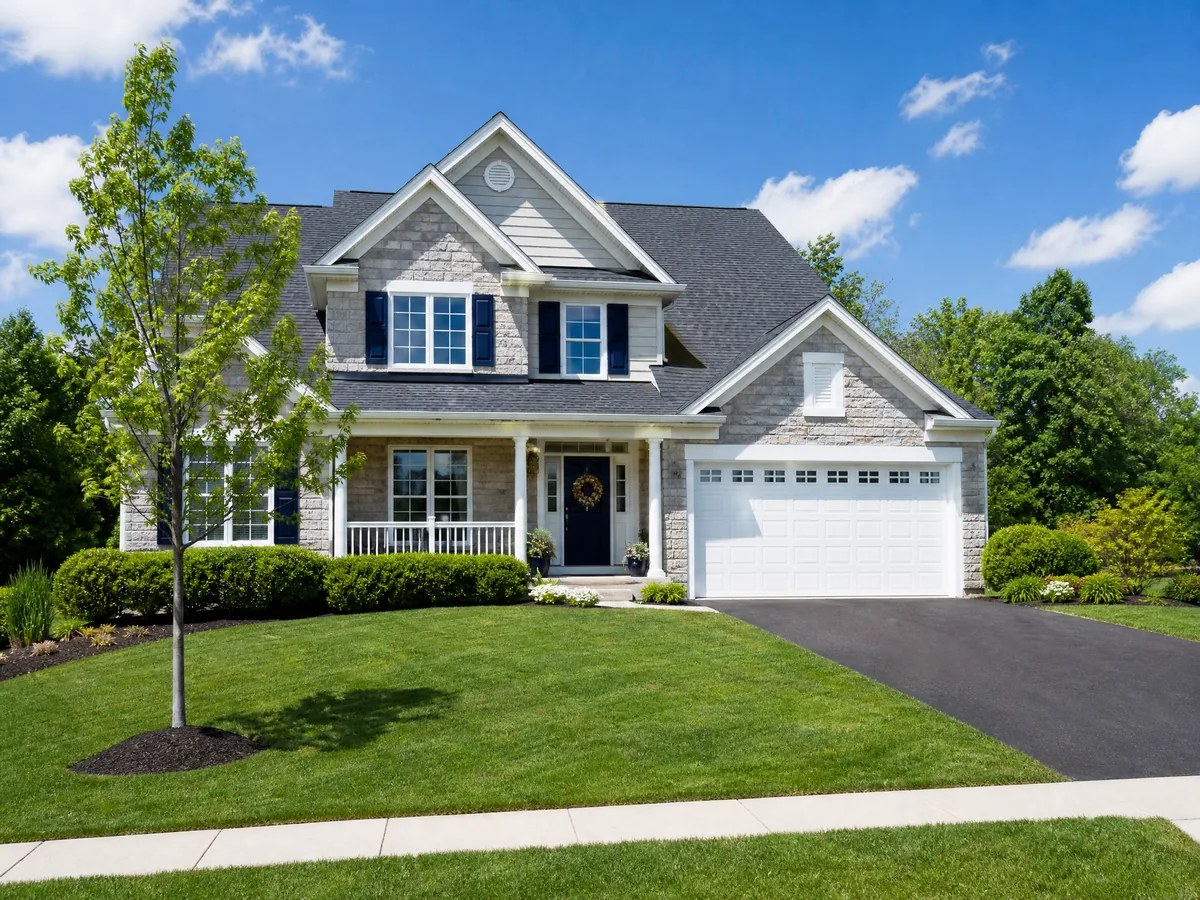
Typical figures, subject to underwriting and market conditions. Not a commitment to lend.
How it works
For investors who qualify conventionally, this is usually the lowest-cost long-term money on a buy-and-hold. We help you weigh it against our DSCR and bank-statement programs so the loan matches your file and your goals.
Enid's median home runs around $137,000. Does a small loan like that run into a lender's minimum, or hit hidden costs?
There's no stated minimum on our conventional program, but budget the fixed closing costs as a real share of the loan. Every price point in the trade area, from Alva's roughly $110,000 median up to Kingfisher's roughly $228,000, sits well under conforming loan limits, so full 30-year conventional financing covers the whole market. What changes at Enid's basis is the arithmetic on third-party costs: the abstract and the attorney's title opinion Oklahoma requires, plus the appraisal, run to similar dollar amounts whether the house is worth $137,000 or $400,000, so they eat a bigger share of a smaller loan. Get those fixed costs quoted in writing before you set your offer price.
When does conventional beat DSCR for a rental purchase in the Enid area?
Conventional usually wins when your income documents cleanly; DSCR wins when you'd rather qualify off the rent instead. Enid rentals pencil to roughly an 11.1% gross yield as of July 2026 ($1,268 monthly rent against a $137,309 median value), which is exactly the condition that lets a DSCR loan qualify easily on rent alone, no tax returns required. But conventional pricing is often lower when you can document your income, and at these smaller Enid-area loan sizes that difference matters more, not less. If your file supports full documentation, price conventional first at any point on the trade area's price ladder, then compare it against DSCR. Subject to underwriting.
How does Garfield County's property tax affect my down payment and escrow on an 80% LTV conventional loan here?
Plan the escrow line before you sign, because Garfield assesses above both Oklahoma City and Tulsa. On an Enid house at the $137,309 mid-tier value, 80% LTV conventional financing is about $109,847 borrowed against a $27,462 down payment. Garfield County assesses at 12.5% of fair cash value, above the 11.00% floor Oklahoma and Tulsa counties use, so an identical property carries about 13.6% more assessed value here. At the City of Enid millage (Enid Public Schools, 106.97 mills), that runs to roughly $1,836 a year in property tax, an effective rate of about 1.337%; a parcel in the Chisholm school district (89.94 mills) runs about $1,543, a 16% lower tax line on the same value. Confirm the school-district code on the assessor's account before you underwrite the escrow.
My conventional loan requires a bound insurance policy at closing. Does Enid's earthquake history complicate that?
Not the way it once did, but a standard policy still won't cover it. Earthquakes of magnitude 2.5 or greater within 50 km of Enid fell from 941 in 2015 to zero so far in 2026, after state injection restrictions ended the induced-seismicity spike. A standard homeowner's policy still excludes earthquake damage as a matter of course, and the Oklahoma Insurance Department says a separate endorsement typically runs $50 to $300 a year here, with a percentage-based deductible rather than the usual flat $500 to $1,000. Hail, straight-line wind, and tornado remain the dominant perils, and roof age is the underwriting gate insurers actually price on, so get a current quote with the roof's age and the hail deductible spelled out before you set your purchase price.
Does the 30-year term on a conventional loan cost more in Oklahoma mortgage tax than a shorter loan would?
Yes, and it's a real but small one-time number to budget at closing. Oklahoma's mortgage registration tax scales with the note's stated term: about 0.02% under two years versus 0.10% at five years or more. A 30-year conventional loan sits at the higher band, so on a roughly $109,847 loan (80% LTV against Enid's $137,309 median value) that's about $110 at closing, against roughly $22 if the same balance were financed on a 12-month bridge instead. It's a modest line item next to the property tax and insurance budgeting above, but state the loan's maximum amount in the instrument, since an open-ended construction or line-of-credit mortgage is taxed on the property's value instead.
Does Oklahoma's state income tax change the return on a documented, long-term Enid hold?
It moved in your favor for 2026: the top individual rate is 4.5%, and the corporate franchise tax is gone after tax year 2023. That's a modest but real improvement to the after-tax return on a fully documented conventional loan, which is the structure this program requires in exchange for its pricing. It matters more if you're investing from out of state: Oklahoma requires a nonresident owner's pass-through entity to withhold at the top marginal rate starting in the first profitable year, so budget for that withholding rather than finding it at tax time. Talk to your CPA about how it applies to your specific structure before you close.
FAQ
Conventional Investment questions, answered.
What is a conventional investment property loan?
It is standard, competitively priced financing for a non-owner-occupied investment property, the long-term loan you take when your file fits the conventional box. It usually carries a lower rate than a bridge or DSCR loan, in exchange for full documentation.
How is it different from a DSCR loan?
A conventional loan qualifies on your documented personal income and credit, while a DSCR loan qualifies on the property's rent. Conventional pricing is often lower if you can document your income and you are within the limit on financed properties; DSCR is easier to scale and skips the income docs. We compare both and put you in the one that fits.
How much do I need to put down?
Plan on roughly 20% to 25% down on an investment-property purchase, with the best pricing at lower leverage and higher credit. Cash-out refinances are typically capped a bit lower than purchases.
What credit score do I need?
Conventional investment financing generally wants a credit score around 580 or higher, and your rate improves meaningfully as your score and reserves go up. We will tell you up front where your file lands.
What can I use it for?
Purchases, rate-and-term refinances, and cash-out refinances on non-owner-occupied 1-4 unit investment property. If you will live in the property, that is owner-occupied financing, which we refer to a trusted partner rather than originate here.
What documents are required?
Because it is fully documented, expect to provide income verification, tax returns, bank statements, and the standard conventional paperwork. If that documentation is a hurdle, our DSCR and bank-statement programs are the no-tax-return alternatives.