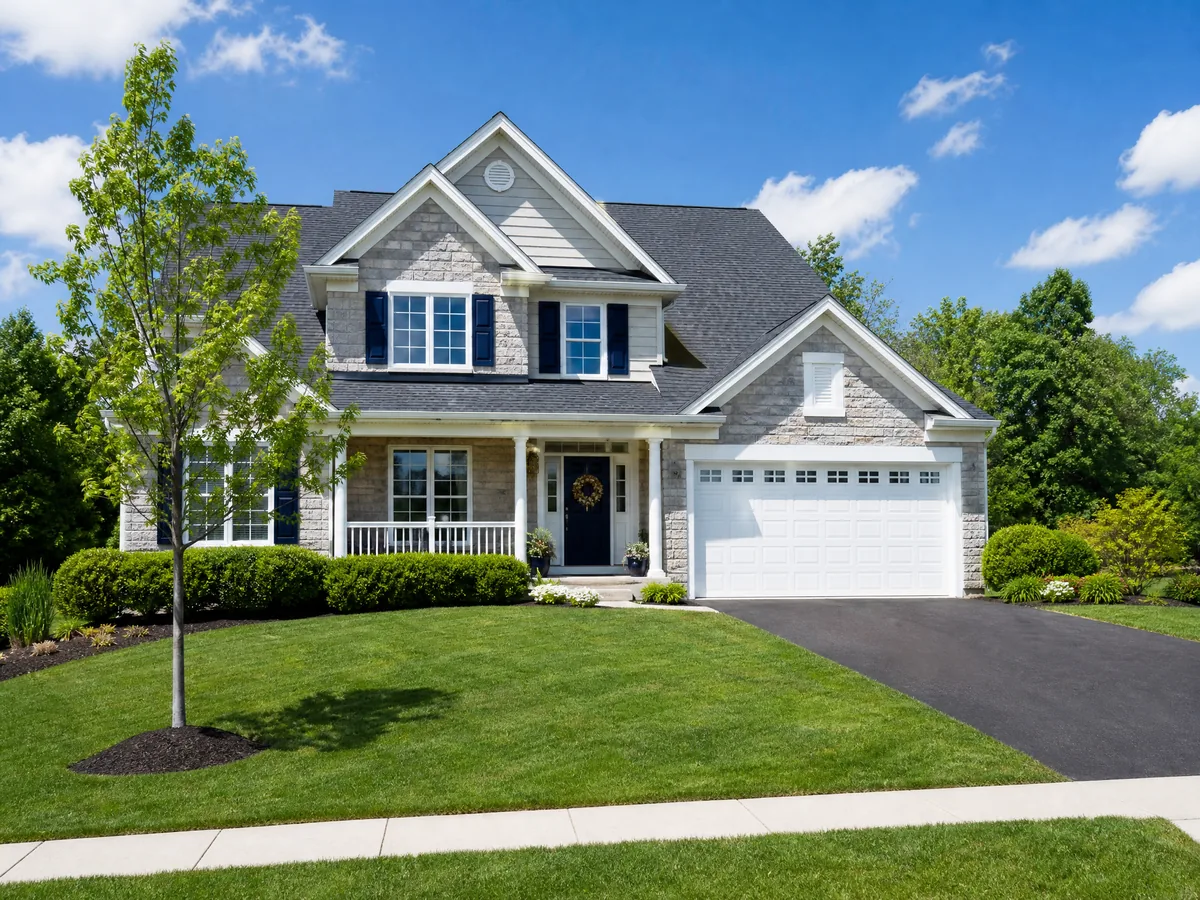
Conventional investment property loans for Fort Worth rentals.
Standard, competitively priced financing for non-owner-occupied investment property when your file fits the box. Often the lowest-cost option for a long-term hold, in exchange for full documentation. Confirm the parcel at the Tarrant Appraisal District before you trust the seller's tax line. We'll compare it against DSCR so you take the structure that fits; business-purpose only, subject to underwriting.
Typical figures, subject to underwriting and market conditions. Not a commitment to lend.
How it works
For investors who qualify conventionally, this is usually the lowest-cost long-term money on a buy-and-hold. We help you weigh it against our DSCR and bank-statement programs so the loan matches your file and your goals.
Is the Tarrant County effective tax rate 1.52% or 1.77%?
Budget roughly 2% to 2.5% of value a year, and confirm the parcel before you lock a payment. We publish that as a range on purpose. The City of Fort Worth rate alone is about $0.67 per $100 of value, and a typical Fort Worth property stacks city, Fort Worth ISD, Tarrant County, Tarrant County College and the hospital district to roughly $2.24 per $100. But the aggregators that report a countywide effective rate disagree with each other, one at about 1.52% and another at about 1.77%, and the practical spread across addresses runs wider than either. The only number worth underwriting is the one for your parcel, from the Tarrant Appraisal District rates page or the county's Truth in Taxation summary. On a conventional file that figure feeds the escrow that sets your qualifying ratios, so a guess at application is what kills the loan two weeks later.
Will my tax bill match what the seller has been paying?
If the seller lived there, almost certainly not, and the gap is bigger than most investors expect. The Texas homestead exemption and the 10% homestead appraisal cap apply only to owner-occupants. A rental or a flip is taxed on full assessed value with neither one. Texas Proposition 13, which passed on November 4, 2025, raised the school-district homestead exemption from $100,000 to $140,000 and is worth roughly $350 to $500 a year to a typical homeowner, and none of that follows the property to you. Pro formas built off a neighbor's bill or the seller's last statement understate carry, often materially. Pull the go-forward assessment and talk to your CPA about how it lands on your return.
Weatherford and Burleson are not in Tarrant County. Does that change my escrow?
Yes. This metro spans three counties and three rulebooks. Tarrant covers Fort Worth, Arlington, Keller, Mansfield, Grapevine and Southlake. Weatherford sits in Parker County and Burleson sits in Johnson County, each with its own appraisal district, tax rates and municipal permitting. Rates move inside Tarrant too: the City of Arlington adopted a total rate of $1.0929 per $100 for tax year 2025, which the city called its lowest in 20 years. Parker and Johnson run broadly similar to Tarrant, and we won't put a finer point on it than that because the published county averages are dated and disagree. Underwrite the parcel's actual jurisdictions, not the county you think it's in.
How should I budget insurance on a North Texas rental?
Get a bindable quote before you close, not after, and check the roof age first. Texas logged 878 major hailstorms in 2024, nearly double the next closest state, and hail is the costliest peril in the DFW region. The statewide average annual homeowners premium reached $3,506 in 2025, and what a specific North Texas property quotes at turns on roof age, claims history and carrier. We don't publish a rate-increase percentage because the available sources disagree by a factor of four. Roof age gates both insurability and premium here, which is also why a flip that leaves a 15-year-old hail-damaged roof in place can fail the buyer's insurance step at exit. On a conventional file the premium sits in your escrow and your qualifying payment, so quote it during diligence.
The demand side is as durable as anything in the country, and it's a headcount story rather than a percentage story. Fort Worth added 19,512 residents in the year to July 1, 2025, reaching 1,028,117 people and the top 10 largest US cities, the second-largest numeric gain of any American city. The DFW metro added 123,557 residents in the same period. On the supply side, far north Fort Worth holds the largest industrial construction pipeline in the country at 7.7 million square feet across 20 projects, anchored by AllianceTexas, which has drawn $18.3 billion of investment through 2025 across 590 companies and more than 66,000 employees. That jobs base is the honest reason lot absorption and rental demand hold up in the northwest ISDs. It is not a promise about your rent or your value.
Conventional or DSCR for a Fort Worth rental right now?
With prices roughly flat, documented income is often the file that survives the ratio test. Fort Worth-Arlington MSA home prices were about flat year over year as of May 2026 after small declines through the spring, and statewide Texas ran 5.3 months of supply at 64 days on market. That is a market you underwrite to today's rent and today's tax bill, not to appreciation. A DSCR loan qualifies on the property's rent, so a Tarrant County tax escrow with no homestead exemption presses directly on the coverage ratio. Conventional financing qualifies on you instead and is usually the lower long-term cost when your returns support it. Send us the address and we'll run both.
What does 20% down look like on a Fort Worth investment purchase?
On a $330,000 purchase, $66,000 from you. We go up to 80% LTV on non-owner-occupied property, so that is $264,000 from us and $66,000 from you (330,000 x 80% = 264,000). Budget past the down payment. Your Fort Worth tax bill will not match what the seller was paying if the seller lived there, because the homestead exemption and the 10% appraisal cap are owner-occupant benefits and neither one follows you. Terms run 30-year fixed or ARM, with income fully documented. Subject to underwriting.
My credit is in the 500s. Can I still finance a Fort Worth rental?
Conventional investment starts at 580, so it depends where in the 500s you sit. Below that, the way in is the asset-based side: a Fort Worth fix and flip or bridge loan carries no minimum score at all, because those qualify off the property and the equity. DSCR and bank statement loans start at 640, so they are a step up rather than a fallback. Weaker credit usually means lower leverage rather than a decline, and there is no hard credit pull to start. Subject to underwriting.
More Conventional Investment questions, answered on the program page
Local rules move. Every tax rate, fee, ordinance and market figure here comes from a primary source and carries the date we read it, and we correct them as the rules change. Where a number is mid-change or we could not verify it, we say so rather than guess. Before you commit a budget, confirm anything that drives it with the city or county, and talk to your attorney or CPA on questions of law or tax.
Published by USA Mortgage Funding, LLC, NMLS #152588. Researched from primary sources by our team, drafted with AI assistance, and every figure checked against its source before publishing. Where an answer rests on a public record, that record is linked under it. Figures read on 2026-08-12.
Funding Fort Worth deals fast.
Get real terms, usually same day. No obligation, no hard credit pull to start.