
Conventional investment loans that fit Lawton's price point precisely.
Standard, competitively priced financing for non-owner-occupied investment property when your file fits the box, up to 80% LTV on a 30-year fixed or an ARM. It's often the lowest-cost option for a long-term hold in exchange for full documentation. Every city we serve around Lawton prices well under conforming loan limits, so this structure covers the whole metro from Geronimo up through Elgin with no jumbo financing needed. We'll compare it against DSCR so you take the structure that fits; business-purpose only, subject to underwriting.
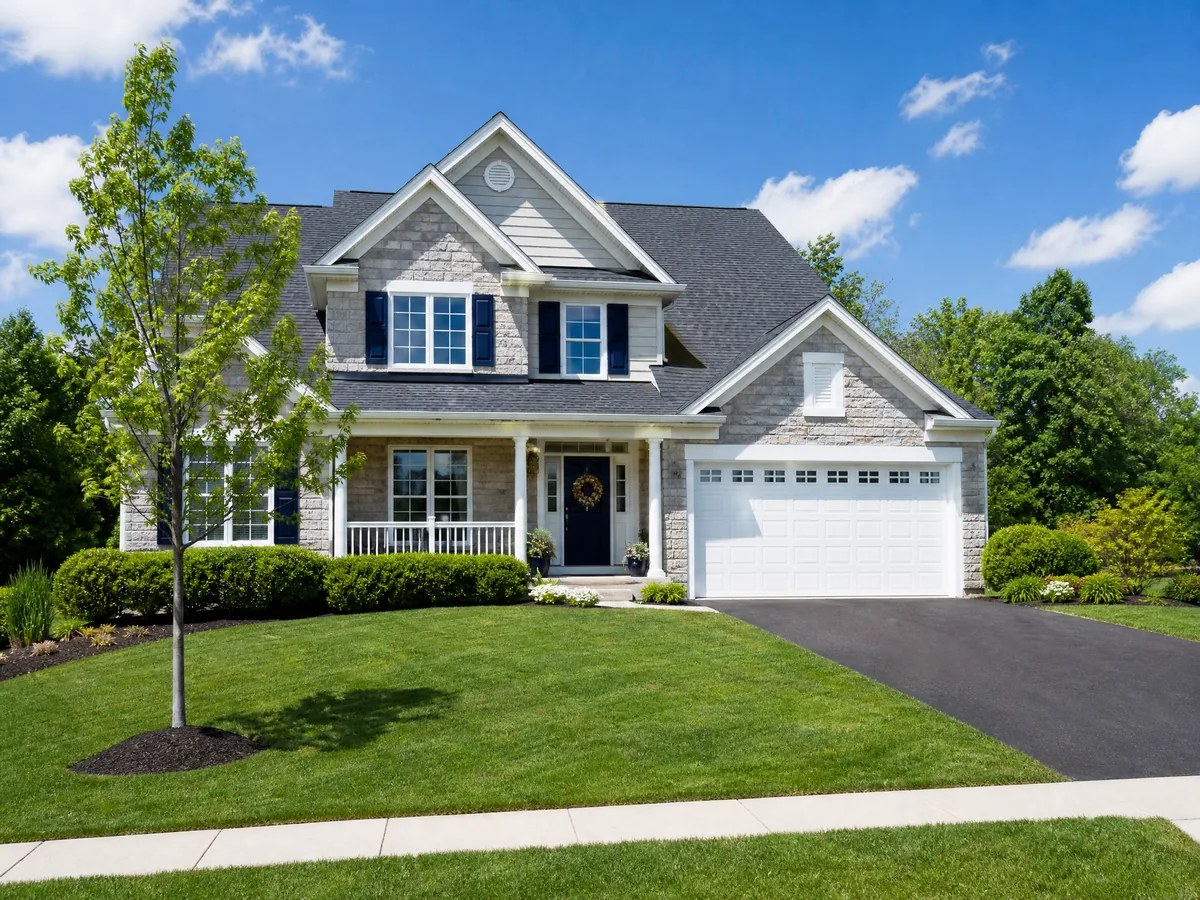
Typical figures, subject to underwriting and market conditions. Not a commitment to lend.
How it works
For investors who qualify conventionally, this is usually the lowest-cost long-term money on a buy-and-hold. We help you weigh it against our DSCR and bank-statement programs so the loan matches your file and your goals.
Does conventional financing work at Lawton's price point, or is it built for higher-cost markets?
It works here, because every city we serve in this metro prices well under conforming loan limits with room to spare. The range runs from Geronimo's $128,889 mid-tier value up through Elgin's $306,114, all of it inside a single conventional loan limit with no jumbo financing needed (Zillow, July 2026). That's the opposite problem from a coastal metro, where conforming limits get eaten by list price before you ever start comparing rates. Business-purpose only, subject to underwriting.
Lawton and Geronimo prices are low. Does a small loan amount work against me on a conventional loan?
It can, so ask before you write the offer, not after. Geronimo's mid-tier value is $128,889 and Lawton's is $144,222, both well under other cities in the metro like Elgin at $306,114 (Zillow, July 2026), and a conventional investor loan on either one produces a genuinely small loan amount once your 20% down payment comes out. Some lenders carry a minimum loan size that quietly rules out the lowest-priced end of a market. Send us the address and purchase price before you're under contract and we'll tell you where it lands.
Conventional or DSCR for a rental in Lawton?
If your tax returns support the file, conventional is usually the lower-cost structure, but the yield math here makes DSCR competitive almost everywhere too. Gross yields run high and tight across the metro: 9.2% in Lawton itself, 9.5% in Duncan, and 9.7% in Chickasha, against Cache's family-rental submarket at 8.7% and Elgin's higher-end stock at 7.8% (Zillow ZHVI and ZORI, July 2026). A DSCR loan pencils reliably in any of those submarkets because the rent supports the payment on its own; conventional wins when your documented income is strong and you want the lower long-term rate that full documentation buys. Send us both sets of numbers and we'll run them side by side.
Does Oklahoma's state income tax change the hold math on a Lawton conventional loan?
It moved in your favor for 2026: the top individual rate is 4.5%, on a path toward zero, and the corporate franchise tax is gone after tax year 2023. That's a real, if modest, improvement to the after-tax return on a documented, buy-and-hold conventional loan. It matters more if you're investing from out of state, since Oklahoma requires a nonresident owner's pass-through entity to withhold tax at the top marginal rate starting in the first profitable year, so budget for that instead of finding it at tax time. Talk to your CPA about how both apply to your structure before you close.
How much do I need to put down on a Lawton investment property with a conventional loan?
At least 20%. Conventional investment financing runs to 80% LTV on non-owner-occupied property, so on Lawton's $144,222 mid-tier home that's about $115,378 from us and $28,844 from you (144,222 x 80% = 115,378), on a 30-year fixed or an ARM. In Cache, where the mid-tier value is $214,764, the same math puts your down payment closer to $42,953. Subject to underwriting.
Does Comanche County's property tax carry affect whether conventional or DSCR fits better?
It affects your qualifying payment either way, and it's higher in Lawton than just across the county line. Comanche County assesses at 11.25% of fair cash value against an effective millage of 0.105971, for an all-in carry of about 1.19% of value with no exemption, roughly $1,719 a year on Lawton's $144,222 mid-tier home. Cross into Stephens County for a Duncan property and that carry drops to about 0.96%, a meaningful escrow difference on either a conventional or a DSCR file. That escrow line is part of the payment a documented conventional file has to qualify against, so confirm the county before you underwrite.
FAQ
Conventional Investment questions, answered.
What is a conventional investment property loan?
It is standard, competitively priced financing for a non-owner-occupied investment property, the long-term loan you take when your file fits the conventional box. It usually carries a lower rate than a bridge or DSCR loan, in exchange for full documentation.
How is it different from a DSCR loan?
A conventional loan qualifies on your documented personal income and credit, while a DSCR loan qualifies on the property's rent. Conventional pricing is often lower if you can document your income and you are within the limit on financed properties; DSCR is easier to scale and skips the income docs. We compare both and put you in the one that fits.
How much do I need to put down?
Plan on roughly 20% to 25% down on an investment-property purchase, with the best pricing at lower leverage and higher credit. Cash-out refinances are typically capped a bit lower than purchases.
What credit score do I need?
Conventional investment financing generally wants a credit score around 580 or higher, and your rate improves meaningfully as your score and reserves go up. We will tell you up front where your file lands.
What can I use it for?
Purchases, rate-and-term refinances, and cash-out refinances on non-owner-occupied 1-4 unit investment property. If you will live in the property, that is owner-occupied financing, which we refer to a trusted partner rather than originate here.
What documents are required?
Because it is fully documented, expect to provide income verification, tax returns, bank statements, and the standard conventional paperwork. If that documentation is a hurdle, our DSCR and bank-statement programs are the no-tax-return alternatives.