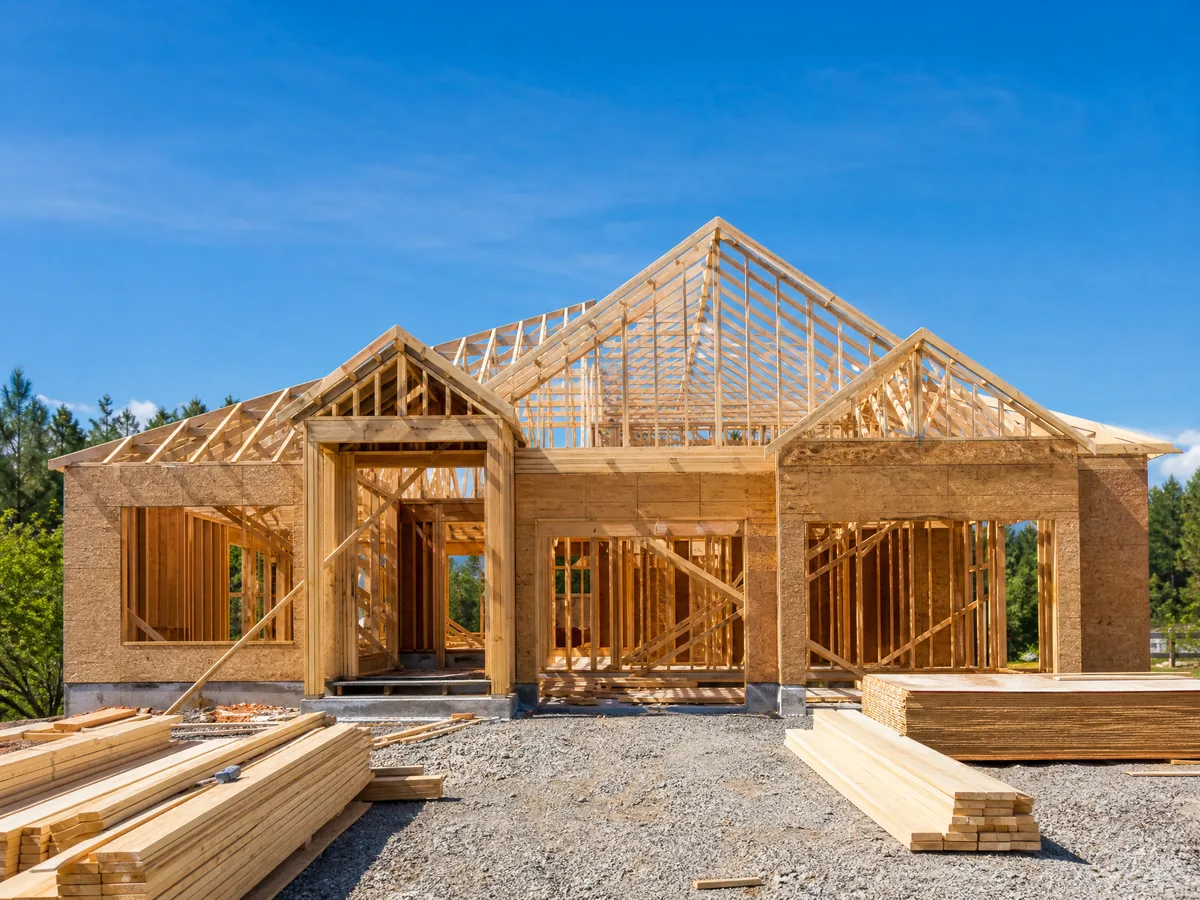
Ground up construction loans for Miami infill and new builds.
Built for spec home builders and developers. We fund the land and the vertical build up to 70% LTV and 85% of cost, with draws that keep pace with the job. Miami-Dade impact fees are due in full before the permit issues, and flood criteria price in sea level rise. Business-purpose only, and every structure is set in underwriting.
Typical figures, subject to underwriting and market conditions. Not a commitment to lend.
How it works
We finance both the land and the vertical construction, with a draw schedule built around your timeline. Experienced builders can access higher leverage on cost.
What does the High-Velocity Hurricane Zone mean for a new build in Miami-Dade?
Broward and Miami-Dade are the only two counties in the state inside the High-Velocity Hurricane Zone, and it is the strictest wind-design regime in the Florida Building Code. Windows, doors, shutters, roofing and other exterior components on your new build must carry either a Miami-Dade Notice of Acceptance or a Florida statewide product approval specifically listed for HVHZ, which requires the full impact-test battery, and the NOA numbers have to appear on your permit application. We don't have a citable dollar premium for HVHZ-rated products over standard Florida-approved products, so budget the requirement into your scope, not a percentage: this is a structural design constraint before it's a cost line, and a contractor's bid from outside Broward or Miami-Dade will usually miss it.
Does sea level rise change site work on a Miami-Dade lot?
Yes. Miami-Dade County maintains its own Flood Criteria that sets the minimum finished-grade elevation for developed sites, and it is built around a forecast of two feet of sea level rise expected by 2060. The criteria is applied basin by basin against 25-year and 10-year storm events, not as a single countywide number, so we don't have one elevation figure to hand you here. What that means for underwriting: fill, drainage and grading cost on a Miami-Dade lot can run higher than an inland Florida site with the same footprint, and a marginal parcel can end up undevelopable at its existing grade. Confirm your parcel's required elevation with the county before you finalize a site budget.
What are Miami-Dade's impact fees on a new single-family build?
Miami-Dade's countywide impact fees are published and quotable, and they're due in full before the building permit is issued. For a single-family detached home: Mobility runs $9,275 to $10,625 per unit depending on the parcel's context zone, Fire is $527.55, Police is $688.42, the school fee is $612 plus $0.918 per gross square foot, and Parks runs $3,084 to $4,903 per unit depending on district. As an illustration only, a 2,000 sq ft house in Context Zone 2, Parks District 2, where the county collects mobility, fire, police, school, and parks, works out to roughly $16,399 in county impact fees before any city permit fee. Which fees actually apply depends on your municipality: Miami, Miami Beach, Hialeah, Coral Gables and Key Biscayne run their own fire departments and aren't charged the county Fire fee. We don't have city-level permit fee schedules to add on top, so confirm those with your local building department.
How long does permit review take on a new build in Miami-Dade?
Florida sets a statutory floor, not an observed timeline: 30 business days for a single-family permit under 7,500 sq ft, 60 business days for a larger single-family or multifamily project up to 50 units. The local government has to notice you of anything missing within 5 business days, and if it blows the deadline the permit fee drops 10% per business day of delay. We don't have Miami-Dade's, or any Miami-Dade municipality's, actual observed review times to cite, so budget to the statutory clock and confirm the working timeline with your specific building department before you set a draw schedule.
Is new single-family construction actually picking up in Miami-Dade right now?
Single-family permits are up while the metro's total housing permits are down, and that split is the story for a builder here. Across the three-county Miami MSA, total housing units authorized fell 21.2% in the first half of 2026 versus the first half of 2025, while single-family (one-unit) permits over the same halves rose 13.9%. That's consistent with the rest of the market: attached, condo product is repricing under the state's milestone-inspection and reserve rules, while detached single-family sits at an all-time high on the Case-Shiller Miami index. If your exit on a completed build is a long-term rental rather than a sale, our DSCR rental loan program can take you out of the construction loan once the certificate of occupancy is in hand.
How much of a Miami-Dade build do I have to fund myself?
At least 15% of total cost, and often more once the land basis is counted. We fund up to 85% of cost and up to 70% LTV, whichever binds first. On a $1,200,000 Miami-Dade project cost that is up to $1,020,000 from us and $180,000 from you (1,200,000 x 85% = 1,020,000). Two Miami-Dade items sit outside the draw schedule and need to be cash on your side: county impact fees, which are due in full before the building permit issues, and the fill, drainage, and grading a parcel needs to meet the county's flood criteria. Subject to underwriting.
How large a ground up construction loan can I get in Miami?
Up to $5,000,000, on a 12 to 24-month term, with draws released against your build schedule. That covers spec and build-to-rent alike. Size the term honestly against Miami-Dade permitting: Florida's statutory clock allows 30 business days for a single-family permit under 7,500 square feet and 60 business days for a larger single-family or multifamily project, and that is the statutory review window rather than an observed timeline. Put the review window in the schedule before you set the draws. Subject to underwriting.
Do I need a building track record to get funded in Miami-Dade?
No, but it moves your leverage.Experienced builders can access higher leverage inside the 70% LTV and 85% LTC ceilings, and a first project generally prices at the lower end. Credit is run, but on a construction loan it carries far less weight than at a bank and there is no minimum score; weaker credit is normally answered with lower leverage rather than a decline. What gets underwritten hardest is the budget, and in Miami-Dade that means a scope written to the High-Velocity Hurricane Zone product rules, which an out-of-county bid usually misses. Subject to underwriting.
More Ground-Up Construction questions, answered on the program page
Local rules move. Every tax rate, fee, ordinance and market figure here comes from a primary source and carries the date we read it, and we correct them as the rules change. Where a number is mid-change or we could not verify it, we say so rather than guess. Before you commit a budget, confirm anything that drives it with the city or county, and talk to your attorney or CPA on questions of law or tax.
Published by USA Mortgage Funding, LLC, NMLS #152588. Researched from primary sources by our team, drafted with AI assistance, and every figure checked against its source before publishing. Where an answer rests on a public record, that record is linked under it. Figures read on 2026-08-13.
Funding Miami deals fast.
Get real terms, usually same day. No obligation, no hard credit pull to start.