
Portfolio loans across Norman rentals scaled by doors, not bedrooms.
Portfolio loans roll five or more Norman-area rentals into one blanket loan with a single payment, starting at $500,000, with individual properties released as you sell them. Norman's zoning caps a rental at three unrelated tenants, so investors here scale by adding doors across Norman, Moore and the McClain County growth towns rather than stacking bedrooms into one house. Business-purpose only, subject to underwriting.
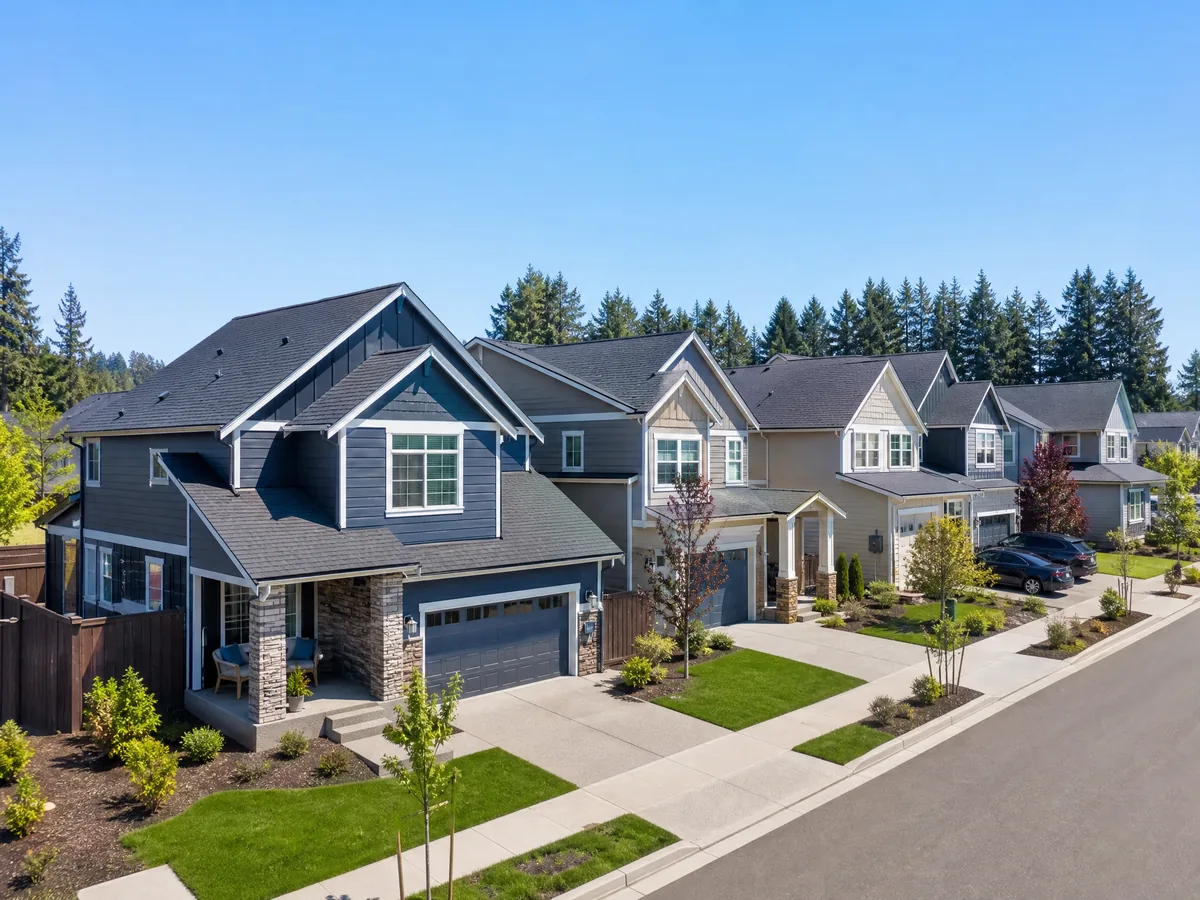
Typical figures, subject to underwriting and market conditions. Not a commitment to lend.
How it works
Instead of a separate mortgage on every door, we structure one blanket loan secured by the portfolio, with the option to release individual properties as you sell them. It is built for investors scaling past a handful of rentals.
Why does a Norman-area portfolio strategy look different from other metros?
Because Norman caps a dwelling at three unrelated tenants, not four or five. The city's zoning definition of a single family holds a related household or not more than three unrelated persons sharing a dwelling unit, enforced through Norman Municipal Court at up to $750 per day. An investor chasing twelve student tenants needs four Norman houses, not one eight-bedroom, which is exactly the case a blanket loan is built for: financing the doors as they multiply instead of financing one oversized house.
Do all the properties in a Norman-area portfolio get taxed at the same rate?
No, and a pro forma that assumes one blended rate will be wrong. A Norman city parcel in Norman Schools carries 120.00 mills, an effective rate near 1.440 percent of fair cash value on Cleveland County's 12 percent assessment ratio. The same school district just outside city limits drops to 109.58 mills, about 1.315 percent, because the city's own levy is a sinking fund only. Add a McClain County property (Newcastle, Blanchard or Purcell) and the assessment ratio has not been published anywhere, so that parcel cannot be underwritten to a Cleveland County number.
Does holding a Norman-area rental portfolio in an LLC change anything?
Yes, on the foreclosure path. Oklahoma's homestead election, which can push a lender's power-of-sale foreclosure into court instead of the faster non-judicial process, applies to an owner-occupied homestead. It does not reach a property held by an LLC for rental use, which is how most portfolio loans are structured here. Talk to your Oklahoma attorney or CPA about the right entity for your portfolio; we do not give legal or tax advice.
How does insurance change across a portfolio of Norman-area doors?
Earthquake cover is a separate purchase on every door, and the risk map has moved since the 2010s. An Oklahoma homeowners policy does not cover earthquake damage, so it is an endorsement or a stand-alone policy, and the deductible is set as a percentage of insured value rather than a flat dollar amount. Brick veneer, the standard central Oklahoma exterior, is one of the most commonly excluded items, so the endorsement can leave the damage a small quake actually causes uncovered. On the frequency side, the Oklahoma Geological Survey's monthly bulletins for December 2025, June 2026 and July 2026 do not list Cleveland County among the five most active counties in any of those three months; current activity sits west and southwest of this metro. Across a portfolio that means reading each exclusion list door by door rather than assuming one policy covers the whole book, and it means roof age and hail, not seismicity, are what a carrier will actually underwrite here.
If my Norman-area portfolio spans more than one county, does that complicate a sale or release?
It adds a step, not a blanket problem. Oklahoma title insurance issues only after an attorney examines a certified abstract prepared by an abstractor licensed in the county where that specific property sits. A portfolio that mixes Cleveland County properties (Norman, Moore, Noble) with McClain County properties (Newcastle, Blanchard, Purcell) needs an abstractor in each county involved when you release or refinance a property out of the blanket loan, not one abstract plant for the whole portfolio.
Which cities can I combine into one Norman-area portfolio loan?
USA Mortgage's Norman coverage spans eight cities across two counties. Cleveland County anchors the portfolio: Norman itself, Moore, Noble, Lexington and Slaughterville. The McClain County growth ring adds Newcastle, Blanchard and Purcell. A blanket loan can mix properties across that list into a single loan and a single payment.
FAQ
Portfolio Loans questions, answered.
What is a portfolio (blanket) loan?
A portfolio or blanket loan rolls several rental properties into one loan with a single monthly payment, instead of a separate mortgage on each property. It simplifies your financing, frees up capital, and lets you scale a rental portfolio without managing a stack of individual loans.
How many properties do I need?
These structures usually make sense at around five or more properties, though we can look at smaller groups. The portfolio can be a mix of single-family rentals, small multifamily, and other income property.
Can I sell or release individual properties?
Yes. Most blanket loans include a release provision, so you can sell an individual property and pay down the loan by that property's allocated amount while the rest stays in place. We set the release terms up front.
How do you size and price a portfolio loan?
We underwrite the combined cash flow and overall leverage of the portfolio, similar to a DSCR loan but across the whole group. Pricing depends on the asset mix, the leverage, and your experience, and loan amounts typically start around $500K.
Do I need to document my personal income?
Usually not. Like our DSCR program, a blanket rental loan qualifies on the portfolio's cash flow rather than your personal income, so tax returns are generally not required. We will want to see the rent roll and operating history.
Can I cash out equity across the portfolio?
Yes. A common use of a blanket loan is to consolidate existing mortgages and pull cash out of the combined equity, giving you capital to acquire more property. Cash-out leverage is set against the portfolio's value and cash flow.