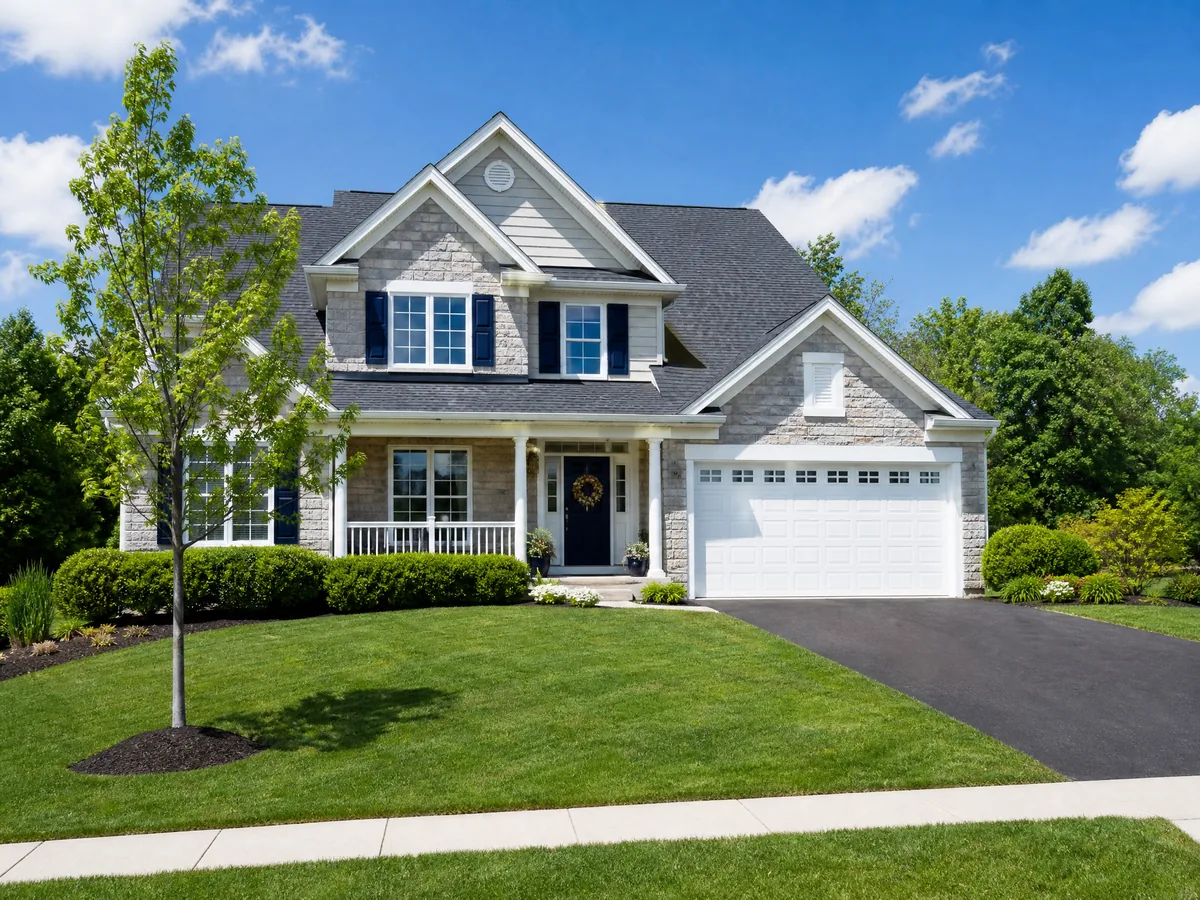
San Antonio rentals, held on conventional investment property loans.
Standard, competitively priced financing for non-owner-occupied investment property when your file fits the box. Often the lowest-cost option for a long-term hold, in exchange for full documentation. Buying outside Bexar County does not automatically buy you a lower-cost tax bill. We'll compare it against DSCR so you take the structure that fits; business-purpose only, subject to underwriting.
Typical figures, subject to underwriting and market conditions. Not a commitment to lend.
How it works
For investors who qualify conventionally, this is usually the lowest-cost long-term money on a buy-and-hold. We help you weigh it against our DSCR and bank-statement programs so the loan matches your file and your goals.
What do property taxes actually run on a San Antonio investment property?
Budget 2.22% to 2.54% of value inside the city of San Antonio, depending on the school district. The Bexar Tax Assessor's 2025 official rates put the non-school stack at 1.285274 per $100 of value: county 0.276331, road and flood 0.023668, city 0.541590, hospital 0.276235, Alamo Colleges 0.149150, river authority 0.018300. Add the ISD and the combined total runs from 2.22% in East Central to 2.54% in Harlandale, with North East ISD at 2.267474 and Northside at 2.290174. Those are the unmitigated rates an investor pays, because no homestead exemption applies to a rental. The rate is address-specific, so pull the real one before you underwrite, and have your CPA confirm how it lands on your return.
Do I get a lower-cost tax bill by buying in the suburbs instead of Bexar County?
Often yes on the base rate, and a single special district can erase the whole saving. Comptroller city plus ISD rates for tax year 2025 come to 1.7517 per $100 in New Braunfels, 1.8645 in Boerne, 1.9191 in Schertz, 1.9267 in Seguin and 1.9299 in Cibolo, all under the city-of-San Antonio stack. Those sums exclude overlays, and the overlays are not small: Meyer Ranch MUD levies 0.95, Comal WID #1A 0.79, Guadalupe MUD #6 and #10 0.80, Park Place MUD 1.20, Kendall WCID #3A 1.10. A house inside one of those districts can carry a higher combined rate than the same house inside Loop 410. Check the parcel's overlays before you treat the suburb as the lower-cost carry.
Because the Texas 10% appraisal cap is homestead-only. Tax Code section 23.23 limits the annual increase in appraised value to 10% for a homestead. Non-homestead investment property gets neither that cap nor the exemption, so if the seller lived in the house, the bill you see during diligence can reflect years of capped value while your go-forward bill resets toward market. Underwrite the escrow at the reassessed number. On a conventional file that escrow feeds straight into your qualifying ratios, so getting it wrong at the start is what kills the loan two weeks in. The 2025 relief bills went the same way: SB 4 raised the school homestead exemption from $100,000 to $140,000, homestead only, with no investor benefit. If you want to contest a value, the protest deadline under Tax Code section 41.44 is May 15, or 30 days after your notice of appraised value if that is later, and Bexar Appraisal District confirmed May 15 for the 2026 cycle.
Does the 20% cap on non-homestead property help my rental?
Only through this year, as the law stands. Tax Code section 23.231, the circuit breaker added by SB 2 in 2023, caps the annual increase in appraised value at 20% on non-homestead property at or below a threshold Bexar CAD puts at $5.32 million for 2026. You have to have owned the property for a full calendar year to get it, and it is stripped when the property sells, so it does nothing for you in year one. The part to plan around: section 23.231 expires December 31, 2026 unless the Legislature extends it. If you are modeling a hold into 2027, do not assume the cap survives. Talk to your CPA about your specific situation.
Why does Bexar County insure at $2,806 when Dallas runs $4,363?
Bexar County is one of the lower-cost big-metro insurance markets in Texas, which is not the same as low-cost. Texas Department of Insurance county data puts the 2025 Bexar average homeowners premium with wind at $2,806, up from $1,510 in 2019, though the increases are decelerating: 18.6% in 2024 and 8.8% in 2025. That $2,806 sits roughly 20% below the $3,506 statewide average and well under Dallas at $4,363, Harris at $4,144 and Tarrant at $3,939. Nearby counties run close: Comal $2,803, Guadalupe $2,659, Kendall $3,721. Two structural points worth knowing. Hail has been the top Texas homeowners loss peril every year from 2016 through 2025 except 2021. And the San Antonio metro is not in TWIA territory, so wind and hail coverage comes from the standard market, with no WPI-8 and no TWIA assessment exposure. Get a bound quote during diligence, because the insurance escrow is part of your qualifying payment.
Conventional or DSCR for a San Antonio rental right now?
With rents flat to falling, a documented file is often the loan that survives the ratio test. Every rent measure we could source shows San Antonio flat or down as of mid-2026. Average apartment rent was $1,264 in data updated August 1, 2026, down 2.65% year over year, and the metro carries the highest apartment vacancy of any major U.S. multifamily market at 15.7%, with 72% of properties offering a concession. Heavily discounted new apartments compete directly with Class B and C houses. On the single-family side, average residential rent in the SABOR MLS area was $1,864 in June 2026. Put a rent number that is not growing against a combined tax rate above 2.2% and you can see why coverage is tight here, which is exactly what a DSCR loan is measured on. If your returns support the file, conventional financing qualifies on you instead of on the rent, and it is usually the lower long-term cost. If they do not, DSCR still gets the deal done. Send us the address and both sets of numbers and we will run them side by side.
Does a 580 score or the reassessed Bexar escrow decide a conventional file?
Conventional starts at 580, and the trade is full documentation. This is the box loan, so expect documented income, tax returns and the paperwork a bank asks for, in exchange for what is usually the lowest long-term cost on a San Antonio hold. Score alone is not the binding test on this program. The reassessed Bexar County tax escrow is, because it lands straight in your qualifying ratios once the seller's homestead protection falls away. Subject to underwriting.
What does 20% down leave once the Bexar escrow resets off the seller's homestead?
Plan on 20% of the purchase. Max leverage is up to 80% LTV on non-owner-occupied property, so on a $300,000 San Antonio rental that is up to $240,000 from us and $60,000 from you (300,000 x 80% = 240,000). Terms run 30-year fixed or ARM on a purchase or a refinance. Size the escrow at the go-forward assessed bill, not the seller's, since the combined rate inside the city runs about 2.22% to 2.54% and the 10% appraisal cap does not follow an investor. Subject to underwriting.
More Conventional Investment questions, answered on the program page
Local rules move. Every tax rate, fee, ordinance and market figure here comes from a primary source and carries the date we read it, and we correct them as the rules change. Where a number is mid-change or we could not verify it, we say so rather than guess. Before you commit a budget, confirm anything that drives it with the city or county, and talk to your attorney or CPA on questions of law or tax.
Published by USA Mortgage Funding, LLC, NMLS #152588. Researched from primary sources by our team, drafted with AI assistance, and every figure checked against its source before publishing. Where an answer rests on a public record, that record is linked under it. Figures read on 2026-08-12.
Funding San Antonio deals fast.
Get real terms, usually same day. No obligation, no hard credit pull to start.