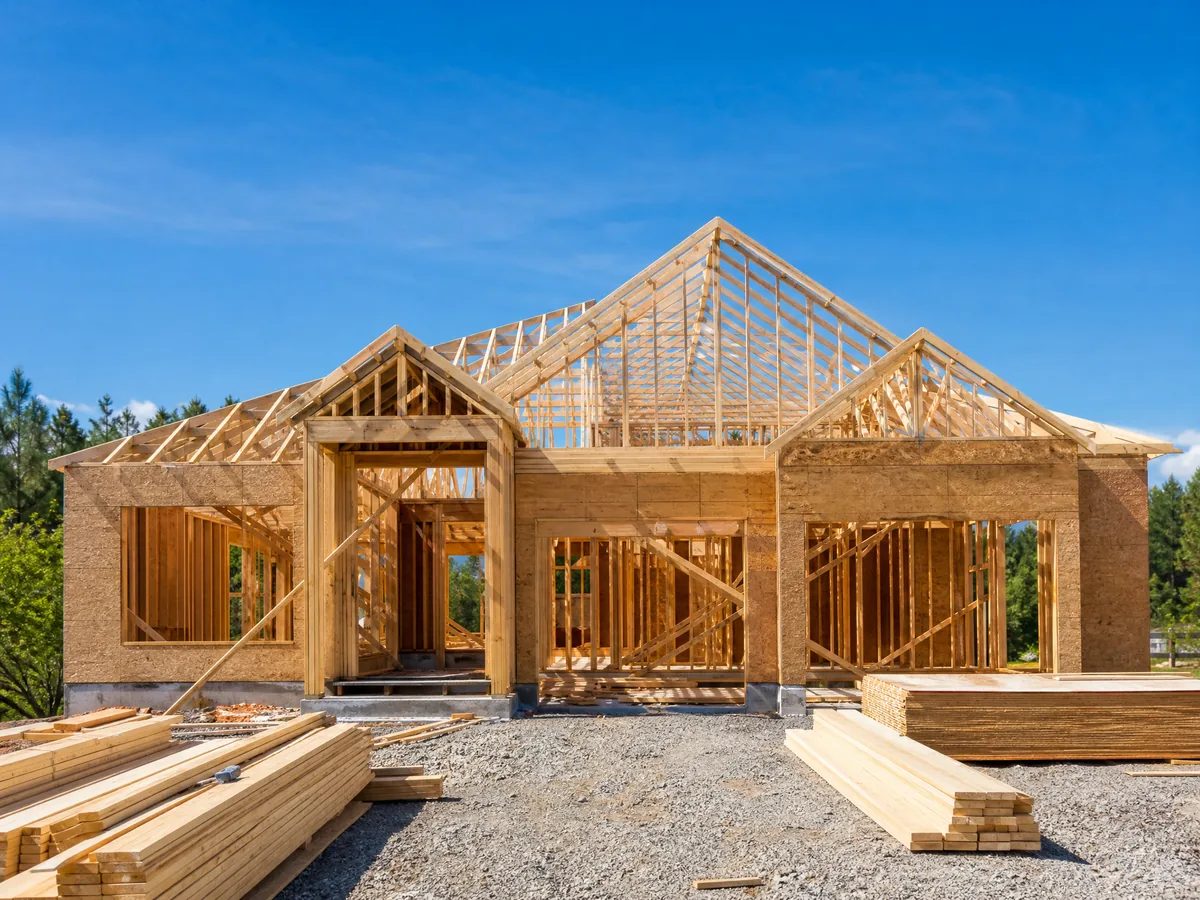
Capital for San Jose builders through ground up construction loans.
Built for spec home builders and developers. We fund the land and the vertical build up to 70% LTV and 85% of cost, with draws that keep pace with the job. Santa Clara County's building department charges its own stack of permit fees and construction excise taxes before you break ground, and that stack belongs in your budget, not a surprise at draw one. Business-purpose only, and every structure is set in underwriting.
Typical figures, subject to underwriting and market conditions. Not a commitment to lend.
How it works
We finance both the land and the vertical construction, with a draw schedule built around your timeline. Experienced builders can access higher leverage on cost.
Is ground-up spec building even realistic in San Jose right now?
Detached single-family ground-up is a small slice of what actually gets permitted here, so know your lane before you underwrite the deal. The San Jose metro authorizes roughly 2,100 single-family building permits a year against a population of about 2 million, and the City of San Jose's own Housing Department has stated there were zero market-rate housing starts in the city during 2024. Multifamily and infill, not subdivision-scale single-family, is where the volume is. That does not rule out a spec build or a teardown-rebuild on an existing lot, an ADU, or a build-to-rent hold. It does mean the deal should be underwritten against real recent comparable sales for that product type and that block, not against a general assumption that new construction moves quickly in this market.
What does the city actually charge to build a new house in San Jose?
Roughly $25,800 in city permit fees and construction excise taxes on a 2,000 square foot house, before impact fees. The Building Division's FY 2026-27 fee schedule prices new single-family construction of that size at $11,496 in issuance, plan review and inspection fees. On top of that, San Jose runs four separate construction excise taxes: the Building and Structure Construction Tax at 1.54% of valuation, the Commercial, Residential, Mobile Home Park Construction Tax at 2.42%, plus flat per-unit charges. On the city's own $175.92 per square foot valuation for a one- or two-family home, that adds up to about $14,310 in taxes, for a combined city-side bill near $25,800. Credit card payments carry a 2.66% surcharge, and any fee of $100,000 or more must be paid by check or wire.
Does a heavy remodel get taxed differently than a new build?
Yes, and the alteration rule can land higher than builders expect. San Jose's municipal code sets the Building and Structure Construction Tax on an alteration, remodel or repair project at 20% of the standard ICC valuation or the actual construction bid cost, whichever is higher. On a $250,000 hard-cost bid, that tax alone at 1.54% comes to about $3,850, and if the city's second construction tax is computed the same way the combined bill runs close to $9,900. We could not confirm that the second tax uses the same rule, so confirm both the permit category you file under and the combined figure with the Building Division before you set the budget.
What does an accessory dwelling unit cost to permit in San Jose?
The Building Division prices ADUs on their own tier, separate from a full new house. A new or altered accessory dwelling unit of 0 to 750 square feet runs $3,291 in combined issuance, plan review and inspection fees, and one of 751 to 1,200 square feet runs $5,103. Both sit well under the $7,854 minimum tier for a new single-family house. If your ground-up plan is an ADU on an existing lot rather than a full teardown, that is the fee stack to budget against, on top of whatever construction excise tax applies to the unit.
Does the downtown high-rise construction-tax suspension change the numbers on a San Jose ground-up build?
Yes, if you're building a qualifying downtown high-rise, the city's Building and Structure Construction Tax can be suspended outright. Ordinance 31301, adopted February 10, 2026, rewrote the municipal code to fully suspend that tax for a Qualified Residential High Rise Project in the Downtown Planned Growth Area, meaning a new residential structure at least 150 feet tall with 10 or more floors. The full suspension covers the first 7,000 units citywide, with a 50% reduction on the next 3,000, and each project has to pass its first inspection within 12 months of getting the building permit. That is real money against the roughly $14,310 in construction excise taxes a standard-size house pays. It only helps a downtown high-rise project, not a typical spec build or teardown-rebuild elsewhere in the city.
Does San Jose defer any impact fees to help my construction loan's interest carry?
Yes, for projects of 10 units or fewer the park impact fee no longer has to be paid before you can pull a permit. San Jose's Parkland Dedication and Park Impact ordinances normally require the in-lieu park fee before a building permit is issued. SB 937, effective January 1, 2025, shifted that timing for a list of designated project types, including any project of 10 or fewer units, so the fee is instead due at certificate of occupancy. For a small infill builder, that moves a real dollar amount from the front of your construction loan, where it draws interest for the whole build, to the back, which is a direct carry-cost saving worth factoring into your draw schedule.
How much of a San Jose build do I have to fund myself?
At least 15% of total cost, and the value test can push it higher. We fund up to 85% of cost and up to 70% LTV, whichever binds first. On a $2,000,000 San Jose project that is up to $1,700,000 from us and $300,000 from you (2,000,000 x 85% = 1,700,000), with draws released against the build schedule. Put the city's permit and construction excise stack inside that cost basis, roughly $25,800 on a 2,000 square foot house before impact fees, rather than treating it as a surprise at draw one. Subject to underwriting.
Does my credit or my track record decide leverage on a San Jose construction loan?
Your track record, mostly. There is no minimum credit score on this program. We run credit, but on an asset-based construction loan it carries far less weight than at a bank, and weaker credit is usually offset with lower leverage rather than a decline. Build history is the lever that actually moves the number, since experienced builders can access higher leverage. In San Jose that history matters more than usual, because detached single-family ground-up is a small slice of what gets permitted here. Subject to underwriting.
Is there a maximum loan size on a San Jose ground-up build?
Up to $5,000,000, on a term of 12 to 24 months. At 85% of cost that covers a project budget near $5,880,000 (5,880,000 x 85% = 4,998,000), with the 70% LTV test applied against completed value on top of it. That is room enough for a spec house, a teardown and rebuild, an ADU on an existing lot, or a small build-to-rent hold. Bring us the budget and real comparable sales for that product type and that block. Subject to underwriting.
More Ground-Up Construction questions, answered on the program page
Local rules move. Every tax rate, fee, ordinance and market figure here comes from a primary source and carries the date we read it, and we correct them as the rules change. Where a number is mid-change or we could not verify it, we say so rather than guess. Before you commit a budget, confirm anything that drives it with the city or county, and talk to your attorney or CPA on questions of law or tax.
Published by USA Mortgage Funding, LLC, NMLS #152588. Researched from primary sources by our team, drafted with AI assistance, and every figure checked against its source before publishing. Where an answer rests on a public record, that record is linked under it. Figures read on 2026-08-22.
Funding San Jose deals fast.
Get real terms, usually same day. No obligation, no hard credit pull to start.