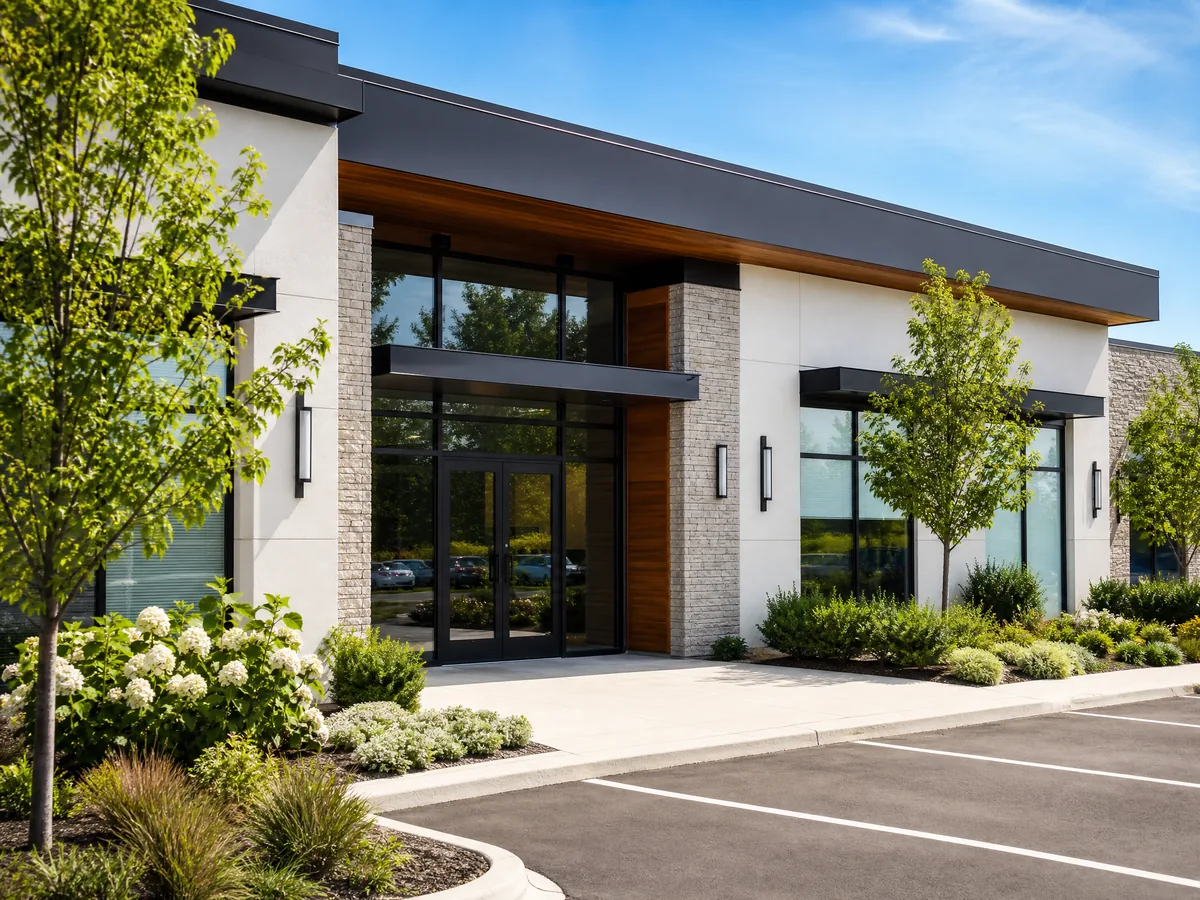
SBA loans for Santa Barbara County owners buying their building.
SBA 7(a) and 504 financing helps an owner-occupied business buy or build the real estate it operates from, with up to 90% financing and terms up to 25 years, placed across our network of more than 20 SBA lenders. In Santa Barbara County that covers a Santa Ynez Valley winery or tasting room buying its own building, a Santa Maria or Lompoc business buying its ag-processing or light-industrial space, and a South Coast professional practice priced out of its lease. We arrange and place SBA financing; we are not ourselves an SBA lender. Business-purpose financing, subject to underwriting.
Typical figures, subject to underwriting and market conditions. Not a commitment to lend.
How it works
SBA loans offer low down payments and long amortizations for owner-occupied property and business acquisition. USA Mortgage arranges and places SBA financing through our network of partner lenders; we are not ourselves an SBA lender. We shop your file across that network so you get the strongest approval.
If I buy my building in the City of Santa Barbara instead of leasing on the South Coast, what does the property tax actually run?
Under Prop 13, your purchase resets the tax base to your price, then caps growth at 2% a year, and the City of Santa Barbara carries a median rate of about 1.05404%. On a $1,848,325 purchase that bills about $19,482 a year. A landlord's lease renews at market every term; owning locks that number in except for the 2% annual creep, which is the durable case for buying instead of renting on the South Coast.
Does it matter which city in the county I buy my business property in?
Yes, by more than a little: the county's ad valorem rate runs from about 1.03% in Montecito to about 1.18% in the City of Guadalupe, and it does not track price the way you would expect. A Lompoc purchase at $597,835 bills around $6,812 a year at its 1.13950% rate, well under the South Coast's numbers, while the county's highest-cost enclave carries its lightest rate. The overlay above the 1% base is school and community college bond debt, so the rate depends on which district your parcel sits in, not on how much the building costs.
What kind of Santa Barbara County business is a typical SBA fit?
Three profiles come up most: a Santa Ynez Valley winery or tasting room buying its production or hospitality building, a Santa Maria or Lompoc ag-processing or light-industrial operator buying its facility, and a South Coast professional practice buying out of a lease it has outgrown. All three share the same underwriting question: is the business ready to occupy and run the real estate itself, rather than hold it as an investment. Tell us which one you are and we will match you to 7(a) or 504.
I heard SBA loan fees were waived. Is that still true for a loan I close on a Santa Barbara County property this year?
No, and that claim is stale. SBA fees were reinstated for fiscal year 2026, covering loans approved between October 1, 2025 and September 30, 2026: 7(a) upfront guarantee fees run 2% to 3.5% or more depending on loan size, and the 504 debenture carries a 0.50% upfront fee and a 0.209% annual fee. Small manufacturers keep a break: 0% 7(a) upfront fee at or under $950,000 and waived 504 fees. Ask us to confirm the fee on your specific loan size before you budget the deal.
My winery has a co-owner who holds a green card rather than citizenship. Does that block an SBA loan?
It can, under a rule that changed in 2026. As of March 1, 2026, every direct and indirect owner of the business must be a US citizen or national with a US principal residence, and a lawful permanent resident, a green card holder, may not hold any ownership percentage at all. That is a federal SBA rule, not a Santa Barbara County one, but it decides whether a co-owned Santa Ynez Valley winery or any other local business qualifies before the property or the financials are even reviewed. Confirm every owner's status with us early.
I'm building a new tasting room or production facility from the ground up rather than buying an existing building. Does the down payment change?
Yes, and new construction pushes it higher on two fronts. The standard 504 borrower contribution is 10%, but it rises to 15% if the business has operated less than two years or the building is single-purpose, and to 20% if both apply, which is common for a purpose-built winery or production facility. New construction also has to meet a 60% owner-occupancy floor rather than the 51% that applies to an existing building, with no more than 20% of the space permanently leased to others. Bring us the site plan early so we can size the contribution correctly.
FAQ
SBA Financing questions, answered.
What is the difference between an SBA 7(a) and a 504 loan?
The 7(a) is the flexible, all-purpose SBA loan: owner-occupied real estate, business acquisition, partner buyouts, equipment, and working capital under one note. The 504 is purpose-built for owner-occupied commercial real estate and heavy equipment, with a long-term fixed rate and a low down payment. We place both and match your scenario to the right one.
How much can I borrow, and how much do I put down?
SBA loans go up to $5M, with larger total project sizes possible on the 504 since a bank funds part of the deal. Down payments are low, often around 10%, rising to 15% to 20% for startups or special-purpose properties. On the right deal we finance up to 90%.
What are the terms and rates?
Terms run up to 25 years for real estate, which keeps payments low. 7(a) rates are usually variable and tied to the Prime rate, while the 504 carries a long-term fixed rate on the CDC portion. Because we place your file across 20+ SBA lenders, we shop your scenario for the strongest terms.
Do I have to occupy the property?
Yes. SBA real estate loans require owner-occupancy, at least 51% of an existing building or 60% of new construction. That requirement is what separates SBA-eligible deals from pure investment property, which fits our other programs.
Do I have to personally guarantee an SBA loan?
Yes. The SBA requires a personal guarantee from anyone who owns 20% or more of the business, and on real-estate deals the loan is also secured by the property. This is standard on every SBA loan, not a sign of a weak file, and it is part of why SBA financing offers low down payments and long terms. We will walk you through exactly what you are signing before you commit.
How long does an SBA loan take to close?
SBA loans are slower than our bridge products, typically 30 to 90 days, because of the documentation and approval process. The tradeoff is a much lower long-term cost. If you need speed now, we can bridge the deal and refinance into SBA later.
What do you need to get started?
Generally two to three years of business and personal tax returns, business financials, a personal financial statement, and details on the property or business. We will tell you exactly what is needed and place your file with the best-fit lender in our network.
Local rules move. Every tax rate, fee, ordinance and market figure here comes from a primary source and carries the date we read it, and we correct them as the rules change. Where a number is mid-change or we could not verify it, we say so rather than guess. Before you commit a budget, confirm anything that drives it with the city or county, and talk to your attorney or CPA on questions of law or tax.
Funding Santa Barbara deals fast.
Get real terms, usually same day. No obligation, no hard credit pull to start.