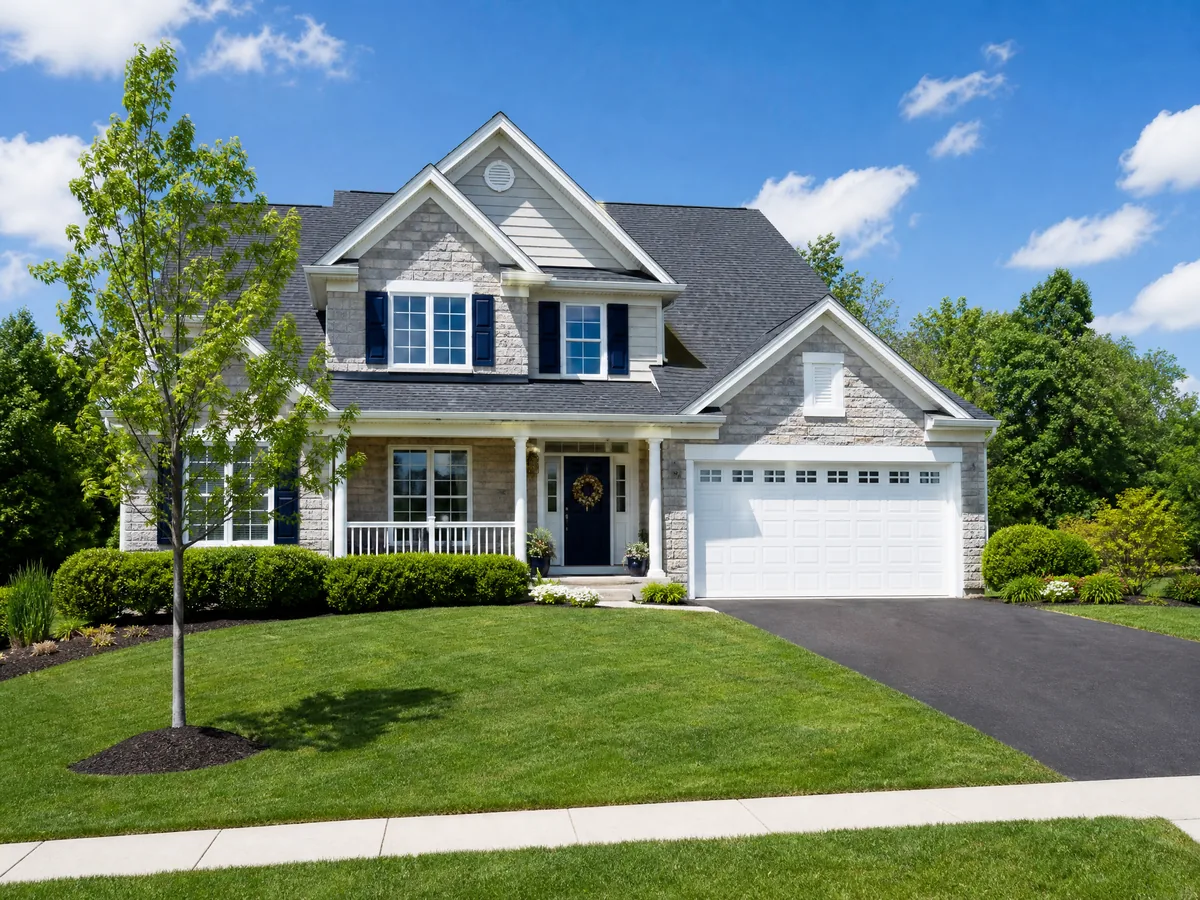
Conventional investment property loans for Atlanta rentals.
Standard, competitively priced financing for non-owner-occupied investment property when your file fits the box. Often the lowest-cost option for a long-term hold, in exchange for full documentation. In Georgia an attorney closes the loan and an intangible tax rides on the note. We'll compare it against DSCR so you take the structure that fits; business-purpose only, subject to underwriting.
Typical figures, subject to underwriting and market conditions. Not a commitment to lend.
How it works
For investors who qualify conventionally, this is usually the lowest-cost long-term money on a buy-and-hold. We help you weigh it against our DSCR and bank-statement programs so the loan matches your file and your goals.
Why will my tax bill be higher than the seller's, and didn't HB 581 cap that?
HB 581's cap was never going to help you, and in the core metro counties it doesn't apply at all. Georgia's HB 581 created a statewide floating homestead exemption effective January 1, 2025 that limits annual growth in a homestead's taxable value to CPI. Two things break it for an investor. First, it is a homestead exemption, and investment property is not homesteaded, so a rental was outside the cap from day one. Second, Fulton, Gwinnett, Cobb and DeKalb, their school districts, and the City of Atlanta all opted out by the March 1, 2025 deadline, so the cap isn't even in force there for the owner-occupants it was written for. The practical consequence: your Atlanta property gets reassessed toward market with no inflation cap behind it, and Georgia assesses at 40% of fair market value, so effective rate equals millage times 0.40. Underwrite escrow on the post-purchase reassessed value, not the number printed on the seller's bill. Pro formas built off a long-held seller's tax line, or off a pre-rehab assessment on a house you're about to improve, come in low every time, and on a conventional file that escrow feeds straight into your qualifying ratios. Talk to your CPA about how it lands on your return.
What Georgia-specific closing costs should I expect on a 30-year investment loan?
Two state taxes and a flat fee, and the bigger one is charged on the loan, not the price. Georgia's real estate transfer tax under O.C.G.A. section 48-6-1 is $1.00 for the first $1,000 of consideration plus $0.10 for each additional $100, which works out to 0.10% of price, or $400 on a $400,000 purchase. Under the Georgia Association of REALTORS form the seller customarily pays it, but that is negotiable. The intangible recording tax under O.C.G.A. section 48-6-61 is $1.50 per $500 of the note's face amount, about 0.30% of the loan, capped at $25,000 and due within 90 days of execution. On a $400,000 loan that's roughly $1,200. Legally the note holder owes it; in practice it shows up on the borrower's side at closing. There is also a flat $10 residential mortgage fee on 1-4 family property. Worth knowing: short-term notes are exempt from the intangible tax, and HB 586 is reported to have raised the short-term threshold from 36 months to 62 months effective July 1, 2025, so a 12-month or 24-month bridge note may fall outside it while a 30-year hold does not. The Department of Revenue page does not restate the 62-month rule, so have your closing attorney confirm the exemption applies before you count on it. If you refinance later with the same lender and same borrower, the tax applies only to the unpaid principal carried over.
A licensed Georgia attorney, in the room, every time. The Supreme Court of Georgia held in In re UPL Advisory Opinion 2003-2 that preparing or facilitating execution of a deed is the practice of law. The attorney has to be physically present; supervising a non-lawyer closer by phone doesn't satisfy it. Closing and disbursing in violation is a misdemeanor and carries civil liability. So there is no "our title company handles escrow" path here. The closing attorney holds and disburses the funds, and picking one who moves is part of hitting your close date. Georgia also secures the loan with a security deed, a deed to secure debt that conveys legal title to the lender, rather than a mortgage. Mail-away closings exist, but they're built around the attorney requirement rather than replacing it. We fund through Georgia closing attorneys and will coordinate with yours, or point you to one.
How much should I budget for insurance on a metro Atlanta rental?
More than last year, and the roof is what decides your quote. Georgia homeowners premiums rose 8.6% in 2025 against a 5.6% national average, and are up roughly 39.7% cumulatively since 2021, with about another 10% increase projected for 2026. Metro Atlanta averages run near $3,420 a year against a Georgia statewide average closer to $2,050, though those two figures come from different methodologies, so treat the gap as directional rather than a clean metro-versus-state comparison. The drivers are Hurricane Helene losses in areas that weren't priced as high-risk, hail and wind claim frequency, replacement-cost inflation, and roof-age underwriting rules that push older homes into higher tiers. That last one is the practical item: a 20-year roof you didn't replace can move the premium enough to change your qualifying payment. Get a bound quote during diligence, not an estimate, because insurance escrow is part of the ratio we underwrite to.
Conventional or DSCR on an Atlanta buy-and-hold right now?
If your returns document, conventional usually wins on cost, and right now it also dodges a soft rent number. Single-family rents in Atlanta fell 0.2% year over year in the first half of 2026, and metro multifamily ran 6.4% vacancy with 0.4% rent growth and 17,100 units still under construction as of Q1 2026. Supply is landing, so underwrite flat rent rather than a trend-rent pro forma. That matters because a DSCR loan qualifies on the rent, and a rent number under pressure squeezes the coverage ratio. Conventional financing qualifies on you instead, and on a long-term hold it is usually the lower-cost money. If your file doesn't document, DSCR still gets the deal closed. Send us the address and both sets of numbers and we'll show you the two side by side.
Is a small investor competing with the institutions for these houses?
Less than you were, starting in 2027. Metro Atlanta has the largest institutional single-family-rental footprint in the country, roughly 72,000 homes by the American Economic Liberties Project's count, or 27.9% of single-family rental stock per John Burns Research and Consulting in July 2025, about four times the national average. Be careful with those headlines, though: the reported share swings widely with the definition, which ranges from owners of 15 properties to owners of 2,000, and the same review notes that three companies own about 19,000 homes, roughly 11% of the region's single-family rental market but only about 0.6% of metro Atlanta's roughly 3 million homes. The change worth planning around is federal. The 21st Century ROAD to Housing Act became law on July 11, 2026 and takes effect January 7, 2027, barring an entity with investment control of 350 or more single-family homes from buying single-family homes, with penalties up to the greater of $1,000,000 per violation or three times the purchase price. Build-to-rent is exempt, and there's no divestiture requirement for homes already owned. The reasonable read, and it is a read rather than a forecast, is that institutional capital shifts from buying existing homes toward building new rentals, and Atlanta is where that shows up first. Meanwhile the metro is roughly balanced already, with 4.0 months of supply, 17,723 active listings and a median price of $418,000, down 1.6% year over year, as of March 2026 across the 11-county Atlanta REALTORS footprint.
Is 580 enough for a conventional Atlanta rental, and what is the trade?
580 and up, which is the lowest floor of any program we write. The trade is that this one is fully documented: unlike our bridge and DSCR products, a conventional investment loan wants real income documentation. Non-owner-occupied only. Subject to underwriting.
How much down, when the escrow resets to Atlanta's post-purchase assessed value?
20%. We go up to 80% LTV on a non-owner-occupied purchase or refinance, so on a $450,000 Atlanta property that is $360,000 from us and $90,000 from you (450,000 x 80% = 360,000). Before you commit to this route, run it against a DSCR loan: same 80% ceiling, no income documentation. Either way, underwrite the escrow on the post-purchase reassessed value rather than the seller's bill, because on a conventional file that escrow feeds straight into your qualifying ratios. Subject to underwriting.
There is no loan floor here. What actually pushes an Atlanta file out of the box?
There is no published floor on this program. It is 30-year fixed or ARM, purchase or refinance, on investment property that fits the box. Where a file falls outside it, the usual reason is documentation rather than size, and that is the point where a bank statement loan or DSCR becomes the better structure. Subject to underwriting.
More Conventional Investment questions, answered on the program page
Local rules move. Every tax rate, fee, ordinance and market figure here comes from a primary source and carries the date we read it, and we correct them as the rules change. Where a number is mid-change or we could not verify it, we say so rather than guess. Before you commit a budget, confirm anything that drives it with the city or county, and talk to your attorney or CPA on questions of law or tax.
Published by USA Mortgage Funding, LLC, NMLS #152588. Researched from primary sources by our team, drafted with AI assistance, and every figure checked against its source before publishing. Where an answer rests on a public record, that record is linked under it. Figures read on 2026-08-12.
Funding Atlanta deals fast.
Get real terms, usually same day. No obligation, no hard credit pull to start.