
Direct private lending in most states
Call us anytime at 512-617-9400
Apply now
Program 07

Conventional Investment in Broken Arrow

Conventional investment property loans for Broken Arrow's newer rental stock.

Standard, competitively priced financing for non-owner-occupied investment property when your file fits the box. We fund up to 80% LTV on a 30-year fixed or ARM, with credit starting at 580, in exchange for full income documentation. Broken Arrow's housing stock is newer and its owner-occupancy far higher than in Tulsa proper, so a documented conventional file here is usually qualifying against a house built for family tenancy, not distressed inventory. We'll compare it against DSCR so you take the structure that fits; business-purpose only, subject to underwriting.
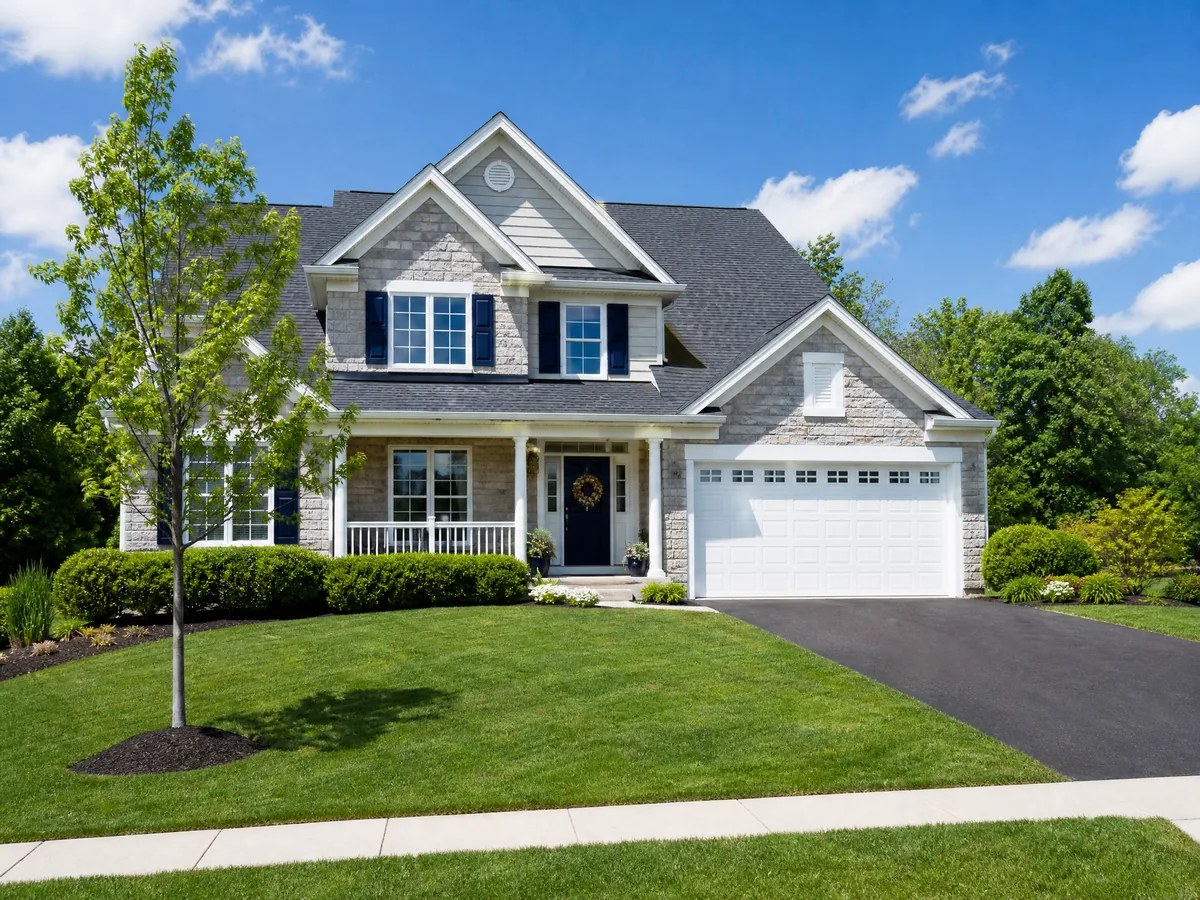
Conventional Investment in Broken Arrow, OK from USA Mortgage
Non-owner
occupied
30-yr
fixed avail.
80%
max LTV
Low
rates

Typical figures, subject to underwriting and market conditions. Not a commitment to lend.

How it works

For investors who qualify conventionally, this is usually the lowest-cost long-term money on a buy-and-hold. We help you weigh it against our DSCR and bank-statement programs so the loan matches your file and your goals.

Who it's for
Buy-and-hold investors
Non-owner-occupied 1-4 units
Borrowers who document income
Purchase or refinance
Typical terms
PropertyInvestment, non-owner-occ
Max leverageUp to 80% LTV
Term30-yr fixed / ARM
IncomeDocumented
CreditFrom 580
UsePurchase or refi
Apply now

*Typical terms, subject to underwriting and market conditions.

Run your Conventional Investment numbers.

Pressure-test the deal in seconds with our free dscr calculator, no sign-up required.

Open the DSCR calculator
Local FAQ

Conventional Investment in Broken Arrow, answered.

Is Broken Arrow's price point a fit for conventional investment financing?
Yes, comfortably. Broken Arrow's mid-tier home value ran $291,736 as of June 2026, which sits well under conforming loan limits, so a standard investor loan covers the submarket without stepping into jumbo territory. That holds across the collar too: every city we lend in around Broken Arrow prices below the same ceiling. Our DSCR program serves the same price range if your file favors the rent roll over documented income.
How much do I need to put down on a Broken Arrow investment property with a conventional loan?
At least 20%. We lend up to 80% LTV on non-owner-occupied conventional financing, so at Broken Arrow's $291,736 mid-tier value as of June 2026 that pencils to about $233,389 from us and $58,347 from you (291,736 x 80% = 233,389). Budget the tax line into that same payment before you lock it: on that value and the 2025 levies, the Wagoner County side of the city runs about $3,786 a year in property tax and the Tulsa County side runs about $4,129, rising to roughly $4,280 in the Bixby-schools part of the city, all on an identical house (our arithmetic on the two counties' levy sheets). Pull the county and levy code for your specific parcel. Subject to underwriting.
When does conventional financing actually beat DSCR for a Broken Arrow rental?
When your tax returns support the file, because the yield math here runs thinner than it looks. Broken Arrow's rough gross rent-to-value ratio is about 6.61% as of June 2026, against 6.85% in Tulsa, and the city has fewer than 12,000 renter households citywide, a shallow pool by count. A DSCR loan underwritten purely on that rent can run tighter in Broken Arrow than it does in higher-yield Tulsa submarkets. A documented conventional file sidesteps the rent math and qualifies on your income and credit instead, so if your returns support it, conventional is usually the structure to lead with here rather than DSCR.
Does Broken Arrow's newer housing stock make a conventional appraisal easier to support?
It tends to, and that is a structural difference from Tulsa proper. Broken Arrow's median year structure built is 1993 against Tulsa city's 1972, and 79.7% of the stock is one-unit detached, so an appraiser working a conventional file here is generally pulling from more uniform, recently-built comparable sales than in older, more varied inventory. That does not set your number for you, and Oklahoma's 5% valuation assessment cap resets the year you buy regardless of financing type, but newer, more comparable stock is a real reason conventional appraisals tend to support here. Subject to underwriting.
I'm self-employed in the trades and buying in Broken Arrow. Can I still qualify conventional?
Possibly, but full documentation is the constraint to plan around, not your income itself. Broken Arrow carries a genuine manufacturing base for a suburb, 11.1% of employed residents work in manufacturing, and Wagoner County's building permits rose 17.0% in 2025, so a meaningful share of the local buyer pool works in the trades feeding that growth. Conventional underwriting runs on full documentation, tax returns and pay stubs, not bank deposits, and a return written to minimize taxable income is usually the binding constraint rather than credit or down payment. A bank-statement loan qualifies off deposits instead and is worth running side by side.
If I ever sell instead of refinance, is there a real owner-occupant buyer pool for a conventional-financed Broken Arrow rental?
Yes, and it is a genuine local advantage over Tulsa proper. 72.6% of Broken Arrow's housing is owner-occupied against 52.0% in the city of Tulsa, and median household income runs $85,220 here against $58,407 in Tulsa. A conventional-financed rental in Broken Arrow sits in a market with a deep family buyer pool for an eventual sale, not just other investors. It does not change your underwriting today, but it is worth weighing when you compare a hold-forever DSCR structure against conventional financing you may want to exit or refinance out of later.
FAQ

Conventional Investment questions, answered.

What is a conventional investment property loan?
It is standard, competitively priced financing for a non-owner-occupied investment property, the long-term loan you take when your file fits the conventional box. It usually carries a lower rate than a bridge or DSCR loan, in exchange for full documentation.
How is it different from a DSCR loan?
A conventional loan qualifies on your documented personal income and credit, while a DSCR loan qualifies on the property's rent. Conventional pricing is often lower if you can document your income and you are within the limit on financed properties; DSCR is easier to scale and skips the income docs. We compare both and put you in the one that fits.
How much do I need to put down?
Plan on roughly 20% to 25% down on an investment-property purchase, with the best pricing at lower leverage and higher credit. Cash-out refinances are typically capped a bit lower than purchases.
What credit score do I need?
Conventional investment financing generally wants a credit score around 580 or higher, and your rate improves meaningfully as your score and reserves go up. We will tell you up front where your file lands.
What can I use it for?
Purchases, rate-and-term refinances, and cash-out refinances on non-owner-occupied 1-4 unit investment property. If you will live in the property, that is owner-occupied financing, which we refer to a trusted partner rather than originate here.
What documents are required?
Because it is fully documented, expect to provide income verification, tax returns, bank statements, and the standard conventional paperwork. If that documentation is a hurdle, our DSCR and bank-statement programs are the no-tax-return alternatives.
See all frequently asked questions
Resources

Guides for Conventional Investment

Browse all guides
More in Broken Arrow

Other programs in Broken Arrow

All Broken Arrow loan programs

Funding Broken Arrow deals fast.

Get real terms, usually same day. No obligation, no hard credit pull to start.

Apply nowTalk to us