
Direct private lending in most states
Call us anytime at 512-617-9400
Apply now
Program 07

Conventional Investment in Denver

Conventional investment property loans in Denver for documented buy-and-hold investors.

Conventional financing for non-owner-occupied investment property, up to 80% loan-to-value with full documentation, often the lowest-cost long-term money when your file fits the box. Denver's own home values sit above several other Front Range metros, so a growing share of local purchases and refinances lands in high-balance or non-agency territory rather than a standard conforming file. We compare it against our DSCR and bank-statement programs so Denver investors take the structure their file and their property actually support. Business-purpose only, subject to underwriting.
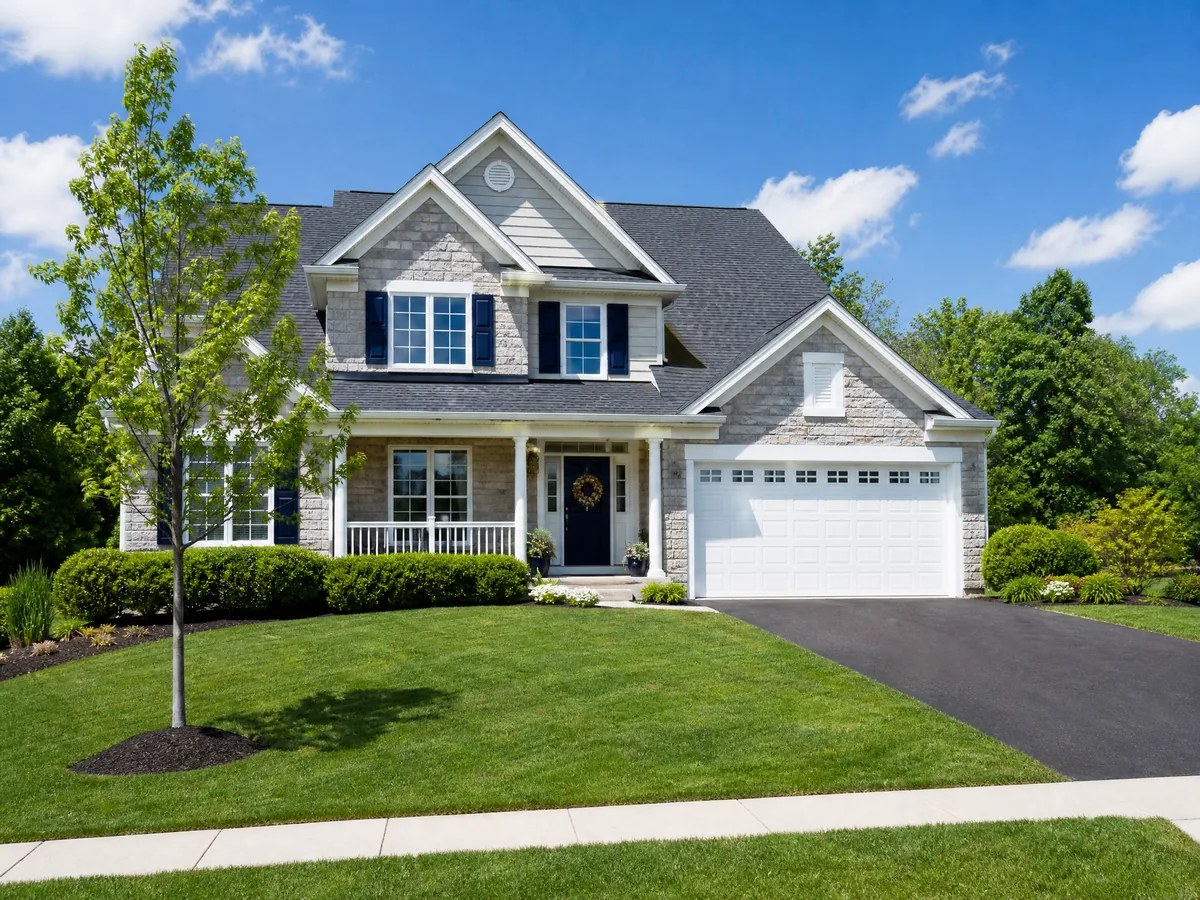
Conventional Investment in Denver, CO from USA Mortgage
Non-owner
occupied
30-yr
fixed avail.
80%
max LTV
Low
rates

Typical figures, subject to underwriting and market conditions. Not a commitment to lend.

How it works

For investors who qualify conventionally, this is usually the lowest-cost long-term money on a buy-and-hold. We help you weigh it against our DSCR and bank-statement programs so the loan matches your file and your goals.

Who it's for
Buy-and-hold investors
Non-owner-occupied 1-4 units
Borrowers who document income
Purchase or refinance
Typical terms
PropertyInvestment, non-owner-occ
Max leverageUp to 80% LTV
Term30-yr fixed / ARM
IncomeDocumented
CreditFrom 580
UsePurchase or refi
Apply now

*Typical terms, subject to underwriting and market conditions.

Run your Conventional Investment numbers.

Pressure-test the deal in seconds with our free dscr calculator, no sign-up required.

Open the DSCR calculator
Local FAQ

Conventional Investment in Denver, answered.

Denver home values run well above other Front Range metros. Does that price a conventional investor loan out of reach?
Not out of reach, but it often means a different file than a lower-cost metro. Zillow put Denver's own mid-tier home value at $538,992 and the broader metro at $599,059 in June 2026, both above Boulder's Front Range neighbors Fort Collins ($577,922) and Greeley ($500,716) and well above Colorado Springs ($464,008). A meaningful share of Denver purchases and refinances lands in high-balance or non-agency territory rather than a standard conforming file. We couldn't source the current conforming loan limit for these counties, so we won't quote one here; send us the address and purchase price and we'll tell you straight which structure fits. See conventional investment terms.
Does Colorado's flat income tax actually help a documented buy-and-hold investor here?
Yes, and it pairs with a property tax structure that's unusually favorable for a long hold. Colorado's individual income tax is a flat 4.40% of federal taxable income, so a documented borrower's state tax line doesn't climb with income the way it would under a bracketed system. Residential property is also assessed at a comparatively low rate for tax purposes, which keeps the carrying cost of a buy-and-hold rental down even before you look at the mill levy on a specific parcel. Talk to your CPA about how that interacts with your entity structure. See conventional investment terms.
My Denver purchase and a Douglas County purchase both quote 'low Colorado property taxes.' Why did my Douglas County estimate come in so much higher?
Because the mill levy is set by tax district, not by county, and the spread inside a single county can be enormous. Denver's total general mill levy is 79.202 mills. Douglas County alone has 631 distinct tax districts for 2025, with total mill levies ranging from 69.821 to 279.845, and one Castle Rock district stacks six overlapping metro districts to 279.845 mills, more than three times Denver's own rate. On an identical $600,000 property that's roughly $3,221 in Denver against roughly $10,713 in the highest Douglas County district, our own arithmetic on the published rates. Before you underwrite a Denver-metro rental, pull the parcel's tax district number and check it against the county's own published mill-levy file, not a countywide average. See conventional investment terms.
I'm financing a long-term rental inside Denver city limits. Does that change what I need in the file beyond the loan itself?
Yes: Denver requires its own rental license, separate from anything the loan requires. Every long-term residential rental inside the City and County of Denver needs a Residential Rental Property license, a four-year term, a $50 application fee, and a third-party inspection at the owner's expense. Enforcement tightened recently: the maximum fine rose from $999 to $5,000 per violation, and the city issued its first $5,000 fine in January 2026. Confirm the license and inspection status before you close, because an unlicensed rental is a live liability on day one. See conventional investment terms.
Should I underwrite a Denver rental against the metro's overall rent numbers?
Not if the property is a single-family home, because the blended rent index understates it. Zillow's all-property-types rent index for the Denver metro was $1,930 in June 2026, dragged down by the area's heavy apartment and condo share, but the single-family-only index was $3,018, up 1.0% year over year while the blended figure fell 1.3%. Against the metro's $599,059 mid-tier single-family value, that's roughly a 6.0% gross yield on detached stock versus 3.9% on the blended figure, our arithmetic on the published series. A file built on the blended number can undersell a house that actually pencils. See conventional investment terms or compare against our DSCR program if the rent, not your income, should carry the file.
Denver hail damage seems to come up a lot. Does that matter for a conventional purchase, not just a flip?
It matters more on a hold than on a flip, because you'll carry the policy for years. A Colorado Division of Insurance analysis found hail, not wildfire, drives 26% to 54% of a Front Range homeowners premium, versus roughly 1% for wildfire in Denver itself; the 2017 Denver metro hailstorm remains Colorado's costliest insured catastrophe. Front Range policies commonly carry a separate wind and hail deductible of 1% to 2% of the dwelling coverage, sometimes 5% on an older roof, which is a real out-of-pocket number on a claim, not the flat deductible an out-of-state buyer might assume. Require replacement-cost coverage, not actual cash value, and get roof age into the file before you lock the loan. See conventional investment terms.
How low can my credit score go on a Denver conventional investment loan?
580 is the floor on this program. That is lower than most investors expect from documented financing. Income is fully documented here, so returns and W-2s are part of the file, unlike our asset-based programs. Weaker credit is usually handled with lower leverage rather than a decline. Subject to underwriting.
What do I put down on a Denver rental with conventional financing?
20% at the maximum leverage. We go up to 80% LTV on non-owner-occupied property, so on a $500,000 Denver rental that is $400,000 from us and $100,000 from you (500,000 x 80% = 400,000). Denver's own mid-tier home value ran $538,992 in June 2026, so send us the purchase price and we will size it against the program. Subject to underwriting.
Does conventional investment financing in Denver work for a refinance, not just a purchase?
Yes, purchase or refinance. The terms are the same either way: up to 80% LTV, a 30-year fixed or an ARM, credit from 580, and fully documented income. If your returns understate what you actually earn, our bank statement loan reads deposits instead. Subject to underwriting.

More Conventional Investment questions, answered on the program page

Resources

Guides for Conventional Investment

Browse all guides
More in Denver

Other programs in Denver

All Denver loan programs
About the local figures on this page

Local rules move. Every tax rate, fee, ordinance and market figure here comes from a primary source and carries the date we read it, and we correct them as the rules change. Where a number is mid-change or we could not verify it, we say so rather than guess. Before you commit a budget, confirm anything that drives it with the city or county, and talk to your attorney or CPA on questions of law or tax.

Published by USA Mortgage Funding, LLC, NMLS #152588. Researched from primary sources by our team, drafted with AI assistance, and every figure checked against its source before publishing. Where an answer rests on a public record, that record is linked under it. Figures read on 2026-08-15.

Funding Denver deals fast.

Get real terms, usually same day. No obligation, no hard credit pull to start.

Apply nowTalk to us