
Direct private lending in most states
Call us anytime at 512-617-9400
Apply now
Program 03

Ground-Up Construction in Denver

Ground up construction loans built for Denver's metro district maze.

Ground-up construction loans fund the lot and the vertical build for Denver spec builders and developers, up to 70% LTV and 85% of cost, with draws that keep pace with the job. A newer Denver-metro subdivision can carry a special district mill levy far above the city's own, so we underwrite the parcel's actual tax district, not a county average. Denver's affordable housing linkage fee and its unit-count affordability threshold apply before your permit issues, so we size the loan around what your project actually owes. Business-purpose only, and every structure is set in underwriting.
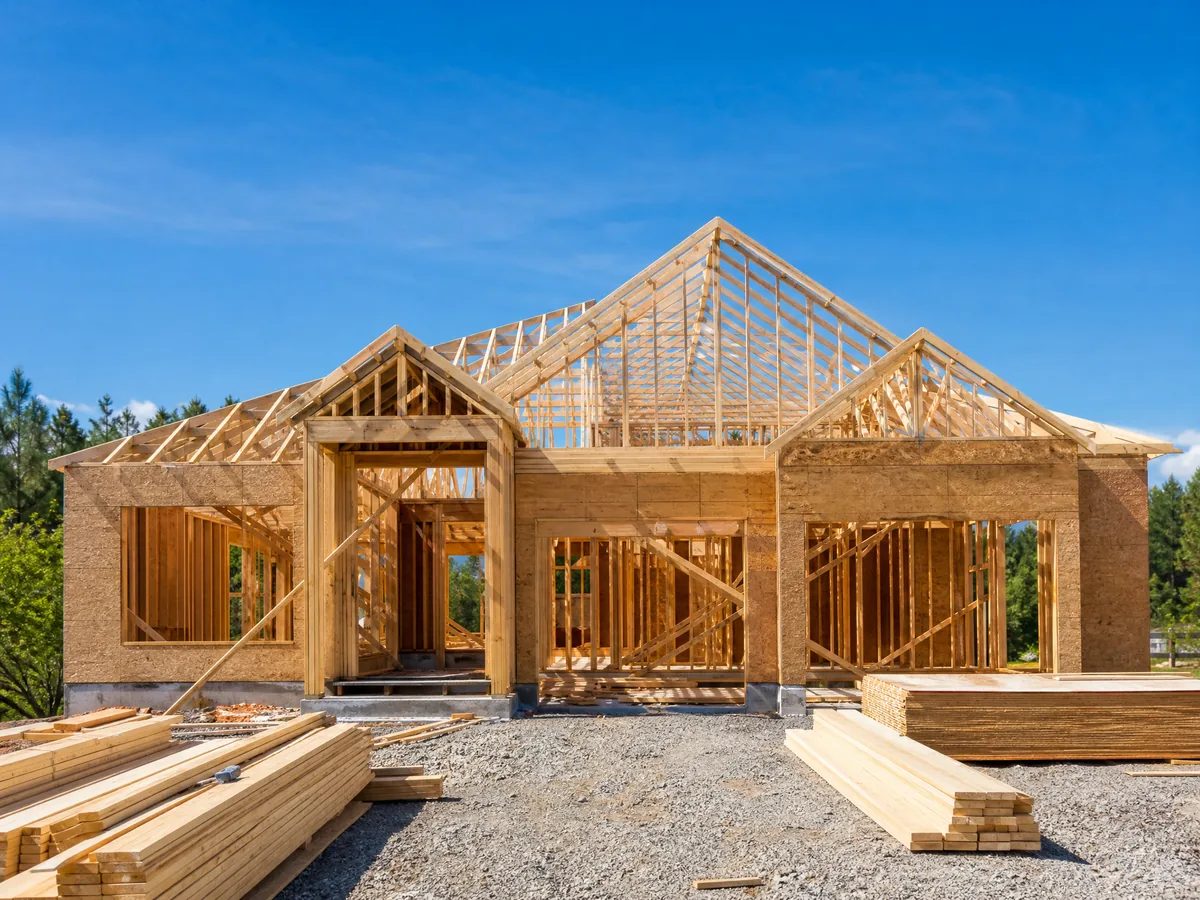
Ground-Up Construction in Denver, CO from USA Mortgage
70%
max LTV
85%
of cost
Most states
funding
$5M
max loan

Typical figures, subject to underwriting and market conditions. Not a commitment to lend.

How it works

We finance both the land and the vertical construction, with a draw schedule built around your timeline. Experienced builders can access higher leverage on cost.

Who it's for
Spec home builders
Developers and operators
Lot purchase or teardown
Build-to-rent strategies
Typical terms
Loan amountUp to $5M
LeverageUp to 70% LTV / 85% LTC
Term12 to 24 months
DrawsPer build schedule
RateFrom 10.00%*
UseSpec or build-to-rent
Apply now

*Typical terms, subject to underwriting and market conditions.

Run your Ground-Up Construction numbers.

Pressure-test the deal in seconds with our free construction loan calculator, no sign-up required.

Open the Construction Loan calculator
Local FAQ

Ground-Up Construction in Denver, answered.

I'm building in a Denver-metro subdivision. Does the tax district actually change my numbers that much?
Yes, and it can swing the carrying cost by more than three times on an identical house. Special taxing (metropolitan) districts are formed by developers to finance a subdivision's infrastructure, then repay it with a property tax on the homes inside the boundary, stacked on top of county, city and school mills. Douglas County alone publishes 631 distinct tax districts for 2025, with total mill levies running from 69.821 to 279.845, median 103.394. On a $600,000 house, Denver's own general levy works out to roughly $3,221 a year; the same house in Douglas County tax district 1791, which stacks six overlapping Meadows Metro Districts at 35 mills each, runs roughly $10,713. Pull the parcel's tax district number before you underwrite the exit, not after.
What does Denver charge on new construction before the permit even issues?
An affordable housing linkage fee, charged on every square foot of new gross floor area, on top of standard permit costs. Under the city's Expanding Housing Affordability ordinance, the published schedule runs from $2.83 per square foot for small residential up to $4.33 for larger residential, with commercial and industrial uses on their own tiers, and the rates escalate every July 1. Confirm the current year's schedule with the city before you set a construction budget line; the rate you build with in January is not guaranteed to hold in July.
I'm planning a 10-plus unit build in Denver. Does the city's affordability rule actually bite at that size?
It bites hard, and it is a threshold, not a phase-in. New residential development of 10 or more units has to set aside roughly 8% to 18% of units as affordable for 99 years, rental or for-sale alike, or pay a fee-in-lieu that runs roughly $250,000 to $478,000 per unit depending on unit type and market area. For a small-multifamily builder that is a real cliff at the ninth unit, not a soft target, and it belongs in your pro forma before you commit to a unit count.
If I build on a lot inside a metro district and sell it, does the buyer find out about the district on their own?
Colorado law puts that on the seller, and a buyer who does homework will find it either way. For sales on or after January 1, 2024, a seller of residential property inside a metropolitan district organized on or after January 1, 2000 has to give the purchaser the district's official website, which discloses its services, board meetings, authorized debt and the maximum mill levy it can levy to repay that debt. Districts formed since August 2013 also carry a recorded public disclosure document naming the district in the title chain. A spec build inside one of these districts should price the disclosure into the marketing story rather than let a buyer discover it at closing.
Does hail risk actually matter on a ground-up build, or is that only a concern for existing homes?
It matters during the build and after the sale. Denver sits in hail alley, and the Colorado Division of Insurance attributes roughly a quarter to over half of a Front Range homeowners premium to hail, versus about 1% for wildfire in Denver itself. Front Range policies commonly carry a percentage wind and hail deductible of 1% to 2% of the dwelling limit, higher on an older roof, which on builder's risk and on the eventual homeowner's policy is a real cost line, not boilerplate. Budget for it and require replacement cost coverage on the finished collateral, not actual cash value.
Does a finished Denver spec build make more sense to sell or to hold as a rental?
A spec build sized for the metro's detached-rental market can pencil as a hold once construction wraps. Denver-metro single-family rent ran $3,018 in June 2026 against a $599,059 metro mid-tier value, a meaningfully stronger gross yield than the blended, apartment-heavy market index of $1,930 suggests. That gap is exactly the kind of number a build-to-rent exit into a DSCR rental loan should be underwritten on, not the blended figure most market reports lead with.
My credit is average. Does that stop a Denver ground-up construction loan?
No. There is no minimum score on this program. We run credit, but on an asset-based construction loan it carries far less weight than at a bank. We underwrite the lot, the build budget, and the finished value. Weaker credit is usually handled with lower leverage rather than a decline, and there is no hard credit pull to start. Subject to underwriting.
How much of a Denver build do I have to fund myself?
At least 15% of cost, and often more once the value test binds. We go up to 85% of cost and up to 70% of value, whichever comes in lower. On a $1,000,000 Denver build that is up to $850,000 from us and $150,000 from you (1,000,000 x 85% = 850,000). Draws follow the build schedule, so the money lands as the work does. Price the parcel's own tax district into the carry before you set that number. Subject to underwriting.
Can a first-time Denver spec builder get the top leverage?
Experienced builders can access higher leverage. On a first Denver build, treat 85% of cost as a ceiling rather than a starting point, and expect us to look hard at the builder, the schedule, and the exit. The program runs up to $5M on a 12 to 24 month term, spec or build-to-rent. Subject to underwriting.

More Ground-Up Construction questions, answered on the program page

Resources

Guides for Ground-Up Construction

Browse all guides
More in Denver

Other programs in Denver

All Denver loan programs
About the local figures on this page

Local rules move. Every tax rate, fee, ordinance and market figure here comes from a primary source and carries the date we read it, and we correct them as the rules change. Where a number is mid-change or we could not verify it, we say so rather than guess. Before you commit a budget, confirm anything that drives it with the city or county, and talk to your attorney or CPA on questions of law or tax.

Published by USA Mortgage Funding, LLC, NMLS #152588. Researched from primary sources by our team, drafted with AI assistance, and every figure checked against its source before publishing. Where an answer rests on a public record, that record is linked under it. Figures read on 2026-08-15.

Funding Denver deals fast.

Get real terms, usually same day. No obligation, no hard credit pull to start.

Apply nowTalk to us