Direct private lending in most states
Call us anytime at 512-617-9400
Apply now
Program 07

Conventional Investment in Raleigh

Raleigh rentals, financed by a conventional investment property loan.

Standard, competitively priced financing for non-owner-occupied investment property when your file fits the box. Often the lowest-cost option for a long-term hold, in exchange for full documentation. Wake County keeps adding people while prices soften, so it's a growth story, not momentum. We'll compare it against DSCR so you take the structure that fits; business-purpose only, subject to underwriting.
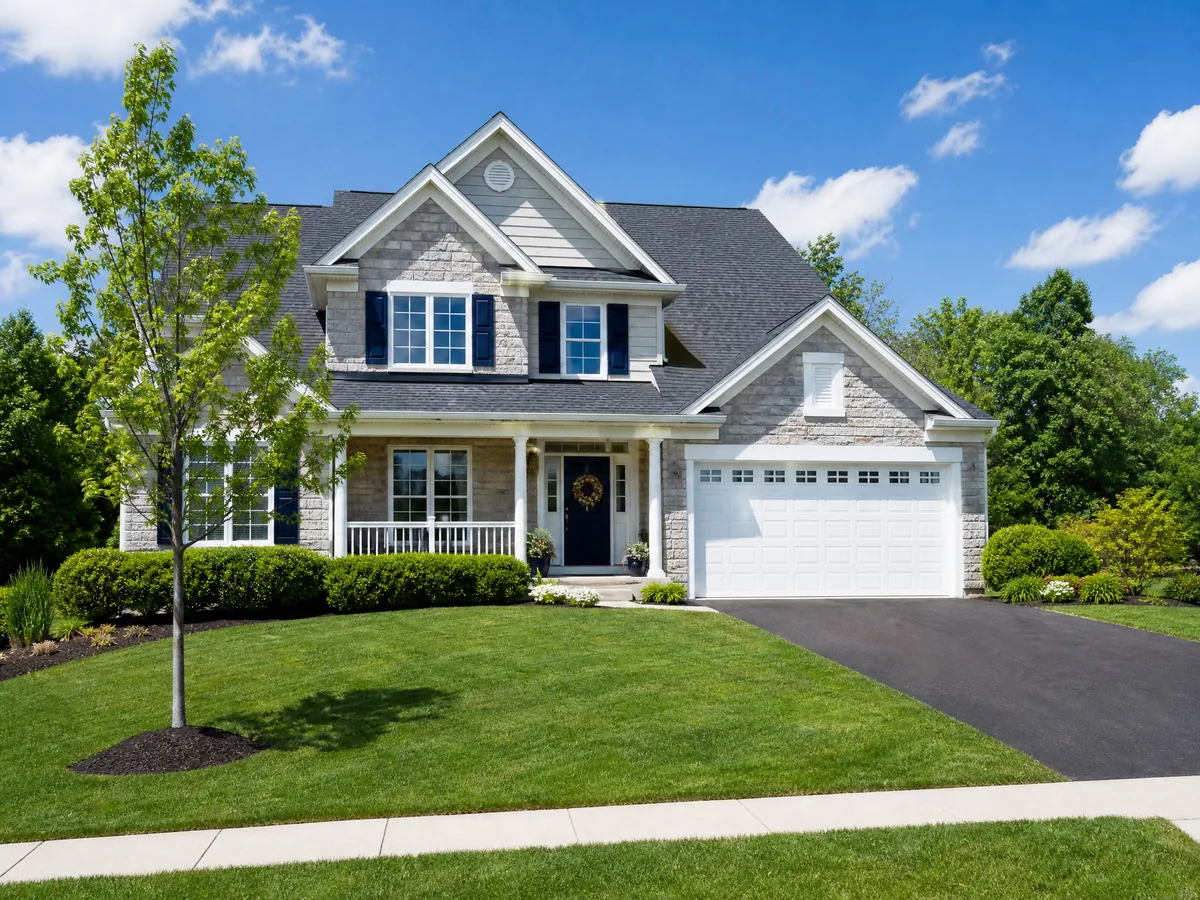
Conventional Investment in Raleigh, NC from USA Mortgage
Non-owner
occupied
30-yr
fixed avail.
80%
max LTV
Low
rates

Typical figures, subject to underwriting and market conditions. Not a commitment to lend.

How it works

For investors who qualify conventionally, this is usually the lowest-cost long-term money on a buy-and-hold. We help you weigh it against our DSCR and bank-statement programs so the loan matches your file and your goals.

Who it's for
Buy-and-hold investors
Non-owner-occupied 1-4 units
Borrowers who document income
Purchase or refinance
Typical terms
PropertyInvestment, non-owner-occ
Max leverageUp to 80% LTV
Term30-yr fixed / ARM
IncomeDocumented
CreditFrom 580
UsePurchase or refi
Apply now

*Typical terms, subject to underwriting and market conditions.

Run your Conventional Investment numbers.

Pressure-test the deal in seconds with our free dscr calculator, no sign-up required.

Open the DSCR calculator
Local FAQ

Conventional Investment in Raleigh, answered.

Does Wake County's growth actually support a conventional buy-and-hold, or is that just marketing?
The numbers back it up. Wake County's population grew from 1,130,903 in 2020 to 1,257,235 in 2025, a gain of 126,332 people, or 11.2%, in five years, and the county adds roughly 66 residents a day. That's landing on a labor market that isn't thin: the Raleigh-Cary metro carried 783,900 nonfarm jobs in May 2026, and unemployment ran 3.1% in June 2026, under the statewide rate of 3.6%. State government alone accounts for 55,300 of those jobs, a payroll that doesn't cycle with housing the way a single-employer town does. If your file documents income cleanly, that's the backdrop a conventional loan is underwriting against; if it doesn't, we'll also price the same deal as a DSCR loan qualified on the property's rent instead.

Sources: fred.stlouisfed.org, wake.gov

My Wake County tax bill didn't move for years and now I hear it's about to reset. How do I underwrite that on a conventional escrow line?
Model the step, not the current bill. North Carolina freezes assessed values between revaluations, so Wake County's tax line sits flat and then jumps in one move at each reval. The 2024 revaluation raised residential values 53% over 2020 in a single step. The next revaluation is effective 2027-01-01, with notices mailing that January and appeals opening at the same time; Wake then shifts to a two-year cycle starting in 2029. On today's tax-year 2026 rate, a Raleigh address pays a combined $0.9091 per $100 of assessed value (county $0.5371 plus city $0.3720), about $3,964 a year on a $436,056 house. Don't underwrite a 2029 hold to that number without pricing in the 2027 reset. Appeals to the Board of Equalization and Review are free to file and typically close when the board adjourns in early to mid April; confirm the current year's date with Wake County Tax Administration.

Sources: wake.gov

Does Raleigh face the same homeowners insurance spikes as the North Carolina coast?
No, and that's a real underwriting difference. North Carolina prices homeowners rates through the NC Rate Bureau, which files for all carriers, and the settled 2025 round capped increases at 7.5% effective 2025-06-01 and another 7.5% effective 2026-06-01, with the Bureau barred from refiling before 2027-06-01. That's a stepped, negotiated statewide increase, not the open filed-rate churn a coastal or Gulf Coast market sees. Raleigh and the rest of Wake County also sit well outside the state's eligible coastal wind-pool counties, so there's no NCIUA Beach Plan placement, no wind-pool deductible, and no assessment story to model here the way there is on the coast.

Sources: ncjua-nciua.org

Median home values are down year over year across the Triangle. Does that hurt my appraisal on a conventional purchase or refinance?
It's a soft tape, not a falling one, and the direction is mild. Raleigh's Zillow home value index ran $436,056 in June 2026, down 2.1% from a year earlier, and the Raleigh-Cary metro's median list price was $450,000 in July 2026, down 2.2% year over year. Every meaningful Triangle city is down over the same period, and active listings reached 5,963 in July 2026, up 5.5% from a year earlier and the highest reading in the two-year window. That's inventory loosening slowly, not flooding, but it means underwriting to a flat-to-slightly-down ARV is the honest read, not appreciation. Send us the specific address and comps and we'll walk you through where it lands.

Sources: fred.stlouisfed.org, files.zillowstatic.com

Does a Raleigh address cost less to carry than a Durham or Chapel Hill address at the same purchase price?
Yes, and the gap is large enough to change your numbers. On the fiscal 2025-2026 rates that put all three counties on one footing, a Raleigh address in Wake County ran a combined $0.8721 per $100 of assessed value, a Durham address in Durham County ran $0.9913 (about 14% more), and a Chapel Hill address in Orange County ran $1.1383 (about 30% more) on identical assessed value. The three counties also revalue on different schedules: Wake reset in 2024, Durham and Orange both reset in 2025. Don't apply a Wake County tax figure to a Durham or Chapel Hill parcel, and pull the county from the register of deeds rather than the mailing address, since Cary, Wake Forest, and other Triangle towns straddle county lines.

Sources: ncdor.gov

What credit score do I need for a conventional investment loan in Raleigh?
580 is the floor, the lowest of anything we write. The trade is documentation. Conventional investment financing runs on fully documented income, so tax returns and the rest of the file have to support the payment. If your Raleigh return is built to minimize what you owe, which is common in a metro where a lot of income comes off 1099s and LLCs, that is exactly where a conventional loan gets hard and where a DSCR loan qualified on the property's rent usually wins. Subject to underwriting.
How much do I need to put down on a Raleigh investment property?
20%. Conventional financing goes up to 80% LTV on non-owner-occupied property, so on a $436,000 purchase, roughly Raleigh's median home value of $436,056 in June 2026, that is up to $348,800 from us and $87,200 from you (436,000 x 80% = 348,800). Raleigh values were down 2.1% year over year at that reading, so underwrite the appraisal flat rather than counting on appreciation to rebuild the equity for you. Subject to underwriting.

Sources: files.zillowstatic.com

More Conventional Investment questions, answered on the program page

Resources

Guides for Conventional Investment

Browse all guides
More in Raleigh

Other programs in Raleigh

All Raleigh loan programs
About the local figures on this page

Local rules move. Every tax rate, fee, ordinance and market figure here comes from a primary source and carries the date we read it, and we correct them as the rules change. Where a number is mid-change or we could not verify it, we say so rather than guess. Before you commit a budget, confirm anything that drives it with the city or county, and talk to your attorney or CPA on questions of law or tax.

Published by USA Mortgage Funding, LLC, NMLS #152588. Researched from primary sources by our team, drafted with AI assistance, and every figure checked against its source before publishing. Where an answer rests on a public record, that record is linked under it. Figures read on 2026-08-13.

Funding Raleigh deals fast.

Get real terms, usually same day. No obligation, no hard credit pull to start.

Apply nowTalk to us