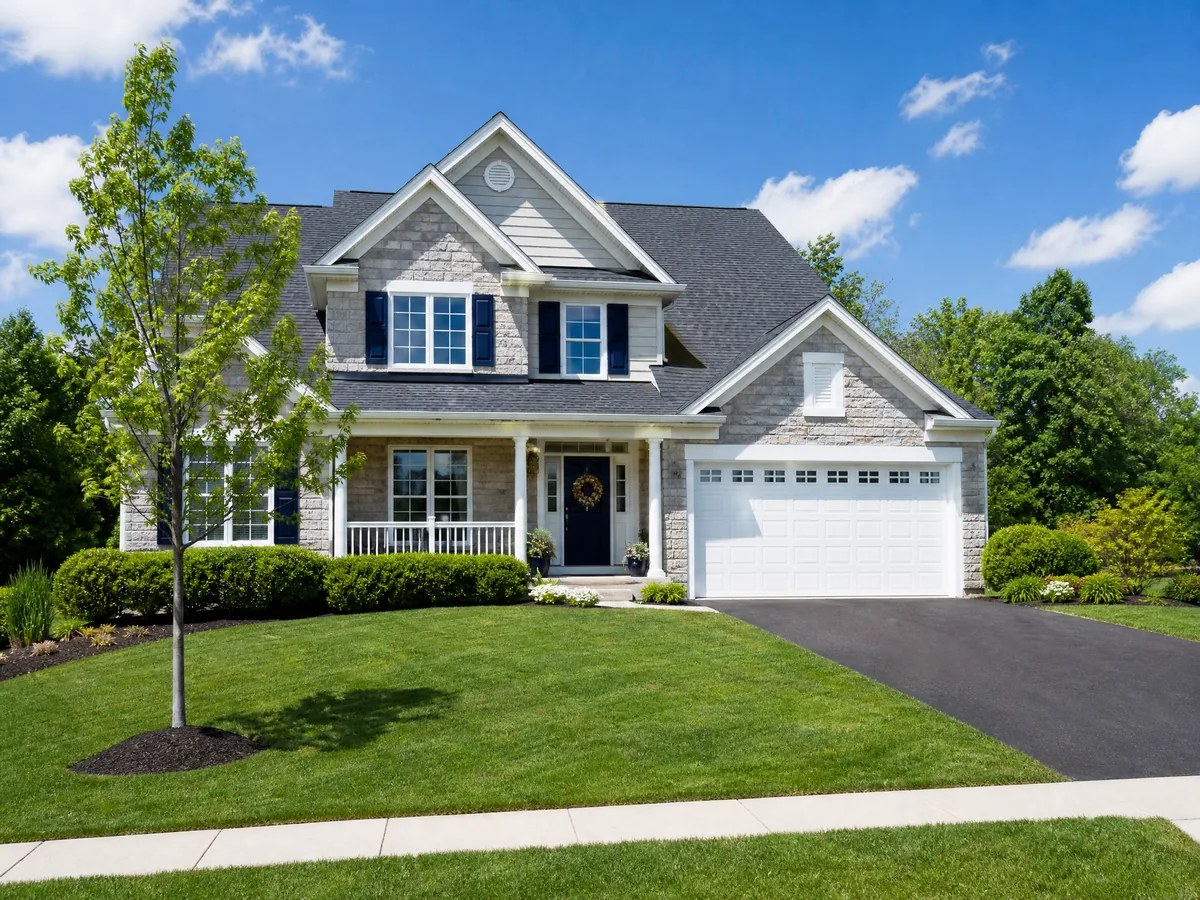
Conventional investment property loans for full-documentation buyers in San Diego.
Standard, competitively priced financing for non-owner-occupied investment property when your file fits the box. Often the lowest-cost option for a long-term hold, in exchange for full documentation. San Diego County's price points push many purchases toward the edge of standard conforming limits, and Prop 13 keeps a long hold's tax line predictable once you're in. We'll compare it against DSCR so you take the structure that fits; business-purpose only, subject to underwriting.
Typical figures, subject to underwriting and market conditions. Not a commitment to lend.
How it works
For investors who qualify conventionally, this is usually the lowest-cost long-term money on a buy-and-hold. We help you weigh it against our DSCR and bank-statement programs so the loan matches your file and your goals.
San Diego home values run close to a million dollars. Does that push a purchase past what conventional investor financing can size?
It can, and you should plan for it rather than be surprised by it. Seven of the eight cities we cover here, San Diego, Chula Vista, Oceanside, Escondido, El Cajon, Vista and Spring Valley, run from $692,258 to $1,002,065 in mid-2026 value, a price band that sits at or above the standard conforming ceiling for a meaningful share of purchases in this county. That means agency investor product covers less of the San Diego market than it would in a lower-priced metro, and a DSCR loan is worth pricing side by side before you assume conventional fits. Send us the address and we will tell you plainly whether the loan size lands inside conventional or needs a different structure.
A San Diego listing shows the seller's annual property tax. Is that what I'll actually pay once I close?
No, and underwriting off the seller's number is the single most common way an out-of-area buyer's numbers break here. Under Proposition 13, every purchase is its own reassessment event: the county resets the taxable base to your purchase price, not the seller's decades-old assessed value, then caps future growth at 2% a year. A County of San Diego worked example shows the gap plainly: a $1,000,000 purchase in a City of San Diego tax rate area carries roughly $12,511 a year at the common 1.25114% rate, while the same house held since the 1990s on a $250,000 assessed base carries roughly $3,128, about four times less on an identical property. Pull the actual tax rate area for your parcel and apply it to your purchase price, not the listing's tax line.
Is the property tax rate the same everywhere in San Diego County?
No, and the spread is large enough to move a full-documentation debt-to-income calculation. County-wide ad valorem rates for fiscal year 2025-26 run from 1.01903% to 1.28664%, and even inside the City of San Diego alone the range is 1.03103% to 1.28214%, a roughly 25-basis-point spread that is about 20% of the tax line on a comparable purchase. Pull the actual tax rate area for the parcel from the county's own table before you finalize a conventional file's debt-to-income math; a flat "1.1% of price" assumption is a guess in this county.
Does a conventional purchase in Chula Vista or the newer north county master-planned areas carry any charges outside the property tax rate?
Often yes, and they are fixed charges that Proposition 13's 1% ceiling does not touch. Community Facilities District special taxes cluster in eastern Chula Vista, including districts like Otay Ranch Village 2, Village 3 and Village 11, and in newer north county areas like Harmony Grove, with published per-parcel averages ranging from roughly $753 to over $3,300 a year depending on the district, and several can stack on a single bill alongside the county's open space assessments. Pull the parcel's actual fixed-charge list from the tax bill rather than assuming a district-wide average applies to your specific unit. See conventional investment terms and we will help you underwrite the full carry, not just the rate.
If I finance a San Diego rental with conventional and title it in an LLC, does that change my exposure under the local tenant protections?
Yes, and it is worth knowing before you pick a title strategy. San Diego's citywide rent increases are capped by the statewide AB 1482 formula, 8.2% for the window running 2026-08-01 through 2027-07-31 in this county. On top of that, the City's own Residential Tenant Protections Ordinance requires just cause for eviction from day one of a tenancy, with relocation assistance on most no-fault move-outs. A single-family home or condo is exempt from that City ordinance only when the landlord is not a corporation, LLC, or REIT, so titling a City of San Diego rental in an entity brings the full just-cause and relocation regime into play even on a single-family property.
Does California's state income tax change the after-tax math on a long-term conventional hold here compared to a no-income-tax state?
It does, and a San Diego pro forma should account for it rather than assume a no-income-tax outcome. California's top marginal personal income tax rate is 13.3%, the highest of any state, and rental income and flip gains are taxed as ordinary income with no lower state capital gains rate. Holding through an LLC adds its own annual $800 franchise tax plus a gross receipts fee that starts at $900 once total California income tops $250,000. Proposition 13's 2% cap on annual base-year growth is a genuine offset that makes the property tax line unusually predictable over a 30-year hold, but it does not erase the income-tax gap. Talk to your CPA about your specific structure before you compare a San Diego hold to one in a no-income-tax state.
What credit score do I need for a conventional investment loan in San Diego?
Credit starts at 580 on this program. That is the lowest entry point of anything we write, but it comes with the trade: conventional investor financing is fully documented, so the income, the reserves and the debt-to-income math all get looked at, unlike a DSCR file that qualifies on the property's rent. In this county the tax line is what usually breaks that math, since your bill resets to your purchase price under Proposition 13 rather than tracking the seller's. Subject to underwriting.
How much do I put down on a San Diego conventional investment purchase?
Plan on 20% of the purchase price. Maximum leverage on non-owner-occupied conventional is up to 80% LTV. On a $900,000 San Diego purchase that is $720,000 from us and $180,000 from you (900,000 x 80% = 720,000). Remember that the eight cities we cover here run from $692,258 to $1,002,065 in mid-2026 value, so on many parcels the resulting loan amount lands at or above the standard conforming ceiling and needs a different structure. Terms are 30-year fixed or ARM, purchase or refinance. Subject to underwriting.
More Conventional Investment questions, answered on the program page
Local rules move. Every tax rate, fee, ordinance and market figure here comes from a primary source and carries the date we read it, and we correct them as the rules change. Where a number is mid-change or we could not verify it, we say so rather than guess. Before you commit a budget, confirm anything that drives it with the city or county, and talk to your attorney or CPA on questions of law or tax.
Published by USA Mortgage Funding, LLC, NMLS #152588. Researched from primary sources by our team, drafted with AI assistance, and every figure checked against its source before publishing. Where an answer rests on a public record, that record is linked under it. Figures read on 2026-08-15.
Funding San Diego deals fast.
Get real terms, usually same day. No obligation, no hard credit pull to start.