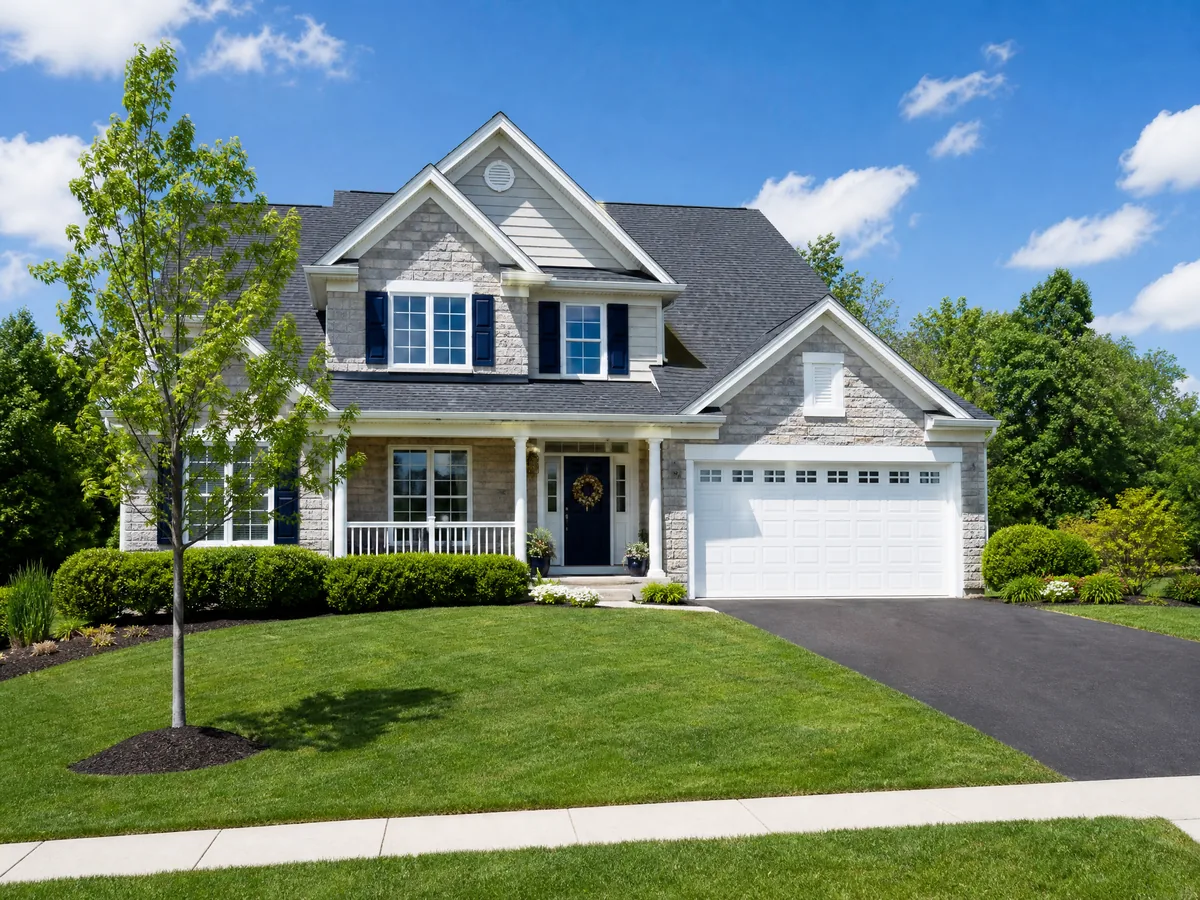
Tampa investors: conventional investment property loans for long-term holds.
Florida's 10% non-homestead cap resets the year you buy, so the seller's bill understates yours. Conventional gives you standard, competitively priced financing for non-owner-occupied investment property when your file fits the box, often the lowest-cost option for a long-term hold in exchange for full documentation. We'll compare it against DSCR so you take the structure that fits; business-purpose only, subject to underwriting.
Typical figures, subject to underwriting and market conditions. Not a commitment to lend.
How it works
For investors who qualify conventionally, this is usually the lowest-cost long-term money on a buy-and-hold. We help you weigh it against our DSCR and bank-statement programs so the loan matches your file and your goals.
How is my rental assessed differently from an owner's homestead?
You get the 10% cap, not the 3% one. Florida caps annual assessment increases on homesteaded property at 3% or CPI, whichever is lower, under Save Our Homes. Everything an investor owns is non-homestead and carries a 10% annual cap instead, from the 2008 amendment that first applied in 2009. The 10% cap applies automatically, with no application to file. It is real protection once you own the property, but it is a looser ceiling than a homesteaded owner has, so model your assessed value climbing faster than the house next door.
Because the non-homestead cap resets on change of ownership. Whatever capped basis the seller built up does not carry over to you. Your first full tax year is typically assessed at market value, which is why the bill you see during diligence systematically understates what you'll actually pay. On a conventional file that escrow feeds straight into your qualifying ratios, so getting it wrong at the start is what kills the loan two weeks in. Underwrite to a market-value assessment, and run the address through the county property appraiser's own estimator before you commit.
Does Hillsborough, Pinellas or Pasco give me the lower-cost carry?
On insurance, yes, and that's the gap you can document. We don't publish a metro millage rate here, because the Hillsborough, Pinellas and Pasco figures in circulation are secondary and we couldn't verify them against the property appraisers. Pull the address-level estimate from the county property appraiser instead. The county spread you can stand behind is insurance: as of March 2026 the state regulator put the average homeowners premium including wind at $4,063 in Pinellas, $3,525 in Hillsborough and $2,756 in Pasco. That roughly $1,300 Pinellas-to-Pasco difference is more than half a month's rent on a typical $2,000 rental, before flood. It is why a Clearwater deal and a same-priced Wesley Chapel deal don't underwrite the same.
No. As of mid-2026 it's coming down, off the highest base in the country. The Florida Office of Insurance Regulation reported the average homeowners premium including wind decreased in 51 of 67 counties between its January 2026 and July 2026 reports, 21 new companies have been approved to write residential property since the 2022-23 reforms, and Florida domestic property insurers ran an 83% combined ratio in 2025, the lowest in more than a decade. Citizens is down to 293,465 policies in force as of June 5, 2026, its lowest in 25 years, against roughly 1.2 million at the end of 2022, and its approved 2026 cuts of 8.8% on homeowners multiperil and 5.5% on wind-only took effect July 1, 2026. Budget from a real bound quote, not from last year's headlines, because that premium is part of your qualifying payment.
What Florida-specific closing costs should I budget on a purchase?
Documentary stamps, and they hit the note as well as the deed. Florida charges 70 cents per $100 of consideration on the deed in every county except Miami-Dade, and 35 cents per $100 on the note and mortgage. Deed consideration expressly includes the amount of any mortgage or other encumbrance, assumed or not. The statute puts deed stamps on the purchaser, but in most Florida counties the seller pays them by contract, so your purchase agreement controls what you actually write a check for at closing. Florida also imposes a nonrecurring intangible tax on mortgages, so expect it as a line item. Have closing counsel confirm the exact figures for your transaction.
Conventional or DSCR for a Tampa rental right now?
If your returns support the file, conventional is usually the lower-cost hold, and the rent picture here rewards buying a house. Single-family rent in the metro was $2,426 a month in June 2026, up 1.1% year over year, while the all-property-types index was $2,020 and down 0.7%. That gap is the apartment delivery wave showing up, and a borrower buying a single-family rental isn't exposed to it the same way. Prices have cooled and flattened rather than fallen: the metro median list price was $397,450 in July 2026, down 4.2% from a year earlier, with 72 median days on market. Conventional financing qualifies on you and generally prices lowest; a DSCR loan qualifies on the property when your documentation doesn't fit. Send us the address and both sets of numbers and we'll show you the two side by side.
On a $400,000 Tampa purchase, what do 20% down and a reset escrow add up to?
Twenty percent down, before closing costs and a first-year escrow built on market value. Max leverage is up to 80% LTV on a non-owner-occupied investment property, so on a $400,000 Tampa purchase that is up to $320,000 from us and $80,000 from you (400,000 x 80% = 320,000), on a 30-year fixed or an ARM. Add Florida documentary stamps on the deed and the note, and remember the escrow is built on a market-value assessment in your first full year rather than on the seller's capped bill. That is the line that quietly moves your qualifying ratios. Subject to underwriting.
My score is under 640. Can I still finance a Tampa rental?
Probably, and conventional has the lowest floor of the three. Credit on a conventional investment loan starts at 580, in exchange for fully documented income: returns, W-2s, the whole file. A DSCR loan starts at 640 and qualifies off the property's rent instead. An asset-based fix and flip or bridge loan carries no minimum score at all, and weaker credit there is usually answered with lower leverage rather than a decline. There is no hard credit pull to start, so send the Tampa scenario and we will tell you which of the three your file fits. Subject to underwriting.
More Conventional Investment questions, answered on the program page
Local rules move. Every tax rate, fee, ordinance and market figure here comes from a primary source and carries the date we read it, and we correct them as the rules change. Where a number is mid-change or we could not verify it, we say so rather than guess. Before you commit a budget, confirm anything that drives it with the city or county, and talk to your attorney or CPA on questions of law or tax.
Published by USA Mortgage Funding, LLC, NMLS #152588. Researched from primary sources by our team, drafted with AI assistance, and every figure checked against its source before publishing. Where an answer rests on a public record, that record is linked under it. Figures read on 2026-08-12.
Funding Tampa deals fast.
Get real terms, usually same day. No obligation, no hard credit pull to start.