
Waxahachie ground up construction loans for the county's growth frontier.
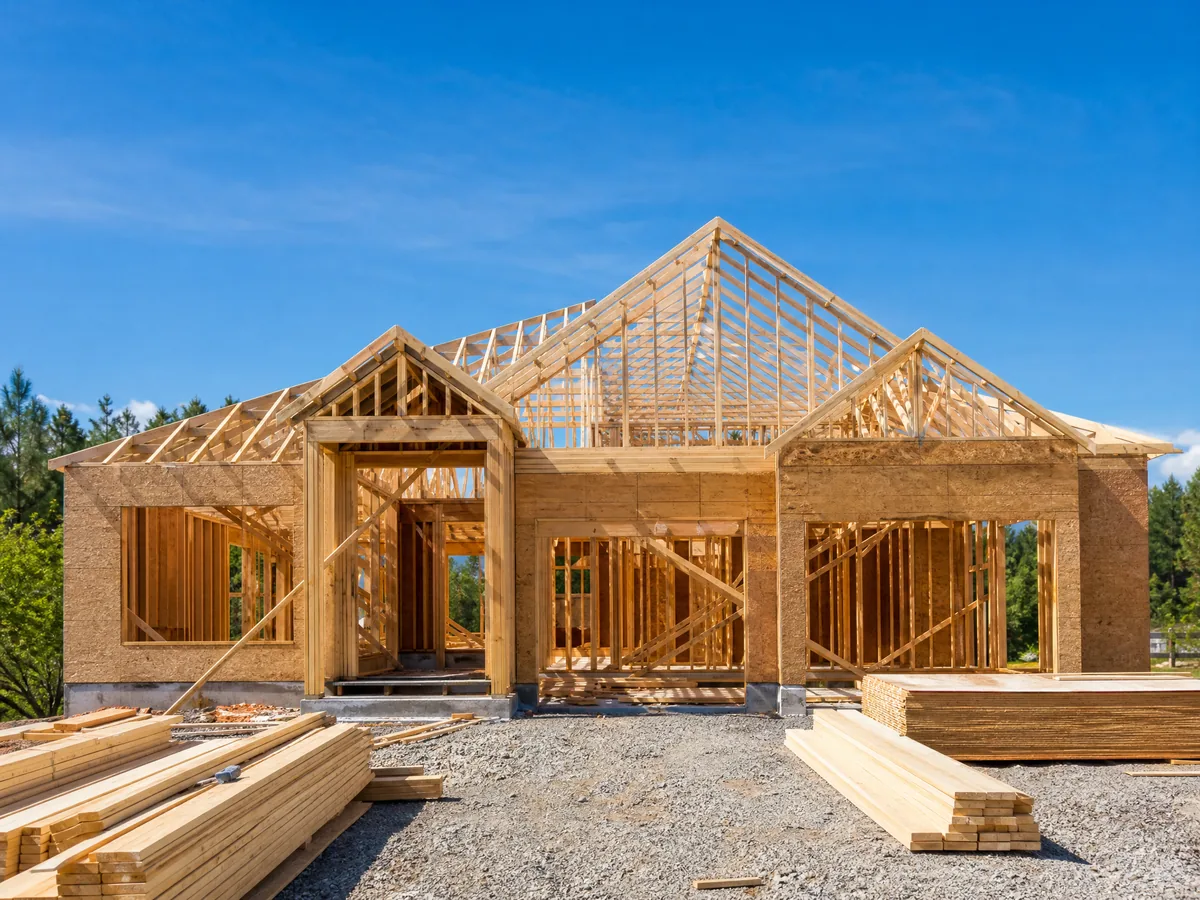
Built for spec home builders and developers. We fund the land and the vertical build up to 70% LTV and 85% of cost, with draws that keep pace with the job. Waxahachie's 2025 impact fee update put roughly $12,700 on a single-family house, due at permit and meter issuance, at the front of the construction loan. Business-purpose only, and every structure is set in underwriting.
Typical figures, subject to underwriting and market conditions. Not a commitment to lend.
How it works
We finance both the land and the vertical construction, with a draw schedule built around your timeline. Experienced builders can access higher leverage on cost.
Where is Ellis County's lot supply actually growing?
Along the I-35E and US-287 corridors, not off distressed resale. Ellis County grew from a 2020 census count of 192,455 to about 240,900 in 2025, roughly a 25% gain in five years, and the county's own characterization is a ground-up and bridge market first, ahead of yield and ahead of flipping. The dominant activity is new subdivision and industrial construction, not tired-house resale, so your comps and your absorption assumptions should come from the growth subdivisions, not the historic core.
What does Waxahachie's 2025 impact fee update actually cost per house?
Roughly $12,700 per single-family house, across roadway, water and wastewater, and it is due before you frame. Ordinance 3654, adopted August 18, 2025 and effective September 18, 2025, updated the schedule. Maximum assessable water and wastewater impact fees run $2,100 and $3,082 per living unit equivalent. Timing matters as much as the amount: roadway fees are paid at permit issuance and water and wastewater fees at water meter issuance, not spread across the build, which puts the whole draw at the front of the construction loan rather than staged with the work. Verify the adopted schedule against Ordinance 3654 before you finalize a pro forma; the $12,700 figure comes from newspaper reporting on the council action, not the ordinance text itself.
How does a lot's improvement district change what a Waxahachie build actually costs?
It can add more than a full point of tax, or a per-lot assessment the ad valorem rate sheet does not even show. The Ellis County Tax Office's PID sheet lists over twenty public improvement districts and municipal management districts across the county's new-subdivision growth, including three inside Waxahachie itself (PID #1's SF1, SF2 and SF3 sections), several carrying rates of 0.60 to 1.00 per $100 and a number showing 'N/A' in the rate column because the district levies a per-lot assessment instead of an ad valorem rate. An 'N/A' is not a free parcel; it is still an annual bill on the lot. Confirm the specific district and its assessment mechanics before underwriting a spec build's carry cost, because two lots in the same subdivision can carry different obligations depending on which section they sit in.
Does Waxahachie's historic district add a step before I can pull a building permit?
Yes, inside the Downtown and Oldham Avenue historic overlays, and it runs ahead of the permit, not alongside it. New construction, alteration or restoration inside either overlay district, on an individually designated historic resource, or on a National Register property requires a Certificate of Appropriateness from the Heritage Preservation Commission before a building permit can issue. That is a commission review step added to the front of your schedule, which matters most on a construction loan with a fixed draw timeline. A lot outside the two overlays runs ordinary permitting with no added review. The exact scope of work that triggers a Certificate of Appropriateness and the commission's review calendar were not confirmed this pass, so build in schedule contingency rather than assume a fixed turnaround.
Is Midlothian's impact fee structured differently than Waxahachie's?
Yes. Midlothian charges a flat roadway impact fee per service unit equivalency rather than Waxahachie's per-house schedule. Under Ordinance 2022-12, effective October 1, 2022, Midlothian's roadway impact fee runs $972 per service unit equivalency for residential and non-residential development alike. Midlothian's per-unit water and wastewater impact fee amounts were not sourced this pass; the city publishes online calculators rather than a flat schedule. Price your specific lot against the city where it actually sits rather than assuming Waxahachie's fee structure applies countywide.
How much of a Waxahachie build do I have to fund myself, and how large a loan can you write?
Roughly 15% of total cost, on a loan up to $5,000,000 and a 12 to 24 month term. We fund up to 85% of cost and up to 70% of value, whichever binds first, released in draws against your build schedule rather than in one advance, for either a spec sale or a build-to-rent hold. Size your own-funds line to cover the front-loaded costs Ellis County adds ahead of the draw schedule: Waxahachie's impact fees hit at permit and meter issuance, and a PID or MUD lot can carry its own assessment on top. Subject to underwriting.
More Ground-Up Construction questions, answered on the program page
Local rules move. Every tax rate, fee, ordinance and market figure here comes from a primary source and carries the date we read it, and we correct them as the rules change. Where a number is mid-change or we could not verify it, we say so rather than guess. Before you commit a budget, confirm anything that drives it with the city or county, and talk to your attorney or CPA on questions of law or tax.
Published by USA Mortgage Funding, LLC, NMLS #152588. Researched from primary sources by our team, drafted with AI assistance, and every figure checked against its source before publishing. Where an answer rests on a public record, that record is linked under it. Figures read on 2026-09-04.
Funding Waxahachie deals fast.
Get real terms, usually same day. No obligation, no hard credit pull to start.