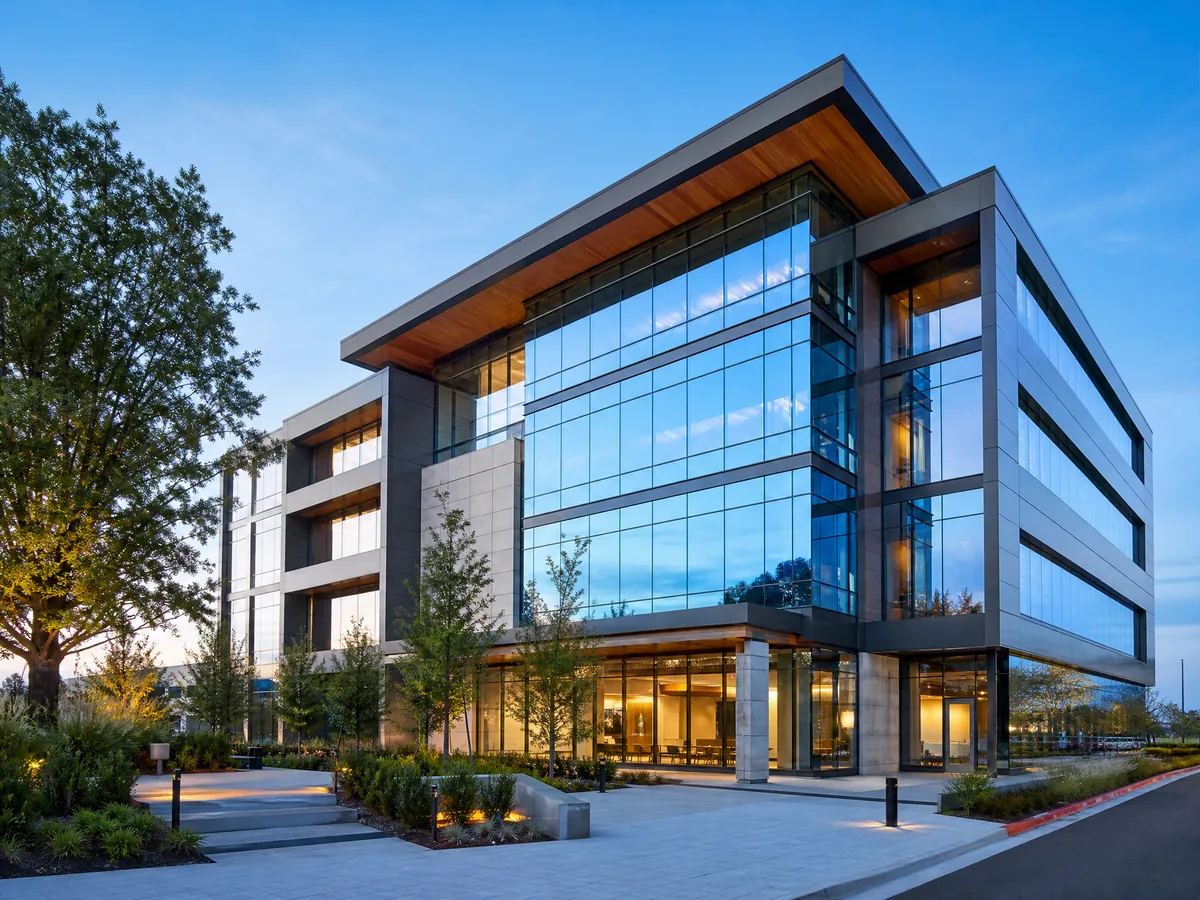
Short-term bridge debt on Colorado commercial property.
Bridge financing up to $10,000,000 on commercial real estate, interest-only, for 24 to 36 months while you execute a business plan. Colorado gives a bridge lender a fast, well-defined enforcement path and a 45% rate ceiling with no business carve-out. Business-purpose only, and every structure is set in underwriting.
Typical figures, subject to underwriting and market conditions. Not a commitment to lend.
How it works
Use bridge capital to reposition an asset, buy out a partner, or stabilize before a refinance. We move quickly on commercial deals that banks find too time-sensitive. When the asset is stabilized, we refinance you out of the bridge and into long-term permanent debt, which we also place in house, so you have a clear exit from day one.
Is there a rate ceiling on a Colorado commercial loan?
Yes, and Colorado is stricter than most states about it. CRS 5-12-103 permits parties to contract in writing for any rate not exceeding 45% per annum, with 8% as the default absent agreement. Separately, CRS 18-15-104 makes it a class 6 felony to knowingly charge, take, or receive a loan finance charge exceeding an annual percentage rate of 45%, and that criminal ceiling carries no business-purpose carve-out. Ordinary bridge pricing sits nowhere near it. Where the arithmetic deserves a look is a short loan carrying default interest plus points and fees, since those can count toward a loan finance charge. Whether particular fee types count, and how the courts have read it on commercial paper, is a question for your counsel. Consumer rate tiers under the Colorado UCCC do not reach you, because CRS 5-1-301(15)(b) excludes loans made for a business, investment, or commercial purpose.
How fast can a lender enforce a Colorado deed of trust?
Fast, and through a public official. Colorado is the only state that forecloses deeds of trust through a county public trustee rather than a trustee the lender selects. The holder files a notice of election and demand with the public trustee, who records it, and CRS 38-38-108(1)(a) then sets the sale 110 to 125 calendar days after recording for non-agricultural property. A combined notice mails within 20 calendar days of recording and again 45 to 60 days before the first scheduled sale date. CRS 38-38-105 also makes a court order authorizing sale mandatory, obtained through a Rule 120 hearing that runs in parallel and inside the same window. It is a limited proceeding, testing reasonable probability of default rather than trying the case. Borrowers should know the flip side: cure rights under CRS 38-38-104 run to 15 calendar days before the sale.
Yes, with a fair-value check built into the bid rather than a separate appraisal statute. CRS 38-38-106(6) requires the holder to bid at least its good faith estimate of the fair market value of the property, less senior liens, unpaid taxes, and estimated holding, marketing, and selling costs, while never requiring a bid above the total amount due. Missing that standard does not invalidate the sale, but it can be raised as a defense in a deficiency action. There is also no owner redemption after a public trustee sale under CRS 38-38-302, only junior lienor redemption starting with a notice of intent within 8 business days. For a bridge borrower the practical read is that Colorado collateral resolves quickly, which is part of why leverage here is available on assets a slower state would price harder.
How is Colorado commercial property assessed while I execute the plan?
At the non-residential rate, which was 27% for tax year 2025, with most non-residential categories moving to 25% to 26% for 2026. That covers commercial buildings, vacant land, and business personal property, and it sits far above the residential rates of 7.05% for school mills and 6.25% for local government mills in 2025. Your bill is actual value times the assessment rate times the mill levy. Real property is revalued every odd-numbered year with notices of valuation mailed by May 1, and CRS 39-5-122(2) requires a protest to be postmarked, delivered, or given in person by June 8. On a 24 to 36 month bridge you will sit through at least one reassessment, so underwrite the tax line at reassessed value rather than the seller's current bill and calendar the protest date.
That is the question the metro pages answer, not this one. The statutory layer, being public trustee foreclosure, the 45% ceiling, the documentary fee, and the non-residential assessment rate, is identical statewide. Deal flow, cap rates, and refinance appetite are not. Denver carries the state's institutional commercial market, Colorado Springs runs a smaller and more locally financed one, and Fort Collins is smaller again with a northern draw. For market conditions and exit depth go to Denver commercial bridge or Colorado Springs commercial bridge. When the asset stabilizes, Colorado permanent financing is the usual next step.
What credit score do I need for a Colorado bridge loan?
There is no minimum score on this program. Bridge is asset-based, so the file turns on the property, the business plan, and the exit. We run credit, but it carries far less weight than it would at a bank, and weaker credit is usually answered with lower leverage rather than a decline. There is no hard credit pull to start, and residential bridge files typically fund in 5 to 7 days. Subject to underwriting.
How much equity do I need in a Colorado bridge deal?
25% at maximum leverage. We go up to 75% LTV, so on a $4,000,000 Colorado commercial purchase that is $3,000,000 from us and $1,000,000 from you (4,000,000 x 75% = 3,000,000), before closing costs. Loans run up to $10,000,000, interest-only, on terms of up to 24 to 36 months. Recording is a flat $43 per document in Colorado, so the closing sheet is thinner than in a transfer-tax state. Subject to underwriting.
More CRE Bridge questions, answered on the program page
Local rules move. Every tax rate, fee, ordinance and market figure here comes from a primary source and carries the date we read it, and we correct them as the rules change. Where a number is mid-change or we could not verify it, we say so rather than guess. Before you commit a budget, confirm anything that drives it with the city or county, and talk to your attorney or CPA on questions of law or tax.
Published by USA Mortgage Funding, LLC, NMLS #152588. Researched from primary sources by our team, drafted with AI assistance, and every figure checked against its source before publishing. Where an answer rests on a public record, that record is linked under it. Figures read on 2026-08-12.
Funding Colorado deals fast.
Get real terms, usually same day. No obligation, no hard credit pull to start.