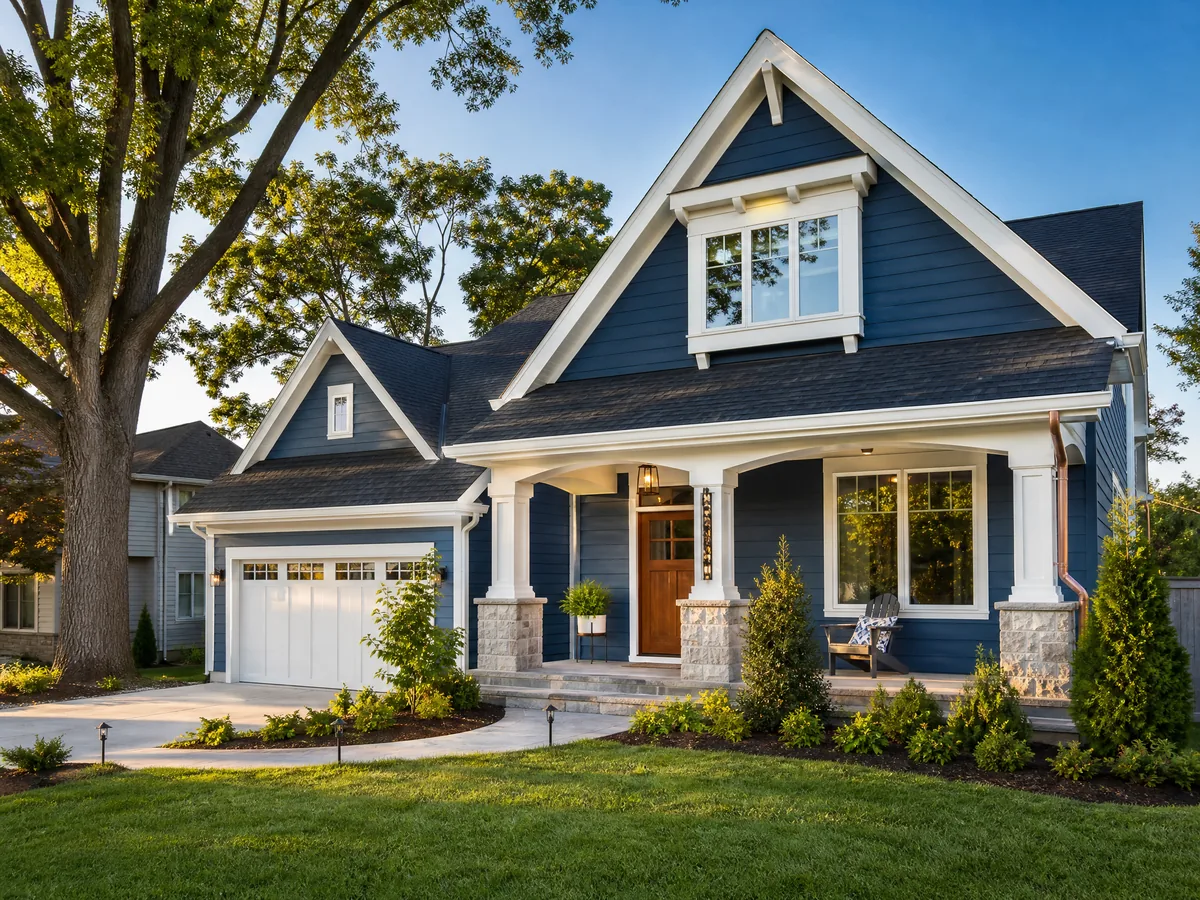
Built for the active flipper. We fund up to 90% of the purchase price and up to 100% of the rehab budget, capped to ARV, on a 6-month interest-only term. Florida taxes both the deed and the loan at closing, so basis math here starts before the first demo day. Business-purpose only, and every structure is set in underwriting.
Typical figures, subject to underwriting and market conditions. Not a commitment to lend.
How it works
Draws are reimbursed quickly as work is completed, and a dedicated closer stays with your file from term sheet to payoff. You can get a term sheet the same day, and we typically fund within 48 hours of clear title, so most flips close in 5-7 days as soon as title and insurance come together.
What do Florida closing taxes add to my flip basis?
Two separate taxes, and neither is optional. Deed stamps run 70 cents per $100 of consideration under section 201.02(1)(a), which is 0.7 percent, statewide except Miami-Dade. On the financing side, mortgage stamps at 35 cents per $100 and the nonrecurring intangible tax at 2 mills stack to 0.55 percent of the loan, uncapped. On a $300,000 purchase with a $270,000 loan that is $2,100 of deed stamps and $1,485 of loan tax (300,000 x 0.7% = 2,100; 270,000 x 0.55% = 1,485). Miami-Dade is its own rule: 60 cents per $100 plus a 45-cent surtax that does not apply to a single-family dwelling, so Miami-Dade single-family is 0.7 percent all in and everything else there is 1.05 percent. See Miami fix and flip for that market. Florida DOR is explicit that all parties are liable regardless of who agrees to pay, so read the contract allocation.
Does the loan tax change how I should size a short Florida flip loan?
Yes, because the tax is on the instrument, not on time outstanding. A six-month Florida mortgage pays the same 0.55 percent as a thirty-year one. There is no proration for a short hold. Two consequences on a flip. First, borrowing more than you need costs you 55 basis points of the excess on day one, so size the rehab draw schedule to the real budget rather than padding the note. Second, if you expect to refinance into a rental hold rather than sell, the second recorded mortgage pays the tax again, which is a reason to decide the exit before you close rather than after. Recording fees themselves are trivial beside it, at $5.00 for the first page and $4.00 per additional page under section 28.24(13). Subject to underwriting.
Is there a rate ceiling on a small Florida flip loan?
Yes, and small is the operative word. Chapter 687 caps by loan size, not borrower type: 18 percent at or below $500,000 and 25 percent above. Florida has no entity carve-out, so titling in an LLC does not lift the ceiling. What makes this live on flip paper is section 687.03(3), which requires value taken as an advance to be valued at receipt and spread across the stated term. On a six-month loan, points spread over six months annualise at double their face weight, so a heavily pointed small loan can annualise past 18 percent at a modest note rate. We structure Florida files with that line in mind, and we will not quote you a default-rate ceiling because the case law on aggregation is not something we have verified. Subject to underwriting.
If I have to foreclose or the seller does, how fast does Florida move?
Slower than a power-of-sale state, and we will not publish a day count because no reliable Florida series exists. Chapter 702 makes every Florida foreclosure judicial, commercial and investment property included. Under section 45.031 the clerk sells not less than 20 and not more than 35 days after final judgment, with notice published weekly for two consecutive weeks and the second publication at least five days before sale. The winning bidder posts a 5 percent deposit on the final bid, objections are due within 10 days of the certificate of sale, and then title passes. Most counties run these sales online. If you are buying at a Florida foreclosure sale, plan cash and lender commitment before the hammer, not after, and expect the timeline to be set by a docket rather than a statutory notice period.
What is the insurance trap on a Florida rehab?
A short claim clock that can outrun your rehab schedule. Section 627.70132 gives a policyholder one year from the date of loss to give notice of a claim, and 18 months for a supplemental claim. For hurricane and windstorm, the date of loss is landfall or the NOAA-verified event date. So a storm-damaged property you buy cheap and plan to rehab next season can carry a claim that is already time-barred, or that will be before you file. On acquisitions of damaged Florida product, confirm the notice date before you underwrite the insurance proceeds into the deal. The other live line is the residual market: a new Citizens policy is ineligible if a private insurer offers coverage not more than 20 percent above the Citizens premium, so Citizens is a fallback with a moving ceiling, not a planning assumption. Get bound quotes on the address.
Where does the flip math differ across Florida?
It differs by metro, and this page is not the place for it. State law is uniform, market conditions are not. Coastal South Florida runs a different product mix, insurance load, and condo exposure than the I-4 corridor, and North Florida runs a lower basis than either. For actual price levels, days on market, and rehab comps, read the metro page: Miami, Tampa, Orlando, Jacksonville, Fort Lauderdale, West Palm Beach, Sarasota, or Fort Myers. The one number that follows you into every one of them is the 0.55 percent loan tax plus 0.7 percent deed stamps. Run the whole deal on the fix and flip calculator before you sign a contract.
What credit score do I need for a Florida fix and flip loan?
There is no minimum score on this program. We do run credit, but on an asset-based loan it carries far less weight than it would at a bank. The file turns on the property, the rehab budget, and the after repair value. Weaker credit is usually answered with lower leverage rather than a decline, and there is no hard credit pull to start. Subject to underwriting.
How much cash do I need to bring to a Florida flip?
Roughly 10 percent of the purchase, plus closing costs and a contingency. We fund up to 90% of the purchase price and up to 100% of the rehab budget, capped to ARV. On a $350,000 Florida purchase that is up to $315,000 from us and $35,000 from you (350,000 x 90% = 315,000), with rehab drawn against the schedule rather than paid up front. Then add Florida closing taxes: 0.7 percent deed stamps and 0.55 percent on the loan. Loan size runs $100,000 to $5,000,000 on a 6-month interest-only term. Subject to underwriting.
Can I get a Florida fix and flip loan on my first deal?
Yes. First-time flippers are welcome on this program. The file is underwritten on the property, the budget, and the exit, so a thin track record is not a decline by itself. Expect it to show up in leverage rather than in a yes or no, and expect harder questions about your contractor and your ARV support. One Florida-specific ask on a first file: title the deal in an entity, because Florida lending law turns partly on whether the borrower is a natural person. Subject to underwriting.
More Fix and Flip questions, answered on the program page
Local rules move. Every tax rate, fee, ordinance and market figure here comes from a primary source and carries the date we read it, and we correct them as the rules change. Where a number is mid-change or we could not verify it, we say so rather than guess. Before you commit a budget, confirm anything that drives it with the city or county, and talk to your attorney or CPA on questions of law or tax.
Published by USA Mortgage Funding, LLC, NMLS #152588. Researched from primary sources by our team, drafted with AI assistance, and every figure checked against its source before publishing. Where an answer rests on a public record, that record is linked under it. Figures read on 2026-08-23.
Funding Florida deals fast.
Get real terms, usually same day. No obligation, no hard credit pull to start.