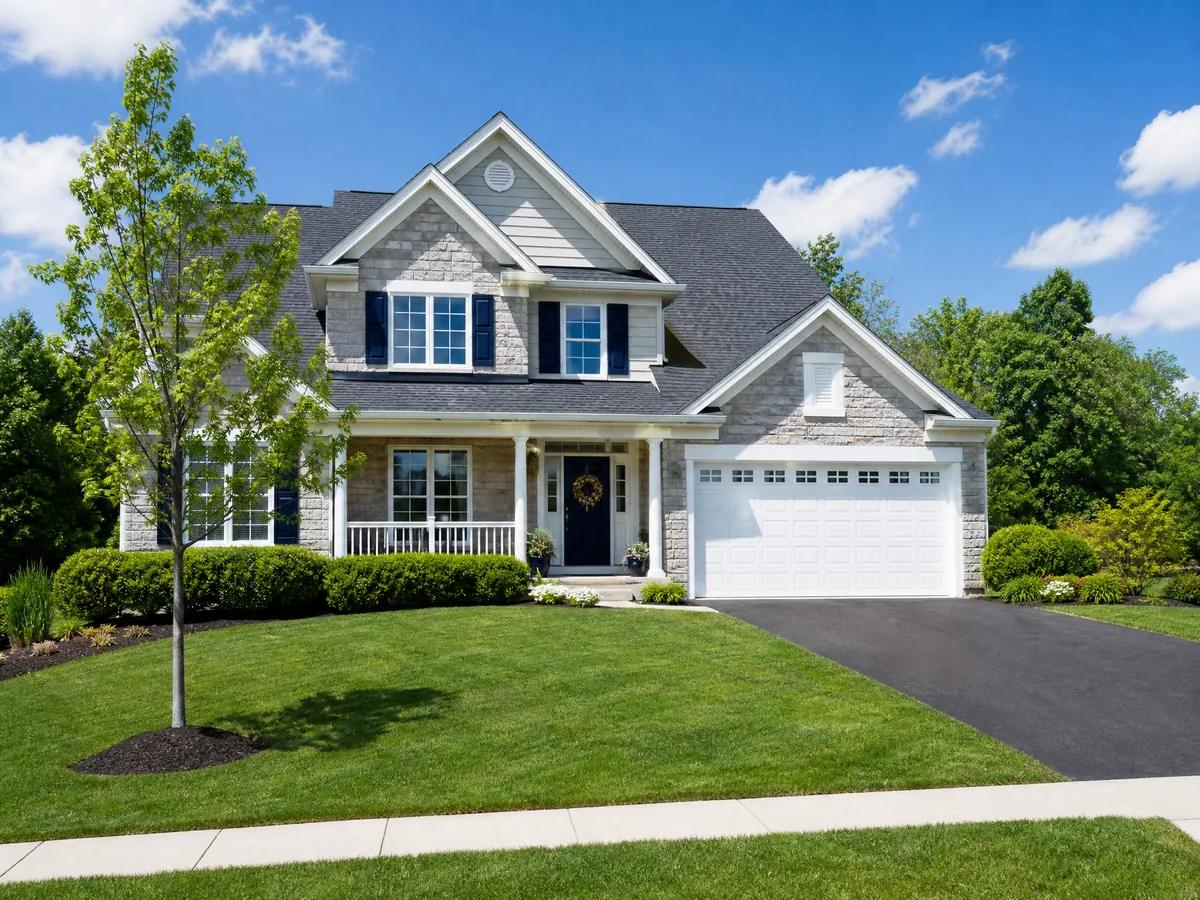
In Nashville, conventional investment property loans for investors.
Standard, competitively priced financing for non-owner-occupied investment property when your file fits the box. Often the lowest-cost option for a long-term hold, in exchange for full documentation. In Tennessee the buyer pays the transfer tax, and assessment runs at 25% of appraisal. We'll compare it against DSCR so you take the structure that fits; business-purpose only, subject to underwriting.
Typical figures, subject to underwriting and market conditions. Not a commitment to lend.
How it works
For investors who qualify conventionally, this is usually the lowest-cost long-term money on a buy-and-hold. We help you weigh it against our DSCR and bank-statement programs so the loan matches your file and your goals.
What closing cost do conventional buyers in Tennessee miss?
The realty transfer tax, and by statute the buyer pays it. Tennessee charges $0.37 per $100 on the greater of the consideration or the property value. On a $400,000 purchase that is $1,480 due at recording, cash out of pocket rather than something you finance. There is a second one sitting on the loan itself: the indebtedness tax runs 11.5 cents per $100 of debt with the first $2,000 exempt, so a $300,000 loan adds roughly $343. Neither number is large on its own. Both belong in your cash to close, and both get missed when investors budget off an out-of-state closing statement.
How do I underwrite property taxes on a Middle Tennessee rental?
Start with the assessment ratio, not the headline rate. Tennessee assesses residential and farm property at 25% of appraised value and commercial and industrial at 40%, and county rates are quoted per $100 of assessed value. So a $500,000 house is taxed on $125,000, and multiplying the market price by the county rate overstates the bill by a factor of four. We don't publish county rates on this page because they are set locally and move with each reappraisal. Pull the current rate for your parcel from the county assessor or trustee before you set the escrow, because on a conventional file that escrow feeds straight into your qualifying ratios. The 40% ratio is the one to watch if the use ever changes: same value, roughly 1.6 times the carry.
Tennessee has no income tax. Does that mean no tax on my LLC?
No state tax on wage income is not the same as no entity-level tax. Tennessee doesn't tax wage or salary income, and the Hall income tax on interest and dividends was fully repealed for tax years beginning on or after January 1, 2021, so on the personal side the answer really is nothing. The entity side is different. Franchise and excise tax applies to LLCs, LPs and corporations doing business in Tennessee: 6.5% of Tennessee net earnings for excise, 0.25% of net worth for franchise, with a $100 minimum. The family-owned non-corporate entity (FONCE) exemption can take a small landlord out of it, but the test is tight. At least 95% of the entity must be held by family members or qualifying trusts, and at least 66.67% of receipts must be passive investment income, which includes rent only where the residential property has four or fewer units at that location and never includes commercial rent or gain on a property sale. Get the F and E question answered by a Tennessee CPA before you title the property, then tell us the entity you'll close in so the file is built right the first time. We are a lender, not your tax counsel.
Rents are soft in Nashville. How does that change a conventional file?
It is the reason documented income is often the loan that survives the ratio test. As of mid-2026, three independent indices agree Nashville rents are falling, not growing: Apartment List has metro rent growth at -3.6% year over year, Zumper has 1-bedroom medians down 5%, and CoStar has advertised asking rent down 1.2%. Multifamily vacancy sits at 8.5%, a cyclical high. Meanwhile the metro median sale price hit a record $495,000 in June 2026. Record price against falling rent compresses coverage, which is exactly what squeezes a DSCR loan. If your returns document, conventional financing qualifies on you instead of on a rent number that has to hold. The constructive half of the story: deliveries drop from 12,852 units in 2024 to 9,011 in 2025 to a forecast 6,020 in 2026, so the supply pressure has a visible end.
Can I count short-term rental income on a Nashville purchase?
Not on the seller's permit. In Davidson County a not-owner-occupied short-term rental permit is expressly non-transferable, the ordinance says it cannot be transferred or assigned to another person, entity, or address, and Tennessee's own preemption statute ends grandfathered status on sale or transfer. New NOOSTR permits are not available in the AR2A, R, RS, and RM districts at all, which is the whole conventional residential stack, and reporting indicates none have issued in residentially zoned areas since January 1, 2022. So a house in a residential Nashville neighborhood underwrites to long-term rent, whatever the seller's trailing revenue looks like. Check the address with Metro Codes before you write the offer, not after.
I'm buying one side of a detached duplex. Does that finance conventionally?
It can, and the title work is the part to sort out early. Two detached houses sit on one Nashville lot under the Tennessee Horizontal Property Act at T.C.A. Title 66, Chapter 27, which expressly counts a separate free-standing building as a unit and creates the regime through a recorded master deed. That is how one side conveys on its own without a subdivision. For a conventional file it means the appraiser needs the right comparable units rather than fee-simple houses, and the master deed plus any association documents need to be in front of underwriting at the start rather than the week of closing. Send us the parcel and the master deed and we'll tell you quickly whether it fits conventional or belongs on another program.
Is my credit too thin for a conventional Nashville investment loan?
Conventional investment financing starts at a 580 credit score. That is lower than most investors expect, but the trade is documentation: this program is fully documented, so income, tax returns and reserves all get read, unlike the asset-based programs where there is no minimum score at all. Leverage runs up to 80% LTV on non-owner-occupied property. If the score clears but the paperwork does not, DSCR or a bank statement loan is usually the better door. Subject to underwriting.
What closes a Nashville conventional purchase, once the buyer-paid transfer tax is in?
Twenty percent down at maximum leverage, plus closing costs. We go up to 80% LTV on investment property, so on a $495,000 Nashville purchase that is $396,000 financed and $99,000 from you (495,000 x 80% = 396,000). Add the Tennessee realty transfer tax at $0.37 per $100, which the statute puts on the buyer, and budget the Davidson County carry off assessed value at 25% of appraisal rather than off your purchase price. Subject to underwriting.
Can I refinance a Nashville rental I already own with conventional financing?
Yes. The program covers purchase or refinance. Terms are 30-year fixed or an ARM, on non-owner-occupied investment property, at up to 80% LTV. A refinance is usually the lowest-cost long-term money available on a stabilized Nashville door, provided the file is fully documented and the property appraises. If the rent has moved since you bought, run the new payment against today's collected rent before you order the appraisal. Subject to underwriting.
Local rules move. Every tax rate, fee, ordinance and market figure here comes from a primary source and carries the date we read it, and we correct them as the rules change. Where a number is mid-change or we could not verify it, we say so rather than guess. Before you commit a budget, confirm anything that drives it with the city or county, and talk to your attorney or CPA on questions of law or tax.
Published by USA Mortgage Funding, LLC, NMLS #152588. Researched from primary sources by our team, drafted with AI assistance, and every figure checked against its source before publishing. Where an answer rests on a public record, that record is linked under it. Figures read on 2026-08-12.
Funding Nashville deals fast.
Get real terms, usually same day. No obligation, no hard credit pull to start.