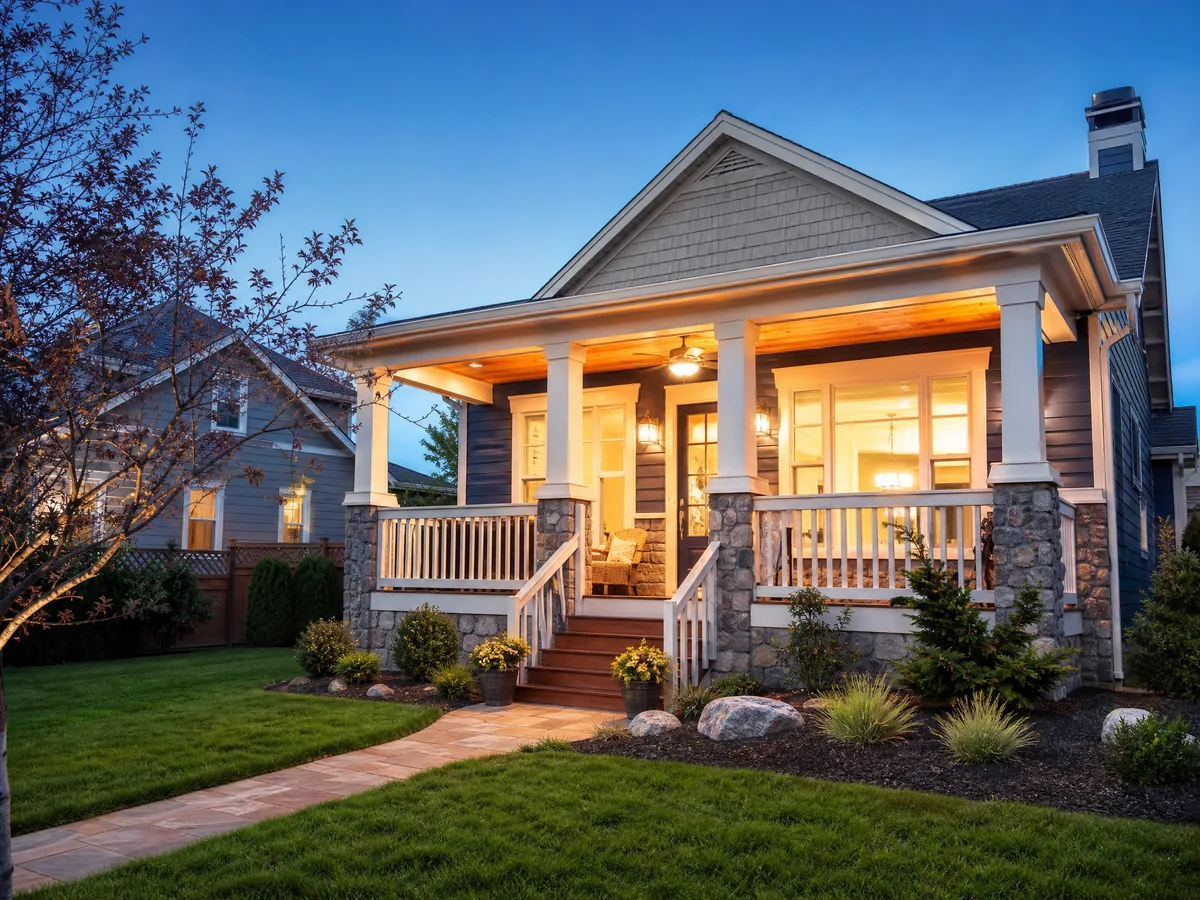
In Sacramento, DSCR loans qualify the rental, not you.
Hold Sacramento rentals with financing that underwrites the property's cash flow, not your income. DSCR as low as 0.75, rates from 5.5% interest-only, and 30-year fixed options for single properties or whole portfolios. Across this metro rents are climbing while values drift down, which improves coverage on paper, but the City of Sacramento layers its own rules on top of state law in ways a pro forma has to account for. Business-purpose only, and rates and structure are set in underwriting.
Typical figures, subject to underwriting and market conditions. Not a commitment to lend.
How it works
No tax returns or personal income docs in most cases. We qualify on the property's cash flow, so you can scale your portfolio without the paperwork drag of conventional lending.
If I title my Sacramento rental in an LLC, does that get me out of local rent rules?
No, and this is the single most common underwriting mistake on a Sacramento DSCR file. A single-family rental house inside the City of Sacramento is unconditionally exempt from the city's own rent ordinance, Sacramento City Code chapter 5.156, no matter who owns it. But the statewide rule, AB 1482, works differently: its exemption for single-family homes only applies where the owner is a natural person, not a REIT, corporation, or LLC with a corporate member. So an LLC buying a detached rental house in the city is exempt from the city ordinance and still exposed to the state cap. Most investors assume the city rule is the strict one and the state rule is the backstop; here it runs the other way. Talk to your attorney about how your entity structure interacts with both tests before you underwrite a rent-growth assumption.
Does Sacramento's rent ordinance apply outside the city limits?
The City of Sacramento is the jurisdiction in this metro with its own rent ordinance stacked on top of state law; the surrounding cities and unincorporated county are generally governed by state law alone, so the city line is a real underwriting boundary. That distinction has not been independently confirmed city by city for every named submarket. Elk Grove, Roseville, Citrus Heights, Rancho Cordova, and unincorporated Sacramento County are reported to have no local rent ordinance, but that is a single-source finding, not confirmed. Folsom and West Sacramento have not been checked either way. Verify the specific city or unincorporated area on your deal before you assume state law is the only rule in play.
How does the City of Sacramento's rent cap actually work, and does it expire?
Sacramento City Code section 5.156.050(A) caps the annual rent increase at 5% plus the change in the local cost-of-living index, up to a combined 10%, with no more than one increase in any 12-month period. For the year effective July 1, 2026 that worked out to 8.6%. The ordinance itself carries a sunset date: as amended by Ordinance 2024-0045, adopted November 19, 2024, it remains in effect until December 31, 2029, at which point it is repealed unless extended again. Statewide AB 1482 runs a similar 5%-plus-CPI formula capped at 10%, but on its own calendar, and where both rules reach the same unit, the stricter cap governs. A rent increase that satisfies AB 1482 but misses a city notice or registration requirement is still exposed, because a compliance lapse under the city chapter is an affirmative defense in an eviction case.
Why doesn't the property tax bill on the listing match what I'll actually owe after I close?
Under Proposition 13, every purchase resets the assessed value to the price you paid, and the gap between the seller's old assessment and your new one is billed separately as a supplemental assessment, outside the normal tax cycle. On a Sacramento rental the seller has held a long time, that gap can be large, because the 2% annual cap on assessment growth means a long hold understates the true carry by a wide margin. Underwrite the tax line off your purchase price, not the number on the listing. Sacramento County's supplemental appeal window runs 60 days from the mailing date of the supplemental bill, a separate clock from the regular July 2 to November 30 appeal period the county uses for standard reassessments. Talk to your CPA about the supplemental bill timeline before you lock a DSCR expense assumption.
Is there a hidden tax line in newer Sacramento-area subdivisions that Proposition 13 doesn't cap?
In newer subdivisions across Elk Grove, Folsom, Rancho Cordova, and North Natomas, check the parcel for a Mello-Roos Community Facilities District special tax before you underwrite it. That special tax funds subdivision infrastructure, is levied on a formula set by the district rather than on assessed value, so Proposition 13's 1% ceiling and 2% growth cap do not apply to it, and it survives the sale rather than resetting when you buy. No dollar figure for any specific district was verified, so run the parcel's actual tax bill, not a metro-wide estimate, before you price the deal.
Why does flood insurance matter so much on a Sacramento DSCR file?
Sacramento sits at the confluence of the Sacramento and American rivers behind an engineered levee system, and a parcel's flood zone follows the accreditation status of the levee segment protecting it, not the property itself. That status can change during your hold: Natomas was remapped into the high-risk floodplain in 2008 after the Army Corps re-evaluated its levees, which froze new construction there until a 2015 remap eased it, and levee work is still underway toward a higher protection standard. Being inside a mapped special flood hazard area triggers a mandatory flood insurance requirement on federally backed loans, and a private lender's own flood insurance requirement is a matter of its credit policy, priced into the deal. Order the flood zone determination early and put the premium in your pro forma before the deal is priced, not after.
How much do I need to put down on a Sacramento rental with a DSCR loan?
About 20% of the purchase, plus closing costs and reserves. We go to up to 80% LTV on this program. On a $480,000 Sacramento purchase that is up to $384,000 from us and $96,000 from you (480,000 x 80% = 384,000). Remember that your tax line resets to the price you paid, not the seller's old bill, and that flood insurance may be required depending on the levee segment, so keep both in the cash you set aside rather than in the pro forma alone. Subject to underwriting.
Is there a minimum loan size for a Sacramento DSCR loan?
Yes. We write DSCR from $100,000 to $3 million. Almost every single rental in this metro fits inside that band, including the City of Sacramento, which carries the lowest basis among the metro's major submarkets. A very small deal below $100,000 is under our minimum, and a purchase above $3 million needs a different structure. Terms run 30-year fixed or a 5, 7, or 10 year ARM. Subject to underwriting.
Does a Sacramento rental have to cover its own payment before you will lend?
Not fully. We go down to a 0.75 DSCR. That means a property whose rent covers only three quarters of the payment can still qualify, usually at lower leverage than a property covering 1.20. Underwrite the coverage you have today, not the coverage you hope to raise into: inside the city limits an annual increase on a covered unit is capped at 5% plus the annual cost-of-living adjustment, up to 10% combined, and no more than one increase in any 12-month period. Credit starts at 640 on this program. Subject to underwriting.
More Rental / DSCR questions, answered on the program page
Local rules move. Every tax rate, fee, ordinance and market figure here comes from a primary source and carries the date we read it, and we correct them as the rules change. Where a number is mid-change or we could not verify it, we say so rather than guess. Before you commit a budget, confirm anything that drives it with the city or county, and talk to your attorney or CPA on questions of law or tax.
Published by USA Mortgage Funding, LLC, NMLS #152588. Researched from primary sources by our team, drafted with AI assistance, and every figure checked against its source before publishing. Where an answer rests on a public record, that record is linked under it. Figures read on 2026-08-15.
Funding Sacramento deals fast.
Get real terms, usually same day. No obligation, no hard credit pull to start.