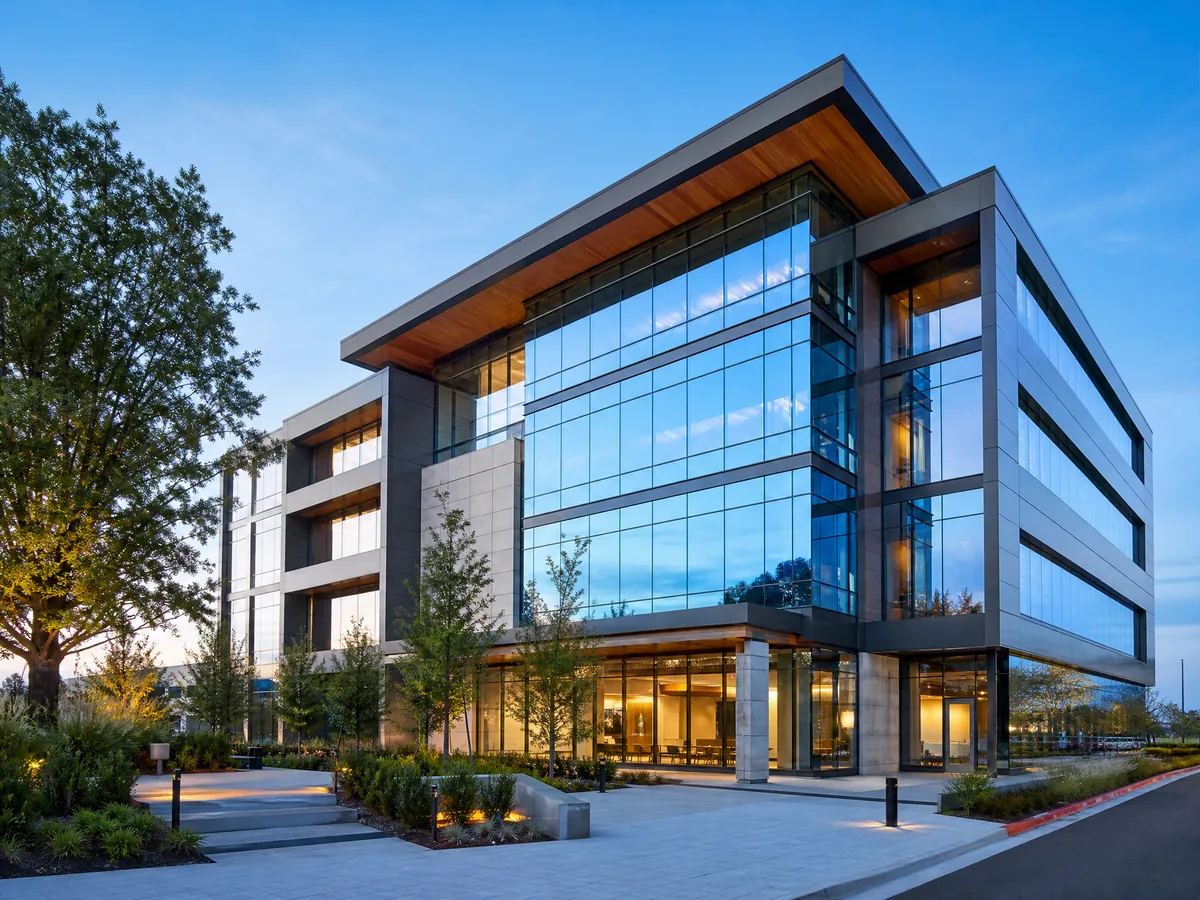
Commercial bridge loans for Sacramento CRE acquisitions and lease-up.
Access equity or finance a project before permanent financing. Flexible commercial bridge across property types, with terms up to 24-36 months and loan sizes up to $10M. Sacramento's state government workforce anchors demand for office and service space downtown, with logistics along the I-5 and Highway 99 corridors filling out the rest. Business-purpose only, and every structure is set in underwriting.
Typical figures, subject to underwriting and market conditions. Not a commitment to lend.
How it works
Use bridge capital to reposition an asset, buy out a partner, or stabilize before a refinance. We move quickly on commercial deals that banks find too time-sensitive. When the asset is stabilized, we refinance you out of the bridge and into long-term permanent debt, which we also place in house, so you have a clear exit from day one.
What's actually driving demand for a Sacramento CRE bridge deal, state government or logistics?
Both, and they sit in different parts of the metro. State government alone is 140,900 jobs, about 12.7% of the metro's nonfarm total, and total government employment runs 23.9% of all payroll. Governor Newsom's return-to-office order took effect July 1, 2026, putting most state workers back at their desks four days a week and explicitly aimed at reviving downtown Sacramento, though no measured effect on downtown office vacancy or rents has been published yet. The other lane is logistics along the I-5 and Highway 99 corridors and West Sacramento's port-adjacent industrial district. Underwrite the tenant and the lease, not a downtown recovery story that hasn't been measured. Our CRE permanent refinance is the exit once the asset is stabilized and leased.
How does Proposition 13 reassessment hit a Sacramento commercial property I'm bridging into a purchase?
The seller's tax bill is not yours, and the correction arrives separately. A commercial parcel is reassessed the same way a residential one is: every change in ownership resets the assessor's base year value to the price paid, and the gap between the seller's old assessment and your new one is billed as a supplemental assessment outside the normal secured roll cycle. Underwrite the tax line off your purchase price, not the current bill on the listing, which reflects the seller's basis and understates your carry the longer they held. Supplemental bills are appealed on their own 60-day clock from the mailing date, separate from Sacramento County's regular July 2 to November 30 appeal window.
Does California's usury law limit rate and fee structure on a Sacramento CRE bridge loan?
No, a business-purpose commercial loan clears the exemption. Article XV of the California Constitution caps most loans at 10% a year absent an exemption, but a loan made or arranged by a licensed real estate broker and secured by real property is exempt under Civil Code section 1916.1, and a California Financing Law licensee lending under its license is separately exempt under Financial Code section 22002. Typical private commercial bridge pricing sits above the constitutional cap, which is exactly why these two exemptions carry the market. This isn't a substitute for your own counsel's read on a specific structure.
If a Sacramento CRE bridge loan goes to foreclosure, how does California's process work?
Non-judicial trustee sale, and it runs about four months at the statutory floor. California forecloses under a deed of trust's power of sale: the trustee first records a notice of default, then must wait at least three months before the notice of sale, which itself carries at least 20 days of publication and posting, so the honest floor from default to a completed sale is roughly 111 to 120 days. California also runs a one-action rule, meaning the lender must proceed against the security rather than suing on the note first, and after a trustee sale Code of Civil Procedure section 580d bars any deficiency judgment against the borrower, though it does not shield a guarantor. Business-purpose loans on non-owner-occupied property sit outside the Homeowner Bill of Rights by definition. Talk to your closing attorney about how that shapes your file.
What should I check before I bridge a Sacramento property near the river or in a newer industrial park?
Two separate things: the levee's accreditation, and whether a Mello-Roos district rides with the parcel. Sacramento's flood zone is set by the accreditation status of the levee segment protecting it, not by the building itself, and that status changes as the Corps and SAFCA re-evaluate segments. Natomas alone went from accredited to unbuildable to a relaxed Zone A99 between 1998 and 2015, and being inside a Special Flood Hazard Area triggers a mandatory flood insurance requirement on federally backed debt. Separately, newer subdivisions in North Natomas, Elk Grove, Folsom, Rancho Cordova and Lincoln commonly carry a Mello-Roos special tax, which sits outside Proposition 13's 1% cap and runs with the parcel through a sale rather than resetting. Order both the flood determination and a CFD search before the deal is priced, not after.
Sacramento County or a neighboring county: does it change how a CRE bridge deal gets underwritten?
It can, because the tax roll and the appeal calendar follow the county line, not the metro line. Most of this metro's named submarkets, including the City of Sacramento, Elk Grove, Citrus Heights, Rancho Cordova, Folsom and Carmichael, sit in Sacramento County under one assessor and one November 30 regular appeal deadline. Roseville sits in Placer County and West Sacramento sits in Yolo County, each with its own assessor and its own calendar, so a bridge deal that spans the river or the county line is really two separate tax diligence processes, not one.
How much equity do I need to bring to a Sacramento commercial bridge deal?
About 25% of value, plus closing costs. We go to up to 75% LTV on commercial bridge, interest-only, for a purchase, a cash-out, or a lease-up hold. On a $2,000,000 Sacramento property that is up to $1,500,000 from us and $500,000 from you (2,000,000 x 75% = 1,500,000). Underwrite the tax line off your purchase price rather than the seller's bill, since the reassessment arrives separately. Subject to underwriting.
What is the largest commercial bridge loan you will write in Sacramento?
Up to $10 million, on terms up to 24 to 36 months. That reaches most of what trades in this metro: professional and service space downtown near the state workforce, and logistics and industrial along the I-5 and Highway 99 corridors and West Sacramento's port-adjacent district. The loan is interest-only for the term, which keeps the carry down while an asset is being repositioned or leased up, and it is sized to the asset, not to a market recovery story. Subject to underwriting.
More CRE Bridge questions, answered on the program page
Local rules move. Every tax rate, fee, ordinance and market figure here comes from a primary source and carries the date we read it, and we correct them as the rules change. Where a number is mid-change or we could not verify it, we say so rather than guess. Before you commit a budget, confirm anything that drives it with the city or county, and talk to your attorney or CPA on questions of law or tax.
Published by USA Mortgage Funding, LLC, NMLS #152588. Researched from primary sources by our team, drafted with AI assistance, and every figure checked against its source before publishing. Where an answer rests on a public record, that record is linked under it. Figures read on 2026-08-15.
Funding Sacramento deals fast.
Get real terms, usually same day. No obligation, no hard credit pull to start.