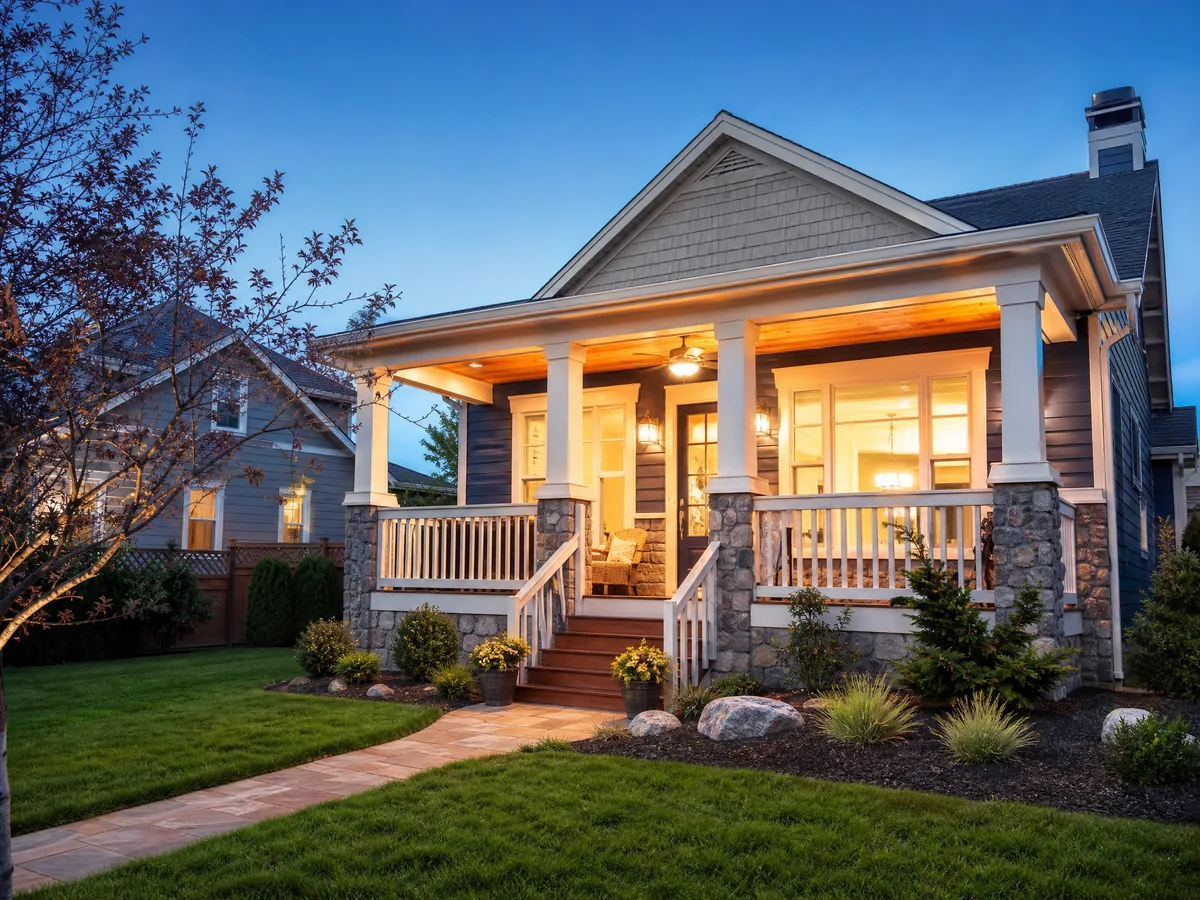
Seattle DSCR loans qualify your rental on cash flow.
Hold your rentals with financing that underwrites the asset, not just you. DSCR as low as 0.75, rates from 5.5% interest-only, and 30-year fixed options for single properties or whole portfolios. The King County yield story favors the south county cities over Seattle proper, and Washington's new statewide rent cap changes what you can raise on a sitting tenant, not what you can charge a new one. Business-purpose only, and rates and structure are set in underwriting.
Typical figures, subject to underwriting and market conditions. Not a commitment to lend.
How it works
No tax returns or personal income docs in most cases. We qualify on the property's cash flow, so you can scale your portfolio without the paperwork drag of conventional lending.
Does Washington's new rent cap mean I can't raise rents on a Seattle DSCR rental?
You can raise rent on a vacancy by any amount; the cap only limits what you can raise on a sitting tenant. Washington's HB 1217 (RCW 59.18.700) caps rent increases on an existing tenancy at the lesser of 7% plus CPI or 10% in any 12-month period, with no increase at all in a tenancy's first 12 months. Commerce publishes the number annually: 9.683% for calendar 2026, 10% for 2027. RCW 59.18.700(1)(b) is explicit that a landlord may reset rent to market once a tenant vacates, so a turnover unit is not capped. A building whose first certificate of occupancy issued 12 or fewer years before the notice is exempt from the cap entirely, which is a genuine underwriting advantage for a newer Seattle-area build. This is statewide law, not a Seattle-only ordinance, and it applies whether the property is a detached house or a multifamily building; underwrite the trajectory of a sitting tenancy against it, not last year's rent roll.
Where in King County does a DSCR rental actually cash flow?
The south county cities, not the Seattle core. Comparing Zillow's June 2026 mid-tier home value against its observed rent index by city, gross yield runs 2.24% in Bellevue and 3.08% in Seattle proper, against 3.44% in Renton, 3.60% in Kent, 3.79% in Auburn, and 3.81% in Federal Way. Property tax alone consumes roughly a third of gross rent on a Seattle-proper hold, so a DSCR file underwritten purely on Seattle city limits is fighting the market's own arithmetic. That is not a knock on Seattle as an investment, since the case there leans on appreciation and the new construction upzone rather than coupon; it is a reason to price the south King corridor into the same DSCR search.
What Seattle-specific landlord rules should I underwrite before closing on a rental inside city limits?
Seattle layers several city rules on top of the state rent cap, and they change the DSCR file's cost and timing assumptions. A rent increase inside Seattle needs 180 days of advance written notice, triple the statewide 60-day default. The Economic Displacement Relocation Assistance rule triggers on any housing cost increase of 10% or more in 12 months for an income-qualified tenant, and the city advances three months of housing cost to that tenant and bills the landlord for it. The Just Cause Eviction Ordinance limits how and when a tenancy can end, and the First-in-Time rule requires filling a vacancy with the first qualified applicant in the order applications were screened, not the applicant a landlord prefers. Every unit also has to register under the Rental Registration and Inspection Ordinance and pass inspection on a five-to-ten-year cycle. None of this applies to south King suburbs the same way; each city sets its own layer, so check the specific municipal code before underwriting a Seattle-proper file.
Does the property tax bill differ much between King County cities I'm considering for a DSCR rental?
Yes, and the spread is wide enough to move a DSCR ratio on its own. King County's 2026 collective levy rates run from 0.65% of value in Mercer Island up to 1.28% in Tukwila, with Seattle at 0.99%, Renton at 1.06%, and Bellevue at the low end of the higher-value cities at 0.74%. Rates look low against a state like Texas, but they apply to values three to four times higher, so the dollar bill is not low: a mid-tier Seattle house near $861,000 carries roughly $8,536 a year in property tax on our arithmetic against the published rate. King County's total 2026 levy also rose about 10% countywide on values that rose only 5.4%, driven by voter-approved measures rather than the assessed value itself, so a DSCR pro forma that escalates tax at a flat 1% a year is understating it in a levy year. Pull the parcel's actual levy code before locking a tax line into the DSCR ratio; talk to your CPA about how a given city's rate interacts with your hold plan.
Can I put a short-term rental on a Seattle DSCR loan?
You can, but Seattle's operator license caps how many units you can run this way, so it works as a small piece of a portfolio rather than a strategy on its own. SMC chapter 6.600 limits a short-term rental operator license to one dwelling unit, or two units if one is the operator's documented primary residence, verified with proof like tax returns or a lease or mortgage. The license fee is $75 per dwelling unit per year. That cap means a Seattle STR portfolio is not buildable inside city limits the way it might be in a market without the rule; an investor who wants STR scale should be looking at south King suburbs and checking that city's own code, since Seattle's neighbors were not confirmed to have the same restriction. Our DSCR rental loan qualifies on the property's cash flow either way, short-term or long-term, once you know what the local license allows.
Does Seattle treat a small landlord differently from a portfolio owner?
Yes, at a specific door count. Seattle's winter eviction protection, which gives an income-qualified tenant a defense against being required to vacate between December 1 and March 1, only applies to landlords who own more than four rental housing units in Seattle. An owner with four or fewer doors in the city sits outside that rule; the fifth door brings the whole portfolio inside it. Every registered rental also carries its own Rental Registration and Inspection Ordinance renewal every two years and an inspection on a five-to-ten-year cycle, at $126 per property plus $31.50 per additional unit as of January 2026, so registration cost and compliance obligations scale with door count too. A DSCR borrower building a Seattle portfolio should plan around the fifth-unit threshold, not just the loan terms.
What credit score do I need for a DSCR loan in Seattle?
Credit starts at 640 on this program. DSCR is not a no-credit loan, but the property does most of the work: we qualify on the rent, with DSCR from 0.75, and there are no W-2s and no tax returns in the file. There is no hard credit pull to start. If your score sits near the line, the usual answer is lower leverage rather than a decline. Because a Seattle-proper hold leans on appreciation more than coupon, a thin ratio there gets more scrutiny than the same file in the South King corridor. Subject to underwriting.
How much do I need to put down on a Seattle DSCR rental?
At least 20% of the purchase. Max leverage is up to 80% LTV, so on a $650,000 Kent purchase, close to that city's $654,483 mid-tier value, that is up to $520,000 from us and $130,000 from you (650,000 x 80% = 520,000), before closing costs. Leverage tightens as the DSCR ratio tightens, so a lower-yield Seattle or Bellevue file may need more down than a South King file at the same price. Subject to underwriting.
What is the smallest DSCR loan you will write in Seattle?
$100,000, and the program runs up to $3M. The floor is rarely the problem in King County. The ceiling can be: a mid-tier Seattle house near $861,000 still sits comfortably inside the range, but a higher-value Eastside purchase can push past it, and that is a conversation to have before you go under contract. Terms run 30-year fixed or 5, 7 and 10-year ARM. Subject to underwriting.
Is there a prepayment penalty on a Seattle DSCR loan?
Prepay is a structure you choose, not a fixed penalty we impose. This program offers flexible prepayment structures, and the shape of it is set with the rest of your terms in underwriting. Pick it against your actual hold plan. If you expect to sell into a turnover, where rent can reset to market because the statewide cap only limits increases on a sitting tenant, a shorter prepay period is usually worth pricing. Subject to underwriting.
More Rental / DSCR questions, answered on the program page
Local rules move. Every tax rate, fee, ordinance and market figure here comes from a primary source and carries the date we read it, and we correct them as the rules change. Where a number is mid-change or we could not verify it, we say so rather than guess. Before you commit a budget, confirm anything that drives it with the city or county, and talk to your attorney or CPA on questions of law or tax.
Published by USA Mortgage Funding, LLC, NMLS #152588. Researched from primary sources by our team, drafted with AI assistance, and every figure checked against its source before publishing. Where an answer rests on a public record, that record is linked under it. Figures read on 2026-08-15.
Funding Seattle deals fast.
Get real terms, usually same day. No obligation, no hard credit pull to start.