
Direct private lending in most states
Call us anytime at 512-617-9400
Apply now
Program 04

CRE Bridge in Seattle

CRE bridge loans for Seattle office and multifamily repositioning deals.

We fund commercial bridge loans up to $10M at up to 75% LTV, with interest-only payments over terms up to 24 to 36 months. Seattle's downtown office market carries real dislocation, the kind that makes repositioning and conversion debt the live trade here. Washington's graduated excise tax, plus King County's flat local add-on, is a real cost to model into any exit. Business-purpose only, and every structure is set in underwriting.
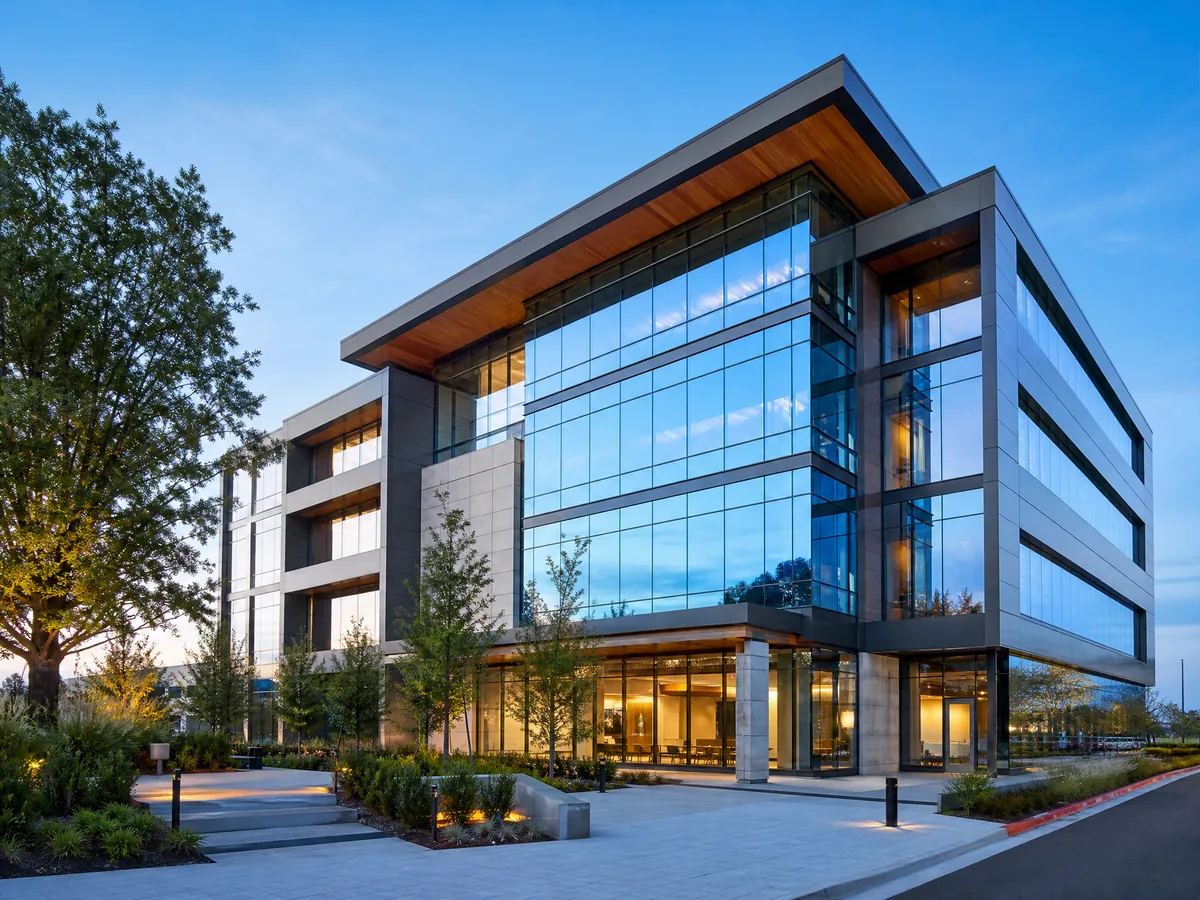
CRE Bridge in Seattle, WA from USA Mortgage
$10M
max loan
24-36 mo
terms
All types
property
Cash-out
available

Typical figures, subject to underwriting and market conditions. Not a commitment to lend.

How it works

Use bridge capital to reposition an asset, buy out a partner, or stabilize before a refinance. We move quickly on commercial deals that banks find too time-sensitive. When the asset is stabilized, we refinance you out of the bridge and into long-term permanent debt, which we also place in house, so you have a clear exit from day one.

Who it's for
Value-add commercial real estate
Repositioning and lease-up
Partner buyouts
Pre-stabilization holds
Typical terms
Loan amountUp to $10M
Max leverageUp to 75% LTV
TermUp to 24 to 36 months
RateFrom 9.00%*
PaymentsInterest-only
StructureBridge or cash-out
Apply now

*Typical terms, subject to underwriting and market conditions.

Run your CRE Bridge numbers.

Pressure-test the deal in seconds with our free bridge loan calculator, no sign-up required.

Open the Bridge Loan calculator
Local FAQ

CRE Bridge in Seattle, answered.

How bad is Seattle's downtown office vacancy, and does that make bridge debt too risky there?
Vacancy is high and still rising, but the sublease glut is finally shrinking, which is the more useful signal. Downtown Seattle office vacancy ran 35.8% in Q2 2026, up from 34.6% a year earlier, against a Puget Sound regional office vacancy of 23.4%. Sublease space stood at 4.72M square feet, the lowest share of total availability since 2018, meaning direct landlords are absorbing more of the pain than sublandlords now. A repositioning or recapitalization bridge underwritten on a real lease-up plan, not on the headline vacancy number alone, is the deal that pencils in this market. Our CRE permanent program is the natural takeout once the asset is stabilized.

Sources: kidder.com

Is there a tax incentive for converting a vacant Seattle office building to housing, and does it change how we structure the bridge exit?
Yes: Seattle adopted a sales and use tax deferral for qualifying office-to-residential conversions, and it has real conditions attached. Under SMC chapter 5.75, effective from Council Bill 120937 on 2025-02-11, a project must convert underutilized commercial space, deliver primarily multifamily housing with at least 10% of units affordable, complete construction within three years of conditional approval, and hold the qualifying use for 10 years or repay the deferred tax. That 10-year hold period is worth building into the exit plan before the bridge closes, not after. Talk to your CPA about how the deferral interacts with your entity's own tax position.

Sources: seattle.gov

Is Seattle's real estate excise tax graduated at the city level too, and what does it actually cost on a CRE exit?
No, and getting this wrong overstates your exit cost in the wrong direction. A claim circulates that Seattle runs its own graduated local excise tax on top of the state rate. It does not: every King County jurisdiction, including Seattle, levies a flat 0.50% local real estate excise tax, per the Washington Department of Revenue's local rate table. The graduated brackets belong to the state rate alone: 1.10% up to $525,000, 1.28% from $525,000.01 to $1,525,000, 2.75% from $1,525,000.01 to $3,025,000, and 3.00% above that. On a $3,000,000 CRE sale, the two layers together work out to roughly $74,138, about 2.47% of price. Build that into the exit math on any bridge deal above the state's first threshold.

Sources: dor.wa.gov

Are Seattle multifamily fundamentals strong enough to support a bridge-to-permanent strategy right now?
Yes, and the supply picture is the reason. Seattle multifamily vacancy ran 6.7% in Q2 2026, down from 7.0% a year earlier, while new deliveries fell 53% year to date compared with the same period in 2025. The average sale price ran $276,610 per unit at a 5.7% cap rate. A supply cliff paired with improving vacancy is the setup that supports long-hold permanent debt once a bridge-financed asset is stabilized. That does not carry over to office, which is a different trade with a different vacancy story.

Sources: kidder.com

Is Seattle industrial space tight enough to underwrite a value-add bridge deal on rent growth alone?
Not right now, so underwrite lease-up, not compression. Industrial vacancy in the Seattle market ran 9.5% in Q2 2026, up from 8.9% at year-end 2025, meaning supply is outrunning demand rather than the reverse. A bridge loan on an industrial asset here needs a credible leasing plan behind the numbers, not an assumption that vacancy keeps tightening on its own.

Sources: kidder.com

If a Seattle repositioning deal triggers Mandatory Housing Affordability, what fee should we budget into the bridge?
A per-square-foot payment that varies by zone and rises every year, so use the current schedule, not last year's. Where a Council-approved rezone increased height or FAR, Seattle's Mandatory Housing Affordability program attaches an in-lieu payment. For the period running 2026-03-01 through 2027-02-28, that payment runs $7.87 to $12.59 per square foot in Low fee areas, $11.02 to $19.68 in Medium, $12.59 to $22.83 in High, and up to $32.66 per square foot in Downtown and select South Lake Union zones. The schedule is CPI-escalated annually, so a project underwritten on an older rate table is underwritten wrong. Confirm the current figures with the City before you finalize a construction budget.

Sources: seattle.gov

Is there a minimum credit score for a Seattle bridge loan?
No minimum score on this program. We run credit, but a bridge loan is asset-based, so the score carries far less weight than it would at a bank. The asset, the equity, and the plan carry the file. Weaker credit is usually answered with lower leverage rather than a decline, and there is no hard credit pull to start. On a downtown Seattle office deal, the thing we underwrite hardest is the lease-up plan, not the borrower's score. Subject to underwriting.

Sources: kidder.com

How much equity do I need in a Seattle repositioning deal?
At least 25% of value. Max leverage is up to 75% LTV, so on a $4,000,000 Seattle multifamily basis that is up to $3,000,000 from us and $1,000,000 from you (4,000,000 x 75% = 3,000,000). Payments are interest-only over terms up to 24 to 36 months, and the program runs to $10M. A weaker lease-up story prices at lower leverage than the ceiling. Subject to underwriting.

More CRE Bridge questions, answered on the program page

Resources

Guides for CRE Bridge

Browse all guides
Compare

CRE Bridge vs. other options

More in Seattle

Other programs in Seattle

All Seattle loan programs
About the local figures on this page

Local rules move. Every tax rate, fee, ordinance and market figure here comes from a primary source and carries the date we read it, and we correct them as the rules change. Where a number is mid-change or we could not verify it, we say so rather than guess. Before you commit a budget, confirm anything that drives it with the city or county, and talk to your attorney or CPA on questions of law or tax.

Published by USA Mortgage Funding, LLC, NMLS #152588. Researched from primary sources by our team, drafted with AI assistance, and every figure checked against its source before publishing. Where an answer rests on a public record, that record is linked under it. Figures read on 2026-08-15.

Funding Seattle deals fast.

Get real terms, usually same day. No obligation, no hard credit pull to start.

Apply nowTalk to us