
Direct private lending in most states
Call us anytime at 512-617-9400
Apply now
Program 10

SBA Financing in St. Louis

SBA loans help St. Louis business owners buy their building.

When your business is ready to own its building instead of renting one, we place SBA 7(a) and 504 financing through more than 20 partner lenders, matching your deal to the program and terms that fit it. USA Mortgage arranges and shops SBA financing; we are not ourselves an SBA lender. In St. Louis, that means owner-occupied buildings from a Central West End medical office to a north county industrial building, whether the property sits inside the city limits or in a St. Louis County municipality with its own tax rules. Business-purpose only, and every file is placed with a lender who underwrites to SBA's occupancy and structure requirements.
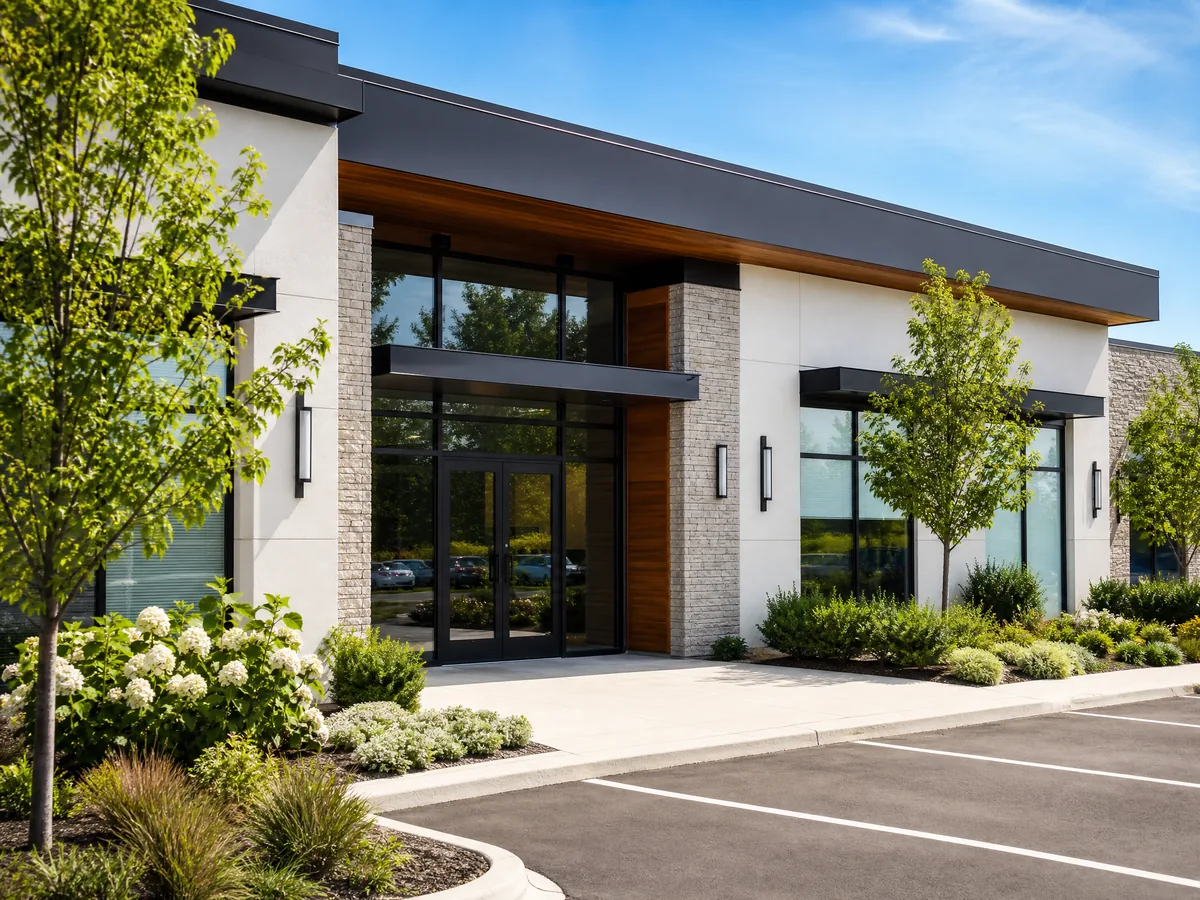
SBA Financing in St. Louis, MO from USA Mortgage
7(a) & 504
programs
90%
financing
25-yr
terms
20+
SBA lenders

Typical figures, subject to underwriting and market conditions. Not a commitment to lend.

How it works

SBA loans offer low down payments and long amortizations for owner-occupied property and business acquisition. USA Mortgage arranges and places SBA financing through our network of partner lenders; we are not ourselves an SBA lender. We shop your file across that network so you get the strongest approval.

Who it's for
Owner-occupied commercial RE
Business acquisition
Real estate plus equipment
Partner or stock buyout
Typical terms
Loan amount$350K to $5M+
FinancingUp to 90%
TermUp to 25 years
RateMarket SBA rates
PropertyOwner-occupied CRE
Programs7(a) and 504
Apply now

*Typical terms, subject to underwriting and market conditions.

Run your SBA Financing numbers.

Pressure-test the deal in seconds with our free sba loan calculator, no sign-up required.

Open the SBA Loan calculator
Local FAQ

SBA Financing in St. Louis, answered.

How is an SBA-financed building taxed if it sits inside the City of St. Louis?
At roughly double the rate a residential building pays. Owner-occupied commercial property in the City of St. Louis is assessed in the 32% commercial subclass at a total rate of $9.7522 per $100 of assessed value, an effective 3.121% of market value, against 1.556% for the 19% residential subclass at $8.1867 per $100. A commercial-classified building also carries the city's Merchants and Manufacturers inventory replacement tax layered into that $9.7522 rate; a residential-classified building does not. Confirm your building's subclass with the city Assessor before sizing the property tax line in your SBA deal.
Can I get a property tax abatement on a building I buy or build for my own business in the City of St. Louis?
Possibly, but only if you apply before construction or rehab begins. The city can freeze the assessment on improvements at the pre-development level, typically for 5 to 10 years, under Chapter 353 or Chapter 99/LCRA, but the application has to be filed before work starts and needs the support of the district's alderman and the neighborhood organization. Filing after the fact forfeits it entirely, so raise the question with your SBA lender and the city before you close on the property, not after the renovation is underway.
If my SBA loan funds new construction or a major renovation in St. Louis, when does the higher tax bill start?
Not until the next odd-year reassessment, which lands January 1, 2027. Missouri reassesses property every odd year, and improvements are valued as though completed as of that preceding odd-year date, so a building finished or substantially renovated in 2026 carries at its pre-improvement assessment through the rest of that year before resetting at the 2027 valuation. Build that timing into your carrying-cost projection for an owner-occupied build-out financed by an SBA 504 or 7(a) loan.
Does St. Louis city's earnings tax apply to the business I'm financing with an SBA loan?
If your business operates inside the City of St. Louis, plan on the question. The city charges a 1% earnings tax on businesses located in or performing work within the city, collected through Form E-234, and the filing requirement reaches partnerships and LLCs operating a business or professional office in the city, apportioning net profits on a three-factor formula where the business also operates elsewhere. St. Louis County has no equivalent earnings tax, which is a real reason some owner-occupants weigh a county location for their SBA-financed building, though the county has its own commercial tax rates to weigh in return. Confirm your specific filing obligation with the Collector of Revenue.
Where in St. Louis are SBA owner-occupied buyers most likely to find real demand for their building?
Around the anchors that are actually growing: the medical corridor, Cortex, and the Boeing expansion in north county. BJC Health and Washington University anchor the Central West End medical corridor, the 200-acre Cortex Innovation Community operates as a nonprofit Chapter 353 master developer in the central corridor, and Boeing won the F-47 fighter contract in March 2025 and is building a new facility near Lambert as part of a north St. Louis County expansion tied to a guarantee of new jobs. An owner-occupied medical office, lab, or industrial building financed with an SBA loan near one of these anchors is underwriting against real, verifiable demand rather than a general market story.
Does the St. Louis County municipality I pick change the property tax on my SBA-financed building?
Yes, and the difference is real money, not a rounding error. Missouri lets taxing authorities that sit wholly in St. Louis County publish a separate levy for each property subclass, so the commercial rate and the residential rate in the same district are legally different numbers. On 2025 general-revenue rates, Clayton's commercial levy runs 0.5770 per $100 against 0.4540 residential, while Florissant levies no municipal property tax at all, 0.0000 across every subclass. Weigh the specific municipality, not just St. Louis County as a whole, when you compare locations for an owner-occupied building.
FAQ

SBA Financing questions, answered.

What is the difference between an SBA 7(a) and a 504 loan?
The 7(a) is the flexible, all-purpose SBA loan: owner-occupied real estate, business acquisition, partner buyouts, equipment, and working capital under one note. The 504 is purpose-built for owner-occupied commercial real estate and heavy equipment, with a long-term fixed rate and a low down payment. We place both and match your scenario to the right one.
How much can I borrow, and how much do I put down?
SBA loans go up to $5M, with larger total project sizes possible on the 504 since a bank funds part of the deal. Down payments are low, often around 10%, rising to 15% to 20% for startups or special-purpose properties. On the right deal we finance up to 90%.
What are the terms and rates?
Terms run up to 25 years for real estate, which keeps payments low. 7(a) rates are usually variable and tied to the Prime rate, while the 504 carries a long-term fixed rate on the CDC portion. Because we place your file across 20+ SBA lenders, we shop your scenario for the strongest terms.
Do I have to occupy the property?
Yes. SBA real estate loans require owner-occupancy, at least 51% of an existing building or 60% of new construction. That requirement is what separates SBA-eligible deals from pure investment property, which fits our other programs.
Do I have to personally guarantee an SBA loan?
Yes. The SBA requires a personal guarantee from anyone who owns 20% or more of the business, and on real-estate deals the loan is also secured by the property. This is standard on every SBA loan, not a sign of a weak file, and it is part of why SBA financing offers low down payments and long terms. We will walk you through exactly what you are signing before you commit.
How long does an SBA loan take to close?
SBA loans are slower than our bridge products, typically 30 to 90 days, because of the documentation and approval process. The tradeoff is a much lower long-term cost. If you need speed now, we can bridge the deal and refinance into SBA later.
What do you need to get started?
Generally two to three years of business and personal tax returns, business financials, a personal financial statement, and details on the property or business. We will tell you exactly what is needed and place your file with the best-fit lender in our network.
See all frequently asked questions
Resources

Guides for SBA Financing

Browse all guides
Compare

SBA Financing vs. other options

More in St. Louis

Other programs in St. Louis

All St. Louis loan programs
About the local figures on this page

Local rules move. Every tax rate, fee, ordinance and market figure here comes from a primary source and carries the date we read it, and we correct them as the rules change. Where a number is mid-change or we could not verify it, we say so rather than guess. Before you commit a budget, confirm anything that drives it with the city or county, and talk to your attorney or CPA on questions of law or tax.

Funding St. Louis deals fast.

Get real terms, usually same day. No obligation, no hard credit pull to start.

Apply nowTalk to us