
Direct private lending in most states
Call us anytime at 512-617-9400
Apply now
Program 03

Ground-Up Construction in St. Louis

Ground up construction loans build St. Louis land bank lots.

Ground-up construction loans fund the lot and the vertical build for St. Louis spec builders and developers, up to 70% LTV and 85% of cost, with draws that keep pace with the job. The city's Land Reutilization Authority holds most of the dirt supply inside the city limits, so a St. Louis build often starts with a public-inventory lot rather than an MLS listing. The county has no equivalent land bank, and its occupancy rules run city by city, so a build in St. Louis County needs its own inspection check before you set a schedule. Business-purpose only, and every structure is set in underwriting.
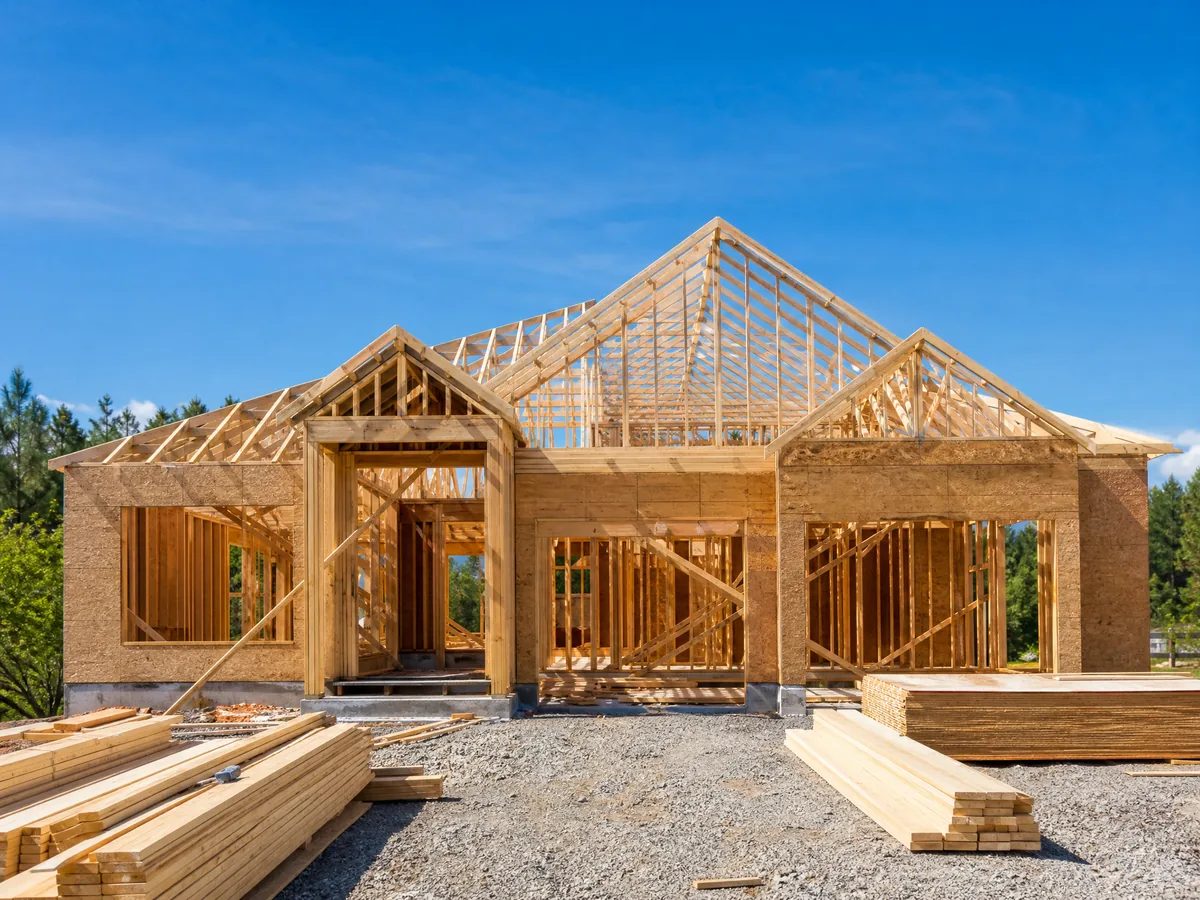
Ground-Up Construction in St. Louis, MO from USA Mortgage
70%
max LTV
85%
of cost
Most states
funding
$5M
max loan

Typical figures, subject to underwriting and market conditions. Not a commitment to lend.

How it works

We finance both the land and the vertical construction, with a draw schedule built around your timeline. Experienced builders can access higher leverage on cost.

Who it's for
Spec home builders
Developers and operators
Lot purchase or teardown
Build-to-rent strategies
Typical terms
Loan amountUp to $5M
LeverageUp to 70% LTV / 85% LTC
Term12 to 24 months
DrawsPer build schedule
RateFrom 10.00%*
UseSpec or build-to-rent
Apply now

*Typical terms, subject to underwriting and market conditions.

Run your Ground-Up Construction numbers.

Pressure-test the deal in seconds with our free construction loan calculator, no sign-up required.

Open the Construction Loan calculator
Local FAQ

Ground-Up Construction in St. Louis, answered.

Where does a spec builder actually find lots in the City of St. Louis?
The Land Reutilization Authority, more than anywhere else. The LRA holds roughly 9,000 properties inside the city, about 85 percent of them vacant lots, and it resumed taking offers in August 2025 after pausing to assess tornado damage. That public inventory is the city's dirt supply in a way no private listing service matches, so a ground-up plan here should start with the LRA's own real estate pages, not a general search.
Does the City of St. Louis publish a building permit fee or plan-review timeline I can budget to?
Not that this research could verify, so do not budget to a number you have not confirmed. Neither the City of St. Louis nor St. Louis County publishes a permit fee schedule, plan-review timeline, or impact fee that this pass located. Call the city's Building Division or your county municipality's building department before you lock a construction budget line, and treat any fee figure you get informally as unconfirmed until it is in writing.
If I want the city's tax abatement on a new build, when do I have to apply?
Before you break ground, not after. The City of St. Louis abates by freezing the assessment on improvements at the pre-development level, typically for 5 to 10 years, under Chapter 353 or Chapter 99 and LCRA, but the application has to go in before construction begins and needs the support of the district's alderman and the neighborhood organization. Apply late and you forfeit the freeze entirely: there is no retroactive fix once the foundation is in.
Does my vacant lot get taxed as residential while I'm carrying it before the build starts?
Not automatically. Missouri classifies vacant land on its "immediate most suitable economic use," not on what you intend to build. The assessor weighs prior use, zoning, legal restrictions, utilities, size and access, among other factors, to land on a subclass. A dirt lot does not default to the 19 percent residential ratio just because a house is coming; get the assessor's read on the parcel's current classification before you model carry costs.
How long does the occupancy inspection actually take once my new build in the city is ready?
Plan for two to three weeks, not a same-week sign-off. The city's Housing Conservation District inspection can be scheduled as early as 3 business days out and as late as 15, and a failed inspection restarts that window. Since 100 percent of the city sits inside a Housing Conservation District, every completed build in city limits goes through this step; build the lag into your draw schedule and your exit timeline rather than assuming a quick close-out.
I'm building in St. Louis County instead of the city. Is the occupancy process the same?
No, and there is no single county rule to plan around. Each St. Louis County municipality runs its own occupancy regime. University City charges a $25 non-refundable application plus $60 per unit for the inspection; Florissant triggers an occupancy inspection on any change of occupancy, including a future sale, for a $50 fee, and requires every code violation found to be corrected even if the transfer does not go through. Confirm the rule with the specific municipality your lot sits in before you promise a closing date to a buyer.
FAQ

Ground-Up Construction questions, answered.

How much of my construction project will you finance?
We fund new construction up to 70% of value and up to 85% of total cost (land plus build), in most states, on loans up to $5M. Experienced builders reach the higher end of leverage. We finance both the lot and the vertical construction within those caps.
Will you finance the land or lot purchase?
Yes. Lot acquisition is funded as part of your loan-to-cost. If you already own the lot, that equity can serve as your down payment, which often lets us fund most or all of the build cost.
How does the draw schedule work?
Construction funds are released in draws as milestones are completed and verified, not handed over at closing. You submit your budget and scope of work up front, complete a phase, request a draw, and we release that portion after inspection. You pay interest on funds as they are drawn.
What are the rates and terms on a ground-up loan?
Our construction pricing starts around 10%, interest-only, on terms of 12 to 24 months. Market ground-up rates generally run 9% to 12% with 1 to 3 points. Your pricing and leverage depend on your build experience and the strength of the project.
Do you lend to first-time builders?
We consider builders at all levels, though a track record helps your leverage and rate. A first-time builder should expect to bring a strong general contractor, a detailed budget, and typically a larger equity contribution. A well-documented project goes a long way.
What do you need to quote a construction loan?
The lot cost or current value, your construction budget and scope of work, the projected after-built value, and your build experience. With those we can size the loan against both cost and completed value and send you terms.
See all frequently asked questions
Resources

Guides for Ground-Up Construction

Browse all guides
More in St. Louis

Other programs in St. Louis

All St. Louis loan programs
About the local figures on this page

Local rules move. Every tax rate, fee, ordinance and market figure here comes from a primary source and carries the date we read it, and we correct them as the rules change. Where a number is mid-change or we could not verify it, we say so rather than guess. Before you commit a budget, confirm anything that drives it with the city or county, and talk to your attorney or CPA on questions of law or tax.

Funding St. Louis deals fast.

Get real terms, usually same day. No obligation, no hard credit pull to start.

Apply nowTalk to us