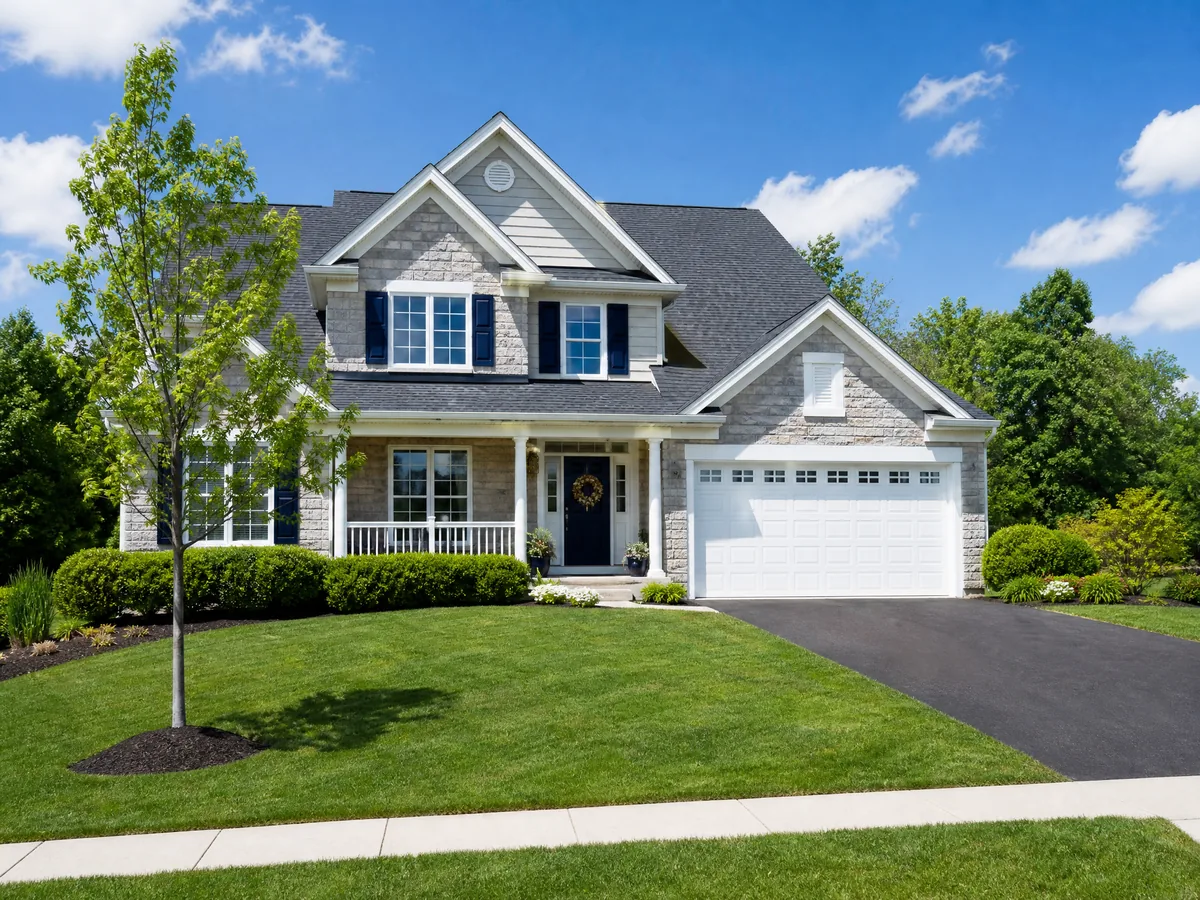
For Houston buy and hold, conventional investment property loans.
Standard, competitively priced financing for non-owner-occupied investment property when your file fits the box. Often the lowest-cost option for a long-term hold, in exchange for full documentation. Houston adds flood and windstorm questions the seller's policy may never have answered. We'll compare it against DSCR so you take the structure that fits; business-purpose only, subject to underwriting.
Typical figures, subject to underwriting and market conditions. Not a commitment to lend.
How it works
For investors who qualify conventionally, this is usually the lowest-cost long-term money on a buy-and-hold. We help you weigh it against our DSCR and bank-statement programs so the loan matches your file and your goals.
What do property taxes actually run on a Houston investment property?
Budget the combined all-entity rate, not one line on the bill. Inside Houston city limits the combined rate ran roughly 2.1% of taxable value on 2025 rates, and a typical bill splits out to about 43% Houston ISD, 26% City of Houston and 19% Harris County, with the balance in smaller districts. That is a directional figure from rate aggregators, so pull the actual rate for the address from the Harris County Tax Office or the appraisal district before you underwrite it. We do not publish combined effective rates for Fort Bend or Montgomery County, because we could not source them from those appraisal districts, and a number we cannot stand behind is worse than no number. On a conventional file the tax escrow feeds straight into your qualifying ratios, so get the real one early and have your CPA confirm how it lands on your return.
How much does a MUD district add to the carry in Katy, Cypress or Fort Bend?
Enough to change the deal. A Municipal Utility District is a special-purpose taxing district that financed the water, sewer and drainage infrastructure in most newer Houston-area subdivisions, and it levies its own ad valorem tax on top of the county, ISD and city rates. Commonly quoted MUD rates run roughly $0.20 to $0.95 per $100 of assessed value, which is why a Katy, Cypress, Fort Bend or Montgomery County rental can carry a total rate near 3% while a house inside the Loop sits closer to 2.1% on 2025 rates. Those quoted ranges come from agent commentary, not from the districts, so treat them as a planning range and pull the actual rate for the district from the Texas Comptroller special-district data or the district's own site. One thing that works in your favor on a long hold: MUD rates decline over time as the original bonds amortize.
Does the 20% appraisal cap protect my Houston rental?
For now, and only until the end of this year as the law stands. Texas Tax Code section 23.231 caps the annual increase in appraised value on non-homestead real property at 20%, plus the value of new improvements, for properties at or below a threshold that indexes annually and was $5 million for tax year 2024. It took effect January 1, 2024 and it expires December 31, 2026 unless the Legislature extends it. The separate 10% homestead cap never applied to investment property in the first place, so if you buy from an owner-occupant, the bill you see during diligence can reflect years of capped value and your go-forward number resets toward market. If you are modeling a 2027 hold on a Houston rental, do not assume the circuit breaker survives. Talk to your CPA about your specific situation.
That depends on the map, and the map is moving. Only about 1 in 7 Harris County households carries an NFIP policy at all, across roughly 262,391 active policies averaging $931 a year, so a seller with no flood coverage tells you very little about the risk. The proposed MAAPnext maps would more than double the number of Harris County properties in the 100-year floodplain, from about 158,500 to about 330,000, though the maps still face months of review. Under Risk Rating 2.0 FEMA prices each property on more than 30 property-specific factors rather than mainly on its mapped zone, so the map change drives the mandatory-purchase trigger while the rating engine drives the premium. The group with a guaranteed new cost is owners newly mapped into the 100-year floodplain who hold a federally backed mortgage and carry no policy, potentially more than 100,000 properties, likely at $1,000 or more a year. Properties in the 500-year floodplain face no mandatory purchase requirement. Carry a flood premium in your escrow assumption on any Houston file being remapped, even if the seller's current policy shows none.
Do I need a separate windstorm policy on a Houston-area rental?
Only on the coastal edge of the metro. TWIA, the residual windstorm market, covers the 14 first-tier coastal counties plus the part of Harris County east of Highway 146 that lies within listed city limits, which reaches parts of Pasadena, La Porte, Seabrook and Kemah. Most of the metro, including Katy, Cypress, Spring, Sugar Land, The Woodlands and the bulk of Houston, is outside that territory and buys wind coverage in the standard market. TWIA implemented a 0% rate change for 2026 policies. If your property is TWIA-eligible, the certificate of code compliance matters: a TDI WPI-8 or WPI-8-E, or a TWIA WPI-8-C, is required, and on new construction or a substantial rehab in the Pasadena area, no WPI-8 can mean no policy and no closing. Confirm eligibility for the exact address during diligence so the insurance escrow in your qualifying payment is the real one.
Conventional or DSCR on a Houston rental right now?
With rents flat, documented income is often the file that clears the ratio test. Median Houston single-family rent was $1,918 in July 2026, flat month over month and down slightly year over year, while multifamily occupancy sat at 88.1% in the second quarter of 2026 with 13,066 units under construction and 4,719 delivered in the quarter alone. New apartment lease-up concessions compete directly with a Class B single-family rental in the same submarket, which is why we stress Houston rent assumptions rather than appreciation. That pressure lands on the debt service coverage ratio in a DSCR loan. If your tax returns support the file, conventional financing qualifies on you instead of on a rent number that may not hold, and it is usually the lower long-term cost. Send us the address and both sets of numbers and we will show you the two side by side.
What do I put down, with the roughly 2.1% Houston tax escrow on top?
20% of the purchase at maximum leverage. Conventional investment financing runs up to 80% LTV, so on a $300,000 Houston rental that is up to $240,000 financed and $60,000 from you (300,000 x 80% = 240,000). Budget the escrow on top of that, because inside Houston city limits the combined tax rate ran roughly 2.1% of taxable value on 2025 rates and a MUD subdivision carries more. It is non-owner-occupied only, on a 30-year fixed or ARM term. Subject to underwriting.
Is a 580 score really enough for a Houston conventional investment loan?
580 is where this program starts. It is the lowest credit floor of the long-term programs we place, and it works because this is a fully documented loan: tax returns and income documents do the heavy lifting rather than the score. A thinner file is usually met with lower leverage rather than a decline. If your returns do not support the file, a DSCR loan qualifies on the rent the property collects instead, at 640 and up. Subject to underwriting.
More Conventional Investment questions, answered on the program page
Local rules move. Every tax rate, fee, ordinance and market figure here comes from a primary source and carries the date we read it, and we correct them as the rules change. Where a number is mid-change or we could not verify it, we say so rather than guess. Before you commit a budget, confirm anything that drives it with the city or county, and talk to your attorney or CPA on questions of law or tax.
Published by USA Mortgage Funding, LLC, NMLS #152588. Researched from primary sources by our team, drafted with AI assistance, and every figure checked against its source before publishing. Where an answer rests on a public record, that record is linked under it. Figures read on 2026-08-12.
Funding Houston deals fast.
Get real terms, usually same day. No obligation, no hard credit pull to start.