
Direct private lending in most states
Call us anytime at 512-617-9400
Apply now
Program 07

Conventional Investment in San Francisco

Conventional investment property loans for documented buy-and-hold investors across San Francisco.

Conventional financing for non-owner-occupied investment property, up to 80% loan-to-value with full documentation, often the lowest-cost long-term money when your file fits the box. The city and the wider five-county metro are moving in different directions, so the price point a conventional loan is financing depends heavily on which side of that split your property sits. Every purchase here also resets the property tax bill to the price you paid, so the escrow line on a conventional file has to be set from the sale price, not the seller's old bill. Business-purpose only, subject to underwriting.
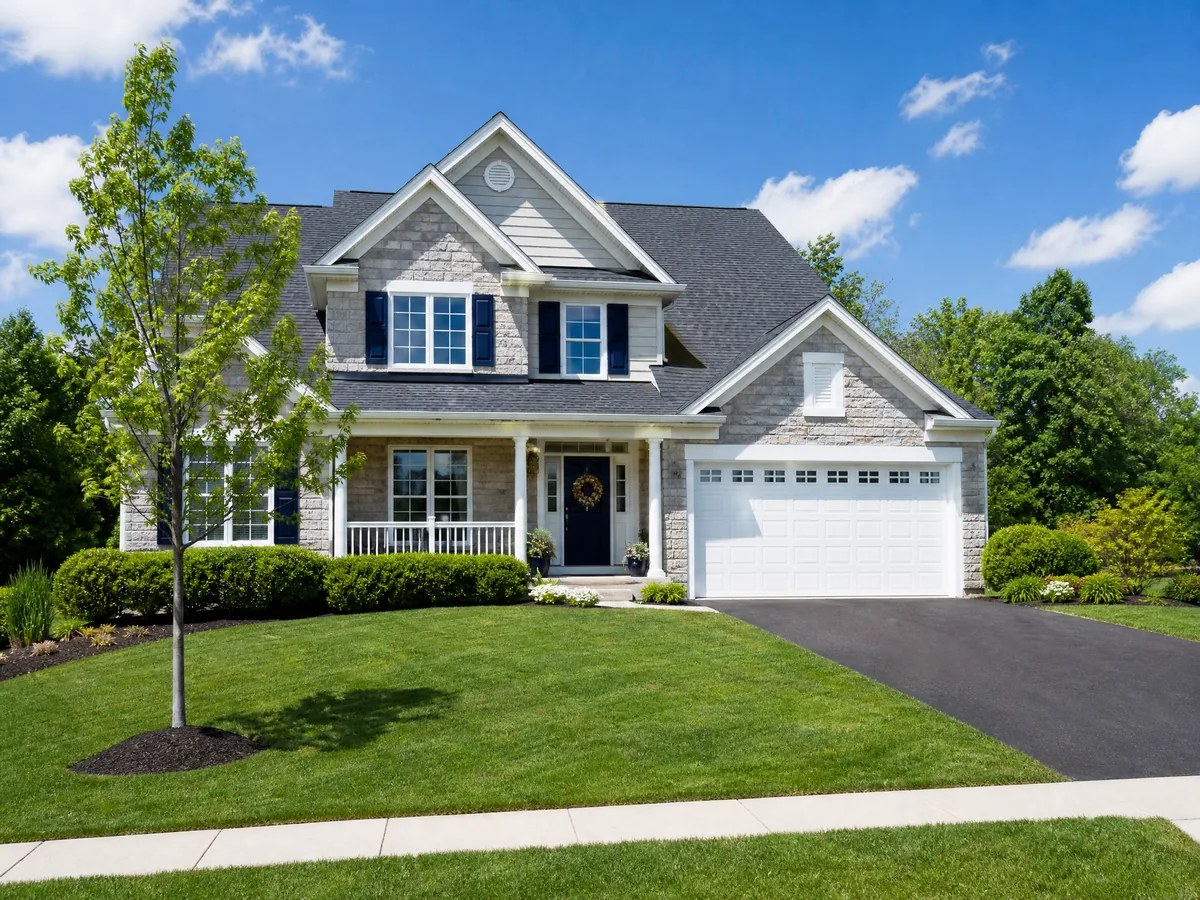
Conventional Investment in San Francisco, CA from USA Mortgage
Non-owner
occupied
30-yr
fixed avail.
80%
max LTV
Low
rates

Typical figures, subject to underwriting and market conditions. Not a commitment to lend.

How it works

For investors who qualify conventionally, this is usually the lowest-cost long-term money on a buy-and-hold. We help you weigh it against our DSCR and bank-statement programs so the loan matches your file and your goals.

Who it's for
Buy-and-hold investors
Non-owner-occupied 1-4 units
Borrowers who document income
Purchase or refinance
Typical terms
PropertyInvestment, non-owner-occ
Max leverageUp to 80% LTV
Term30-yr fixed / ARM
IncomeDocumented
CreditFrom 580
UsePurchase or refi
Apply now

*Typical terms, subject to underwriting and market conditions.

Run your Conventional Investment numbers.

Pressure-test the deal in seconds with our free dscr calculator, no sign-up required.

Open the DSCR calculator
Local FAQ

Conventional Investment in San Francisco, answered.

San Francisco values are some of the highest in the country. Does that put a conventional investor loan out of reach here?
Not across the metro, but where you buy changes the math a lot. Zillow put the City of San Francisco's mid-tier home value at $1,416,278 in July 2026, but the East Bay flatlands run far lower: Richmond at $610,065, Oakland at $717,798, Concord at $733,409, and Hayward at $831,558. A conventional loan comfortably covers a purchase in those cities; a San Francisco, Berkeley, or Peninsula purchase is much more likely to land above a standard conforming file and into high-balance or non-agency territory. Send us the address and purchase price and we will tell you plainly whether the file is conforming, high-balance, or better suited to one of our non-agency programs. See the California rules behind it.
Gross rental yields here run under 5% almost everywhere in the metro. When does conventional actually beat DSCR?
When your own documented income carries the file, because the property's rent often cannot. Gross yields across this metro's submarkets run from 2.35% in Berkeley to 5.07% in Richmond, and there is no city in the metro where a market-rate purchase covers debt service at typical DSCR pricing without a large down payment. Conventional financing qualifies on your documented income rather than the property's rent coverage, so a lower-yield San Francisco, Berkeley, or Peninsula purchase that would need a large down payment to clear DSCR can still close conventionally if your income file supports it. Compare it against our DSCR program before you pick a structure.
My San Francisco purchase closes in April. What does that do to my first year's tax bill on a conventional loan?
It brings two supplemental tax bills instead of one, on top of the regular cycle. Every purchase here is a change in ownership that resets the assessed value to the price you paid, not the seller's old Proposition 13 basis. When the closing falls between January 1 and May 31, San Francisco issues two supplemental tax bills; a closing from June 1 through December 31 gets one. Bills are mailed within 60 days of the assessment notice. Set your escrow reserve from the purchase price times the applicable rate, not from the seller's prior bill, or the impound account will come up short in exactly the deals where the seller held longest. See the California rules behind it.
Should I underwrite off general Bay Area price trends, or does San Francisco itself move differently?
The city and the wider metro are moving in different directions, and the gap is large. Zillow's mid-tier value for the City of San Francisco was $1,416,278 in July 2026, up 11.6% year over year, while the five-county metro value moved from $1,123,479 to $1,136,810 over the same period, up only 1.2%. A conventional file priced off a metro-wide average will understate what a San Francisco property itself is worth and overstate what an East Bay property is worth. Pull the city or county level number, not the metro blend, before you set a purchase price or a refinance value. See the California rules behind it.
I'm financing conventionally instead of through DSCR. Do I still have to deal with San Francisco's rent control system?
Yes. Rent control attaches to the property, not to how you financed it. Every owner of residential rental property in San Francisco must report to the Rent Board Housing Inventory by March 1 each year, and a rent increase notice is not enforceable without a current license on the effective date of the increase. Owners also owe an annual Rent Board fee of $59.00 per dwelling unit for the 2025-2026 tax year, which expressly covers post-1979 units, condominiums, single-family homes, and vacant units, with half of it collectible from the tenant. Qualifying on your own income rather than the rent roll does not remove these obligations; budget for them regardless of which loan program you use. See the California rules behind it.
My San Francisco investment property has more than $1,000,000 of dwelling coverage. Does that affect my insurance at closing?
It can limit your earthquake deductible options, which is worth knowing before you shop the policy. Homeowners insurance generally does not cover earthquake damage in California, and separate earthquake coverage through the California Earthquake Authority carries deductible tiers of 5%, 10%, 15%, 20%, or 25%. Two categories of home are restricted to the 15%, 20%, or 25% tiers only: homes with a Coverage A dwelling limit above $1,000,000, and pre-1980 homes on a raised or other foundation without a verified retrofit. Both restrictions are common in San Francisco's older, higher-value housing stock, so confirm the deductible tiers your property qualifies for before you lock in coverage for closing. Insuring more than one property across the metro? See how we underwrite a San Francisco Bay Area portfolio. See the California rules behind it.
How much do I need to put down on a San Francisco investment property conventionally?
From 20% of the purchase price, plus closing costs. Maximum leverage is up to 80% LTV on a non-owner-occupied purchase. On a Richmond purchase at that city's July 2026 mid-tier value of $610,065, that is $488,052 from us and $122,013 from you (610,065 x 80% = 488,052). The same 20% against the City of San Francisco's $1,416,278 is a very different check, which is the practical reason a first conventional investment purchase in this metro often starts in the East Bay. Set the escrow line off the price you paid, not the seller's bill. Subject to underwriting.
My credit is in the low 600s. Can I still buy a San Francisco investment property conventionally?
Likely yes. Credit on this program starts at 580. That is lower than most people expect from a documented, agency-style file, and it is worth checking before you assume you need a private loan. The trade-off is that income has to be documented on a conventional file, so tax returns and the rest of the package are part of it. If your score or your paperwork does not fit, weaker files are usually offset with lower leverage rather than declined on our asset-based programs, and there is no hard credit pull to start a conversation. Subject to underwriting.

More Conventional Investment questions, answered on the program page

Resources

Guides for Conventional Investment

Browse all guides
More in San Francisco

Other programs in San Francisco

All San Francisco loan programs
About the local figures on this page

Local rules move. Every tax rate, fee, ordinance and market figure here comes from a primary source and carries the date we read it, and we correct them as the rules change. Where a number is mid-change or we could not verify it, we say so rather than guess. Before you commit a budget, confirm anything that drives it with the city or county, and talk to your attorney or CPA on questions of law or tax.

Published by USA Mortgage Funding, LLC, NMLS #152588. Researched from primary sources by our team, drafted with AI assistance, and every figure checked against its source before publishing. Where an answer rests on a public record, that record is linked under it. Figures read on 2026-08-21.

Funding San Francisco deals fast.

Get real terms, usually same day. No obligation, no hard credit pull to start.

Apply nowTalk to us