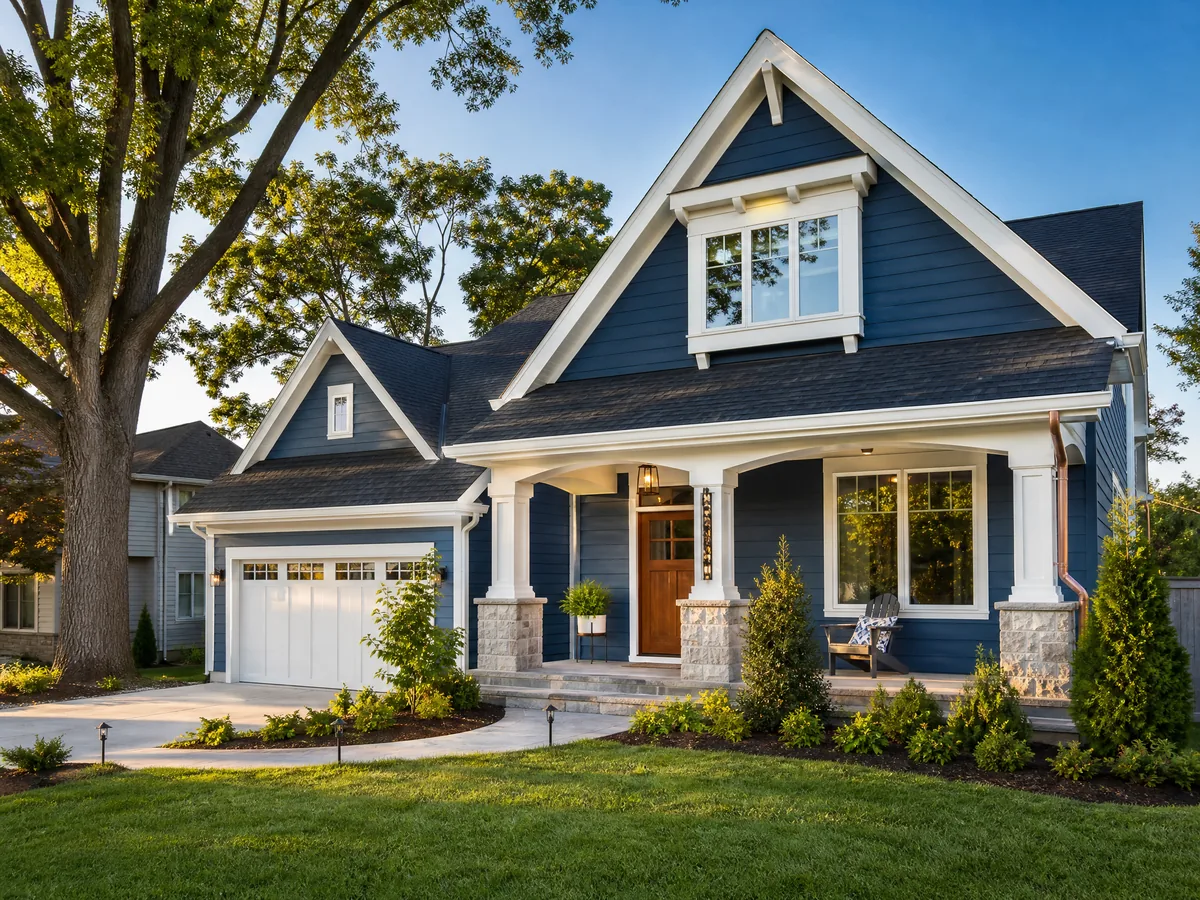
Built for the active flipper. We fund up to 90% of the purchase price and up to 100% of the rehab budget, capped to ARV, on a 6-month interest-only term. North Carolina adds two wrinkles to a flip: a foreclosure sale that stays open for upset bids, and an attorney who has to be responsible for your closing. Business-purpose only, and every structure is set in underwriting.
Typical figures, subject to underwriting and market conditions. Not a commitment to lend.
How it works
Draws are reimbursed quickly as work is completed, and a dedicated closer stays with your file from term sheet to payoff. You can get a term sheet the same day, and we typically fund within 48 hours of clear title, so most flips close in 5-7 days as soon as title and insurance come together.
I won a North Carolina foreclosure auction. Do I own it?
Not yet, and this is the single most important thing to know about buying distressed here. Under NCGS 45-21.27 a foreclosure sale is not final when the hammer falls. Any person may file an upset bid with the clerk within 10 days of the report of sale, raising the price by the greater of 5% or $750, with a deposit of the greater of 5% of the upset bid or $750 in cash or certified funds. The statute allows successive upset bids, and each one restarts a fresh 10-day period. A contested property can stay open for weeks. So your rehab schedule does not begin at the auction, and neither does your carry clock. We can commit fast, but title does not pass until the upset-bid period runs out clean, and we underwrite to that. Build the wait into your hold assumptions before you bid.
How much lead time does a North Carolina power of sale give me?
More than a first-Tuesday state, and it is visible in advance. Before any power of sale runs, NCGS 45-21.16 requires a hearing in front of the clerk of superior court on notice served at least 10 days out, or posted on the property at least 20 days before the hearing if service fails after reasonable effort. The clerk has to find a valid debt held by the foreclosing party, default, a right to foreclose, and proper notice. Then NCGS 45-21.17 requires the notice of sale to be posted at the courthouse 20 days ahead, published weekly for two successive weeks with the last publication no more than 10 days before the sale, and mailed at least 20 days ahead. Practice sources put filing to sale at roughly 60 to 90 days. That is a published pipeline you can work rather than a single monthly auction date, and it means the time to call us is when the notice posts. We fund most fix and flip files in 5 to 7 days once title and insurance come together, subject to underwriting. Apply now.
Who closes my North Carolina flip, and what does that change?
A licensed North Carolina attorney has to be responsible for it. The State Bar's Authorized Practice Advisory Opinion 2002-1 reads the unauthorized-practice statutes as barring a non-attorney from handling a residential real estate closing here. A non-lawyer may present and identify documents, direct where to sign, and receive and disburse funds, and the attorney need not be physically present, but title opinions, the legal status of title, how you take title, and drafting the documents are the attorney's work. For a flipper that means both ends of the deal run through a closing attorney's trust account rather than a title company escrow desk. It is a who-does-the-work rule rather than an automatic delay, and North Carolina closing attorneys who handle investor volume close quickly. We do not publish timing numbers for them. Pick your closing attorney before you go under contract, not the week of closing.
What does the state charge me when I sell the finished flip?
0.2% of the sale price, and the statute puts it on you as the seller. NCGS 105-228.30 sets the state excise tax on conveyances at one dollar per $500 of consideration, or fractional part, and says the transferor pays it to the register of deeds before recording. On a $400,000 resale that is $800 (400,000 divided by 500 = 800, times $1). Recording is flat under NCGS 161-10, $26 for the first 15 pages of a deed plus $4 a page after, and $64 for the first 35 pages of a deed of trust. Compared with states that charge a full point or a doc stamp on the note, North Carolina is one of the cheapest exits in our footprint, and there is no mortgage or intangibles tax on the financing. The exception is seven far-northeastern coastal counties that add a local land transfer tax of $1 per $100. None of them is in the Piedmont, so a Charlotte flip or a Raleigh flip pays the 0.2% only.
How do North Carolina property taxes and insurance hit a 6-month hold?
Property tax is a stepped number, and insurance is moving on a settled schedule. NCGS 105-286 has counties reappraising at least every eight years, and between revaluations assessed values are frozen, so the bill you inherit may be stale rather than wrong. Mecklenburg revalued effective January 1, 2023 with the next in 2027; Wake revalued effective January 1, 2024, next in 2027, then a two-year cycle from 2029. There is no homestead cap or investor split in North Carolina, so all real property sits at one local rate. On insurance, North Carolina is a rate-bureau state: the Bureau asked for a 42.2% average statewide homeowners increase and the Commissioner settled it at 7.5% on June 1, 2025 and 7.5% on June 1, 2026, capped at 35% in any territory, with no new filing before June 1, 2027. That is more predictable carry math than a filed-rate state. What we could not source is North Carolina vacant-dwelling or builder's risk pricing, so get a real quote on the actual address before you set your budget.
What credit score do I need for a North Carolina fix and flip loan?
There is no minimum score on this program. We run credit, but on an asset-based loan it carries far less weight than it would at a bank. The file turns on the property, the rehab budget, and the after repair value. Weaker credit is usually answered with lower leverage rather than a decline, and there is no hard credit pull to start. Subject to underwriting.
How much cash do I need to bring to a North Carolina flip?
Roughly 10% of the purchase, plus closing costs and a contingency. We fund up to 90% of the purchase price and up to 100% of the rehab budget, capped to ARV. On a $400,000 purchase that is up to $360,000 from us and $40,000 from you (400,000 x 90% = 360,000), with rehab drawn against the schedule rather than paid up front. Leave room for the closing attorney's fee and the 0.2% state excise tax you pay on the way out. Subject to underwriting.
What is the smallest North Carolina flip you can fund?
$100,000 is the floor and $5,000,000 is the ceiling. Below $100,000 the fixed cost of a closing eats the deal for both of us. The term is 6 months, interest-only, which has to cover rehab, listing, and a price reduction, and on an auction buy it has to absorb the 10-day upset-bid window too. Check the market numbers on the metro page before you set your exit: Greensboro fix and flip. Subject to underwriting.
Can I get a North Carolina fix and flip loan on my first deal?
Yes. First-time flippers are welcome on this program. The file is underwritten on the property, the budget, and the exit, so a thin track record is not a decline by itself. Expect it to show up in leverage rather than in a yes or no, and expect harder questions about your contractor and your ARV support. Every loan here is business-purpose only, on non-owner-occupied property. Subject to underwriting.
More Fix and Flip questions, answered on the program page
Local rules move. Every tax rate, fee, ordinance and market figure here comes from a primary source and carries the date we read it, and we correct them as the rules change. Where a number is mid-change or we could not verify it, we say so rather than guess. Before you commit a budget, confirm anything that drives it with the city or county, and talk to your attorney or CPA on questions of law or tax.
Published by USA Mortgage Funding, LLC, NMLS #152588. Researched from primary sources by our team, drafted with AI assistance, and every figure checked against its source before publishing. Where an answer rests on a public record, that record is linked under it. Figures read on 2026-08-12.
Funding North Carolina deals fast.
Get real terms, usually same day. No obligation, no hard credit pull to start.