
Direct private lending in most states
Call us anytime at 512-617-9400
Apply now
Program 07

Conventional Investment in Washington DC

Conventional investment property loans for buy-and-hold investors across Washington DC.

Standard, competitively priced financing for non-owner-occupied investment property when your file fits the box. We fund up to 80% LTV on a 30-year fixed or adjustable-rate loan for documented-income investors, purchase or refinance. Loan size sits comfortably in conforming territory across the Maryland suburbs and much of the District, while Arlington, the City of Fairfax and Bethesda in Montgomery County generally price above it, and closing costs and the property tax stack both differ sharply by jurisdiction here. This program is business-purpose only, subject to underwriting, and never advice on your own tax or legal exposure.
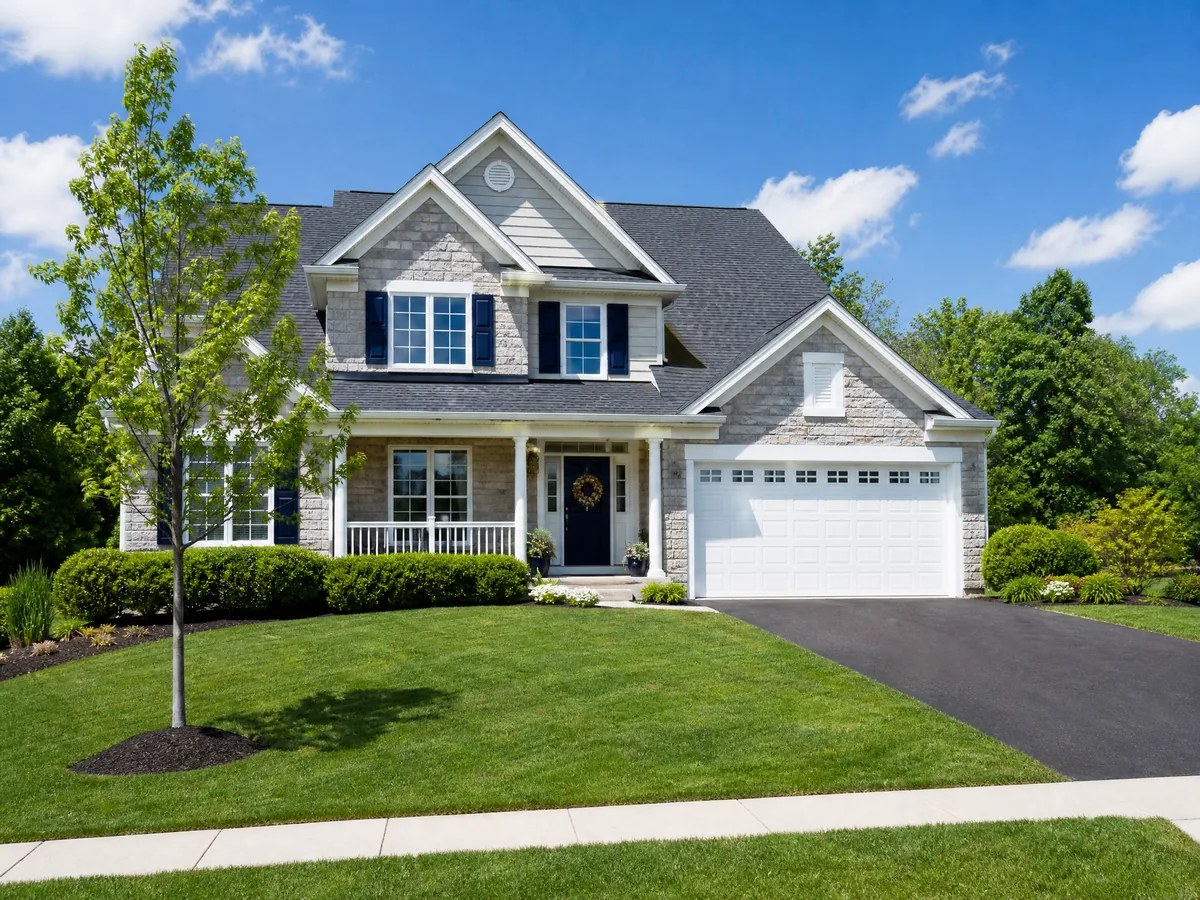
Conventional Investment in Washington DC, DC from USA Mortgage
Non-owner
occupied
30-yr
fixed avail.
80%
max LTV
Low
rates

Typical figures, subject to underwriting and market conditions. Not a commitment to lend.

How it works

For investors who qualify conventionally, this is usually the lowest-cost long-term money on a buy-and-hold. We help you weigh it against our DSCR and bank-statement programs so the loan matches your file and your goals.

Who it's for
Buy-and-hold investors
Non-owner-occupied 1-4 units
Borrowers who document income
Purchase or refinance
Typical terms
PropertyInvestment, non-owner-occ
Max leverageUp to 80% LTV
Term30-yr fixed / ARM
IncomeDocumented
CreditFrom 580
UsePurchase or refi
Apply now

*Typical terms, subject to underwriting and market conditions.

Run your Conventional Investment numbers.

Pressure-test the deal in seconds with our free dscr calculator, no sign-up required.

Open the DSCR calculator
Local FAQ

Conventional Investment in Washington DC, answered.

Where in this metro does a conventional loan size fit most easily, and where does it push toward jumbo territory?
It depends heavily on the jurisdiction, not the neighborhood. Zillow's mid-tier home value for June 2026 put Hyattsville in Prince George's County, Maryland at $408,502 and Silver Spring in Montgomery County, Maryland at $556,503, both comfortably inside routine conventional sizing, with Washington, DC itself at $579,159. Arlington County, Virginia ($823,028), the City of Fairfax, Virginia ($798,660) and Bethesda in Montgomery County, Maryland ($1,168,471) generally sit above that range. Send us the address and we will tell you plainly whether conventional or one of our other programs fits the file. See conventional investment terms.
Hyattsville has the lowest home values in this metro. Does it also carry the lowest property tax bill?
No, it is the opposite, and it is the single easiest number to underwrite wrong in this metro. Maryland's SDAT statewide rate table shows Hyattsville, an incorporated city in Prince George's County, at a combined municipal, county and state real property tax rate of 1.6220 per $100 of assessed value, against 1.1120 per $100 in unincorporated Prince George's County. Hyattsville's own county component is reduced to 0.8800 because it provides its own municipal services, but its municipal levy of 0.6300 more than replaces the difference. Underwrite the parcel's actual jurisdiction, not a countywide average; a pro forma built on the unincorporated county's rate understates a Hyattsville rental's escrow by roughly 51 basis points of assessed value. See conventional investment terms.
If I hold a District rental in an LLC, does that change what I owe the District each year beyond the mortgage?
Yes, and it is worth budgeting for separately from your loan payment. The District taxes an unincorporated business, including most LLCs and partnerships holding DC rental property, at 8.25% of DC taxable income once gross receipts pass $12,000, with a minimum tax of $250 if DC gross receipts are $1,000,000 or less. That minimum can apply even in a loss year on a single-property DC LLC. Maryland and Virginia entity-level rules were not part of this pass, so do not assume the same exposure follows you across the District line. Talk to a DC CPA before you close on entity structure.
How does the District tax a non-owner-occupied rental, and what happens if a slow lease-up drags on?
The base rate is modest, but the District's vacant and blighted classes turn that math on its head fast. DC's Office of Tax and Revenue lists Class 1A residential property at $0.85 per $100 of assessed value, and Class 1B residential property of no more than two dwelling units, the size most investor rentals fall into, at $0.85 on the first $2.558 million and $1.00 above that. A property that lands on the Class 3 vacant list is taxed at $5.00 per $100 instead, and a Class 4 blighted listing runs $10.00 per $100. A single-family property that is listed for sale or sitting unrented gets only half a tax year of exemption from that jump before the higher class applies, so a slow lease-up after a District purchase is worth planning around. See conventional investment terms and confirm the current tax year with OTR before you close.
I'm comparing a purchase in Arlington against one in the District. Does the closing cost gap actually matter?
Yes, and it is one of the clearest jurisdiction differences in this metro. Virginia's deed side runs a quarter-percent state recordation tax plus a smaller local share, a grantor tax and a regional transportation fee, all well under 1% combined, which makes Northern Virginia the lower-cost jurisdiction to close in among the three. The District, by contrast, taxes a taxable deed at 2.9% (1.45% recordation plus 1.45% transfer) on residential property at $400,000 or more and on all commercial or mixed-use property, with a lower 2.2% band only below that threshold on residential deals. That gap is on the deed alone, before any deed of trust recordation tax on top of it. Run the arithmetic on your own purchase price rather than assuming a flat percentage, since Virginia's local add-ons are not fully verified here. See conventional investment terms.
Does financing conventionally instead of DSCR change what I can raise rent on a long-term hold?
No, rent regulation attaches to the property and the jurisdiction, not to the loan program. Under the District's Rental Housing Act, a rental unit is covered by rent control by default unless an exemption is claimed and registered, and the small-landlord exemption is unavailable to an LLC, corporation or REIT regardless of how the purchase is financed. For Rent Control Year 2026 (May 2026 through April 2027) the District's general cap is 4.1%. Montgomery County, Maryland's own rent stabilization law caps units at least 23 years old at 5.2% for July 2026 through June 2027, while Arlington County, the City of Alexandria and Fairfax County, Virginia have no rent control at all. The same investor can face three different rent-increase ceilings within a fifteen-mile radius, and it is worth underwriting before you buy, not after. Compare this to our DSCR program if you want to weigh both structures.
Is 580 really the credit floor for a conventional investment loan in the Washington DC metro?
Credit starts at 580 on this program. The tradeoff is documentation: this is a fully documented income loan on non-owner-occupied investment property, so the returns and the rest of the file come with it. If the returns are the problem rather than the score, our bank statement loan reads deposits instead, and our DSCR rental loan qualifies on the rent. Subject to underwriting.
How much do I put down on a Washington DC investment property with a conventional loan?
About 20%. We fund up to 80% LTV on a 30-year fixed or adjustable-rate loan, purchase or refinance. On a $550,000 purchase that is up to $440,000 from us and $110,000 from you (550,000 x 80% = 440,000). Budget the escrow line off the parcel's actual jurisdiction rather than a county average: a Hyattsville rental runs 1.6220 per $100 of assessed value against 1.1120 in unincorporated Prince George's County. Subject to underwriting.

More Conventional Investment questions, answered on the program page

Resources

Guides for Conventional Investment

Browse all guides
More in Washington DC

Other programs in Washington DC

All Washington DC loan programs
About the local figures on this page

Local rules move. Every tax rate, fee, ordinance and market figure here comes from a primary source and carries the date we read it, and we correct them as the rules change. Where a number is mid-change or we could not verify it, we say so rather than guess. Before you commit a budget, confirm anything that drives it with the city or county, and talk to your attorney or CPA on questions of law or tax.

Published by USA Mortgage Funding, LLC, NMLS #152588. Researched from primary sources by our team, drafted with AI assistance, and every figure checked against its source before publishing. Where an answer rests on a public record, that record is linked under it. Figures read on 2026-08-15.

Funding Washington DC deals fast.

Get real terms, usually same day. No obligation, no hard credit pull to start.

Apply nowTalk to us