
Direct private lending in most states
Call us anytime at 512-617-9400
Apply now
Program 03

Ground-Up Construction in Washington DC

Ground up construction loans that build across Washington DC.

We fund ground-up construction across Washington DC, Maryland, and Virginia up to 70% LTV and 85% of cost, with draws on a 12 to 24 month term that keep pace with the job. In the District, a building permit issued after 1975 keeps the new units out of rent control, and a certificate of occupancy inside 15 years keeps the building out of the TOPA Offer of Sale. In Montgomery County, new construction is exempt from rent stabilization for 23 years, while Arlington, Alexandria, and Fairfax carry no rent cap at all. Business-purpose only, and every structure is set in underwriting.
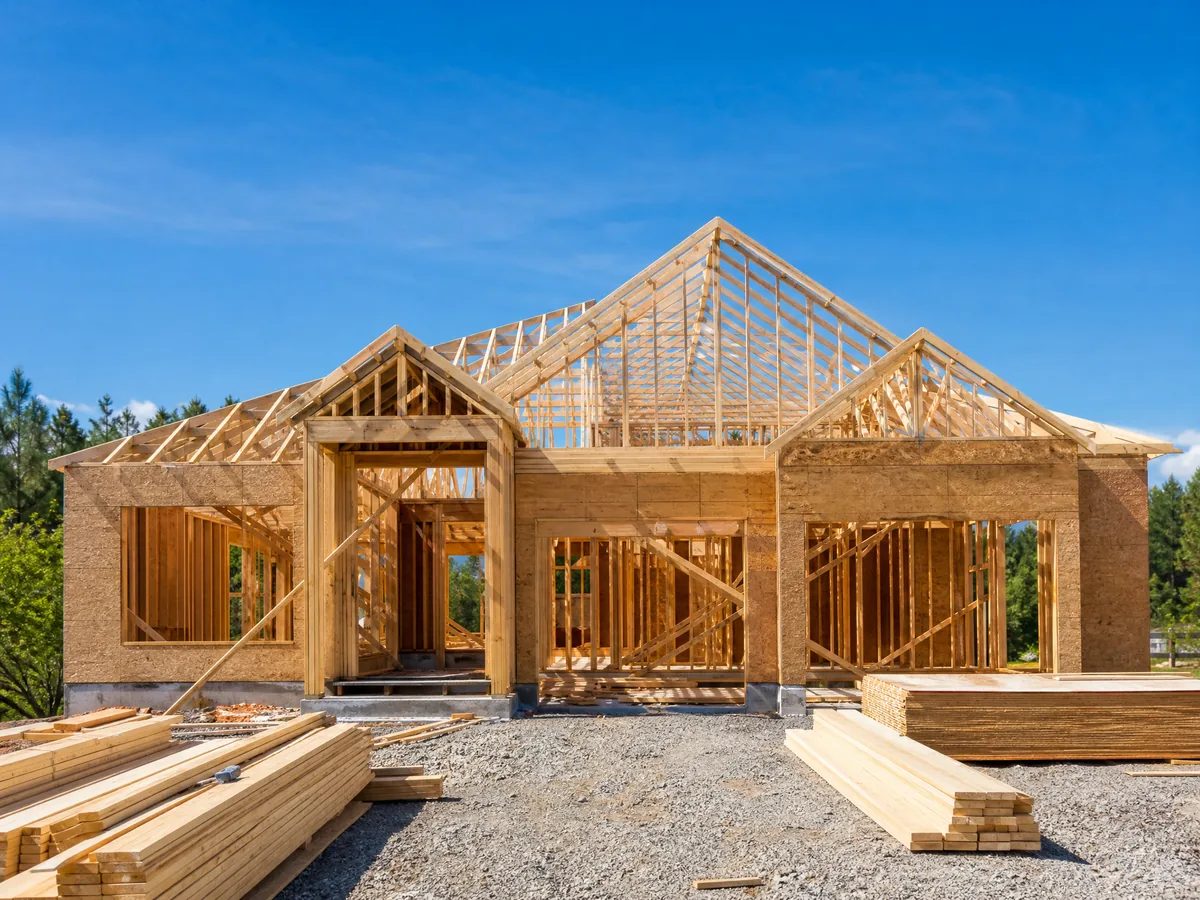
Ground-Up Construction in Washington DC, DC from USA Mortgage
70%
max LTV
85%
of cost
Most states
funding
$5M
max loan

Typical figures, subject to underwriting and market conditions. Not a commitment to lend.

How it works

We finance both the land and the vertical construction, with a draw schedule built around your timeline. Experienced builders can access higher leverage on cost.

Who it's for
Spec home builders
Developers and operators
Lot purchase or teardown
Build-to-rent strategies
Typical terms
Loan amountUp to $5M
LeverageUp to 70% LTV / 85% LTC
Term12 to 24 months
DrawsPer build schedule
RateFrom 10.00%*
UseSpec or build-to-rent
Apply now

*Typical terms, subject to underwriting and market conditions.

Run your Ground-Up Construction numbers.

Pressure-test the deal in seconds with our free construction loan calculator, no sign-up required.

Open the Construction Loan calculator
Local FAQ

Ground-Up Construction in Washington DC, answered.

What's the construction-to-permanent tax advantage for a District build?
Where the construction loan's deed of trust recordation tax was properly paid, the District taxes the permanent loan only on the amount by which it exceeds that construction liability. DC's deed of trust recordation tax runs 1.1% of the debt, so a builder who pays it correctly on the construction loan avoids paying it twice at conversion to permanent financing. This relief is a District of Columbia rule; Maryland and Virginia have no equivalent construction-to-permanent recordation relief documented in this research.
Does new construction actually get me out of DC rent control?
Yes, in the District: a building permit issued after December 31, 1975 exempts the units from DC's Rental Housing Act. Registration is still the trigger, since DC's default is rent-control coverage unless the unit is registered as exempt with the Rental Accommodations Division. Build in the District and register the exemption, and you keep the ability to set rent without the annual cap. This is District of Columbia law only, and it does not apply in Maryland or Virginia.
What does a newer certificate of occupancy do for a District building's exposure to TOPA?
A building that received its permanent certificate of occupancy within the last 15 years is exempt from the TOPA Offer of Sale. Under the RENTAL Act, effective December 31, 2025, that exemption sits alongside a separate District exemption for most owner-held 2 to 4 unit buildings. You still must send tenants a Notice of Transfer at sale. TOPA is District of Columbia law only; Maryland and Virginia have no TOPA analogue documented in this research.
Does Montgomery County give new construction the same break from rent control?
Yes: in Montgomery County, Maryland, new construction is exempt from the county's rent stabilization law for 23 years, measured from the construction date in the county's own records. That county law, capped at the lesser of local CPI-U plus 3% or 6% for the year running July 2026 through June 2027, applies only to units at least 23 years old, so a new build sits outside it for the full exemption period. Rockville and Takoma Park are separately carved out of the county law by their own incorporation; Silver Spring and Bethesda, having no municipal government, fall under the county rule directly once they age into it.
Is Virginia's new-construction picture different from DC and Maryland?
Yes: Arlington, Alexandria, and Fairfax carry no rent control at all, new or old construction, because Virginia localities lack the authority to enact rent regulation. A Northern Virginia build carries none of the District's rent-control registration duty or Montgomery County's stabilization law, and Virginia's deed-side closing costs are the lowest of the three jurisdictions in this metro. Confirm your specific locality with Virginia counsel, since Virginia is a Dillon Rule state and this research does not tie the prohibition to a single code section.
What will my permit fees and review timeline look like for a ground-up build in this metro?
We can't publish a figure for any of the eight jurisdictions here, because none has a verified permit fee schedule or review timeline in our research. That is true in the District of Columbia; Montgomery County (Silver Spring, Bethesda, Rockville); Prince George's County (Hyattsville); and Northern Virginia (Arlington, Alexandria, Fairfax City). Confirm current fees and review timelines directly with the relevant permitting office before you set a construction budget line, and see our ground-up construction loan terms for how draws are structured around your schedule.
What credit score do I need for a ground up construction loan in Washington DC?
There is no minimum score on this program. We run credit, but on an asset-based construction loan it carries far less weight than at a bank. We underwrite the land basis, the build budget, the draw schedule and the finished value. Weaker credit is usually handled with lower leverage rather than a decline, and there is no hard credit pull to start. Subject to underwriting.
How much of the cost do I have to cover on a Washington DC ground up build?
About 15% of cost, and the loan is also held to 70% of value. We fund up to 85% LTC and up to 70% LTV, whichever is tighter on your deal, drawn against the build schedule on a 12 to 24 month term. On a $1,200,000 all-in cost that is up to $1,020,000 from us and $180,000 from you (1,200,000 x 85% = 1,020,000). Leave room in that number for permitting, since no jurisdiction in this metro has a verified permit fee schedule or review timeline we can publish. Subject to underwriting.
Do I need a building track record to get a Washington DC construction loan?
No, but experience changes the leverage. Experienced builders can access higher leverage, while a first build is usually structured tighter with the same draw-per-schedule mechanics. Bring the plans, the budget, the builder and the exit, whether that exit is a spec sale or a build-to-rent hold. Subject to underwriting.

More Ground-Up Construction questions, answered on the program page

Resources

Guides for Ground-Up Construction

Browse all guides
More in Washington DC

Other programs in Washington DC

All Washington DC loan programs
About the local figures on this page

Local rules move. Every tax rate, fee, ordinance and market figure here comes from a primary source and carries the date we read it, and we correct them as the rules change. Where a number is mid-change or we could not verify it, we say so rather than guess. Before you commit a budget, confirm anything that drives it with the city or county, and talk to your attorney or CPA on questions of law or tax.

Published by USA Mortgage Funding, LLC, NMLS #152588. Researched from primary sources by our team, drafted with AI assistance, and every figure checked against its source before publishing. Where an answer rests on a public record, that record is linked under it. Figures read on 2026-08-15.

Funding Washington DC deals fast.

Get real terms, usually same day. No obligation, no hard credit pull to start.

Apply nowTalk to us