
Direct private lending in most states
Call us anytime at 512-617-9400
Apply now
Program 09

CRE Permanent in Washington DC

Washington DC commercial mortgage debt, sized for a long hold.

Long-term, permanent financing for stabilized commercial real estate. We place it in house through agency multifamily channels (Fannie Mae and Freddie Mac), insurance funds, and other wholesale sources. Across the District, the Maryland suburbs and Northern Virginia, a stabilized hold carries a different set of ongoing obligations in each jurisdiction, from rent regulation to building energy-performance requirements, and we underwrite the lease and tenant credit in front of us rather than a market survey. Business-purpose only, and every structure is set in underwriting.
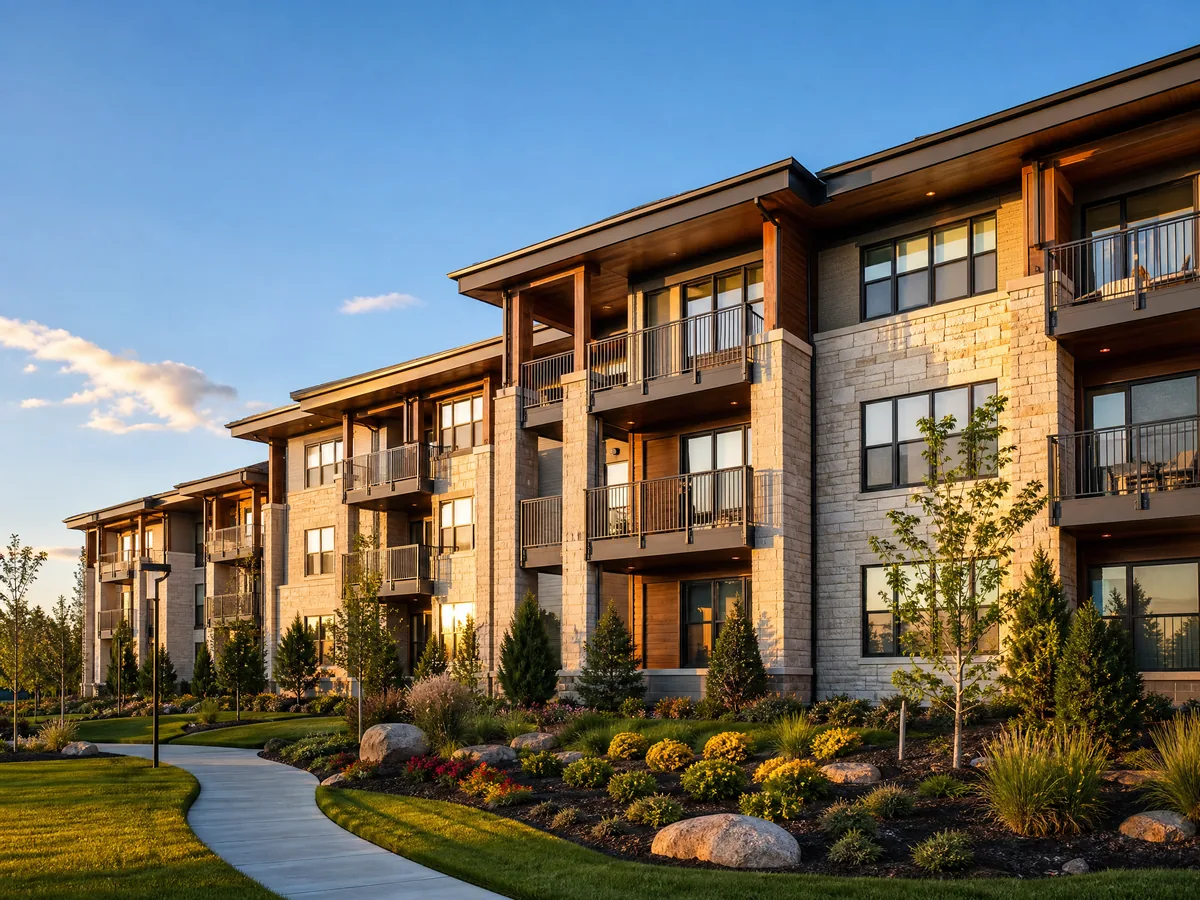
CRE Permanent in Washington DC, DC from USA Mortgage
Agency
Fannie/Freddie
Long-term
fixed
Multifamily
& commercial
Wholesale
channels

Typical figures, subject to underwriting and market conditions. Not a commitment to lend.

How it works

For a stabilized asset ready for permanent debt, we shop your file across agency multifamily programs, insurance companies, and wholesale lenders, then place the structure that fits your hold. When a deal needs to stabilize first, we can bridge it and refinance into permanent debt later.

Who it's for
Stabilized multifamily 5+
Commercial and mixed-use
Agency permanent debt
Refi out of a bridge
Typical terms
PropertyStabilized commercial
ProgramsAgency, insurance, wholesale
TermLong-term permanent
RateMarket permanent rates
UseAcquisition or refinance
Best forLong-term holds
Apply now

*Typical terms, subject to underwriting and market conditions.

Run your CRE Permanent numbers.

Pressure-test the deal in seconds with our free cap rate calculator, no sign-up required.

Open the Cap Rate calculator
Local FAQ

CRE Permanent in Washington DC, answered.

How does the DC-Maryland-Virginia rent cap patchwork change NOI growth assumptions on a stabilized multifamily hold?
It depends entirely on which of the three jurisdictions the asset sits in, and the caps are not interchangeable. In the District of Columbia, the Rental Housing Act applies to all rental housing not affirmatively exempted and registered, capping general increases at 4.1% for Rent Control Year 2026 (May 1, 2026 through April 30, 2027). In Montgomery County, Maryland, Bill 15-23 caps increases on county-licensed units at least 23 years old at the lesser of local CPI-U plus 3% or 6%, set at 5.2% for July 2026 through June 2027, with new construction exempt for 23 years. In Arlington County, the City of Alexandria and Fairfax County, Virginia, there is no rent cap at all, because Virginia localities lack the authority to enact one. Model rent growth off the jurisdiction the property actually sits in, not off a metro-wide assumption.
Does rolling a District construction loan into permanent debt get any relief on DC's recordation tax?
Yes, and it is one of the few durable cost advantages a stabilized District owner carries into a refinance. Where the construction loan's deed of trust recordation tax was properly paid at closing, DC Code 42-1102 taxes the permanent loan only on the amount by which the permanent debt exceeds the construction liability, rather than taxing the full new balance at the standard 1.1% security-instrument rate. A straight refinance recorded later, with no construction loan behind it, does not get this treatment, since DC has no general refinance exemption. Confirm which path your deal is on with your closing attorney before you size the permanent loan.
Does Montgomery County's building energy performance law follow the asset once it's stabilized and refinanced?
Yes. It attaches to the building, not to the owner, so it travels straight through a refinance into permanent debt. Montgomery County, Maryland's Building Energy Performance Standards, under Bill 16-21, cover privately owned commercial and multifamily residential buildings over 25,000 square feet, with individualized interim and final performance deadlines set per building, or a filed Building Performance Improvement Plan as an alternative. That is a capital-expenditure obligation a Silver Spring, Bethesda or Rockville owner is still carrying the day the construction loan pays off, and it belongs in the sources and uses on the permanent structure, not as a surprise afterward. Talk to your engineer about your building's specific compliance deadline before you size the loan.
Is Arlington County's own assessment data actually pointing toward multifamily over office for a long-hold Northern Virginia asset?
Yes, and it's the assessor's own numbers saying so, not a broker's pitch. Arlington County, Virginia's adopted FY2027 revenue summary shows calendar year 2025 to 2026 assessed value up 6.0% for apartments and down 11.3% for commercial overall, with office specifically down 18.0% year over year excluding reclassifications, and the county is already re-coding office approved for adaptive reuse as apartment for 2026 assessment purposes. That is a structural signal from the taxing authority itself about where value is moving in Arlington, Alexandria and Fairfax County, Virginia, not a forecast we are making. It is a reasonable input for how you weight a stabilized Northern Virginia asset for the long hold, alongside your own leases and tenant credit.
Does the LLC holding my stabilized District asset owe the District anything beyond the property tax bill?
Yes, an entity-level tax that a straight pass-through structure elsewhere would not owe. The District of Columbia's Unincorporated Business Franchise Tax runs 8.25% on unincorporated businesses with DC gross receipts over $12,000, with a minimum tax of $250 where gross receipts run $1,000,000 or less and $1,000 above that. A single-property DC LLC can owe the $250 minimum even in a year the property loses money once it crosses the $12,000 gross receipts line, and that belongs in your debt service coverage math before you size a permanent loan against a District asset. No comparable entity-level tax was located for Maryland or Virginia in our research, so this is a District-specific line item. Talk to a DC CPA about how it interacts with your ownership structure.
What if my DC, Maryland or Virginia commercial property isn't stabilized yet?
Lease it up or reposition it first, then refinance into permanent debt once it performs. We place both sides in-house: a bridge loan carries the property through lease-up or repositioning in the District, the Maryland suburbs or Northern Virginia, and once the rent roll and leases are in place, we shop the file across agency multifamily programs, insurance companies and wholesale lenders for the long-term structure that fits your hold.

More CRE Permanent questions, answered on the program page

Resources

Guides for CRE Permanent

Browse all guides
Compare

CRE Permanent vs. other options

More in Washington DC

Other programs in Washington DC

All Washington DC loan programs
About the local figures on this page

Local rules move. Every tax rate, fee, ordinance and market figure here comes from a primary source and carries the date we read it, and we correct them as the rules change. Where a number is mid-change or we could not verify it, we say so rather than guess. Before you commit a budget, confirm anything that drives it with the city or county, and talk to your attorney or CPA on questions of law or tax.

Published by USA Mortgage Funding, LLC, NMLS #152588. Researched from primary sources by our team, drafted with AI assistance, and every figure checked against its source before publishing. Where an answer rests on a public record, that record is linked under it. Figures read on 2026-08-15.

Funding Washington DC deals fast.

Get real terms, usually same day. No obligation, no hard credit pull to start.

Apply nowTalk to us