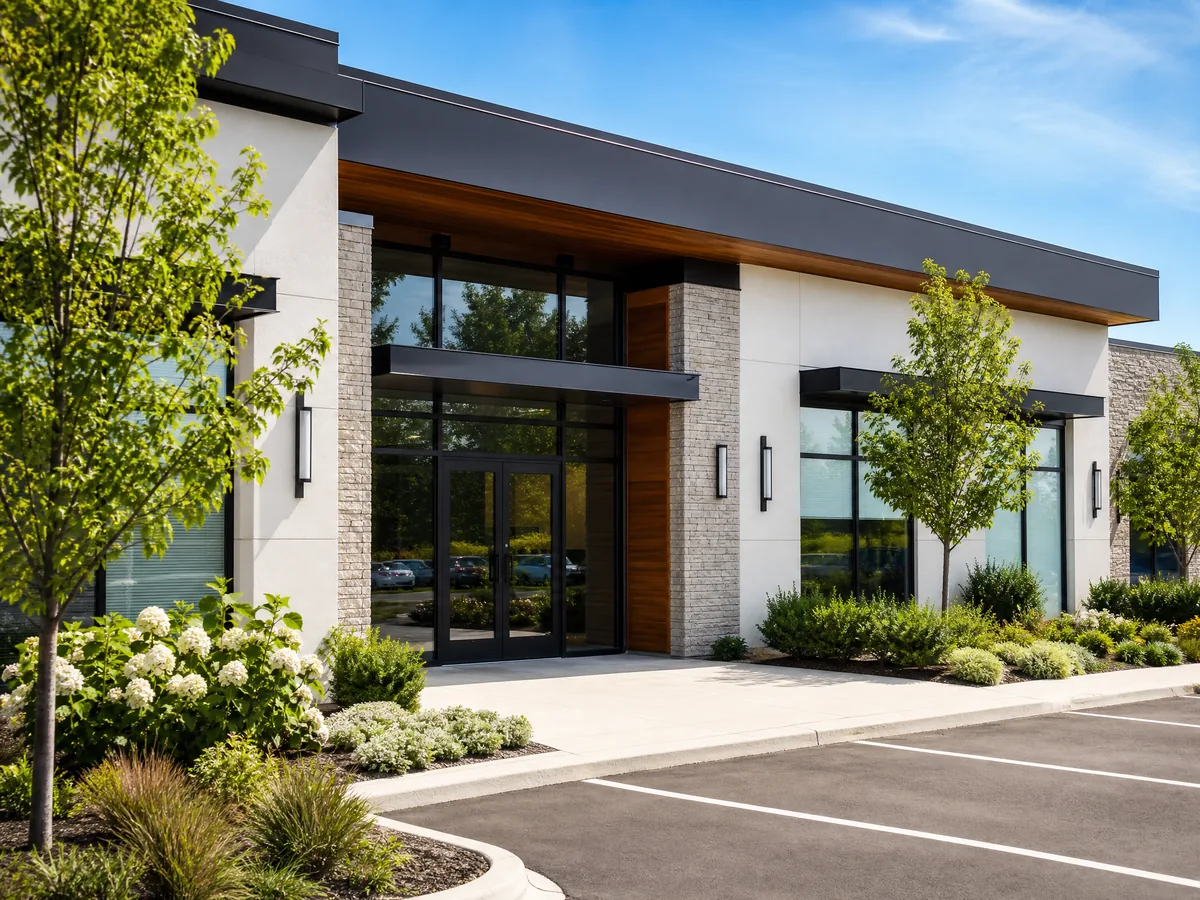
SBA loans for owner-occupied property across California.
When a deal calls for long-term, government-backed financing, we place SBA 7(a) and 504 loans through relationships with more than 20 SBA lenders. We match your scenario to the right program and the best terms. In California the building your business occupies is taxed, insured and closed like any other commercial asset. Business-purpose only, and every structure is set in underwriting.
Typical figures, subject to underwriting and market conditions. Not a commitment to lend.
How it works
SBA loans offer low down payments and long amortizations for owner-occupied property and business acquisition. USA Mortgage arranges and places SBA financing through our network of partner lenders; we are not ourselves an SBA lender. We shop your file across that network so you get the strongest approval.
What does owner-occupied mean on a California SBA deal?
That your business occupies the building, not that you live in it. It is worth being precise, because California uses the same phrase for something else entirely. Civil Code section 2924.15 defines owner-occupied for Homeowner Bill of Rights purposes as property that is the borrower's principal residence and secures a loan made for personal, family or household purposes. An SBA loan on the building your company operates out of is neither of those things. It remains a business-purpose loan on commercial property, and that is the only kind of loan we place. The occupancy test that matters on an SBA file is the program's own requirement that the operating business occupy the property, and your placement lender will size that against your square footage. If your plan is to buy a building and lease all of it out, this is the wrong program and a commercial bridge or permanent loan is the right conversation.
What happens to the property tax when my business buys its building?
It reassesses at your purchase price, and then it is capped for the life of the loan. Article XIII A holds the ad valorem tax to 1% of full cash value, sets full cash value at the appraised value when a property is purchased, newly constructed or changes ownership, and lets the base rise by an inflationary rate not to exceed 2% a year. Effective bills add voter-approved debt levies that vary by county and district, so pull the actual rate stack rather than assuming a flat 1%. For an owner-occupant on a 25-year loan, that cap is the strongest argument for buying rather than renting in California: your occupancy cost is fixed by a mortgage and a tax line that can only creep, while market rent has no such ceiling. Have your California CPA model both paths before you commit. See San Diego SBA for that market's own picture.
What California closing costs should an SBA buyer budget for?
Escrow, title and a transfer tax that depends entirely on the city. California is an escrow state with no attorney required at closing, and independent escrow companies are licensed by the DFPI under the Escrow Law. Practice splits north to south, with the title company typically running escrow in Northern California and a separate escrow company sitting alongside the title insurer in the south. On tax, Revenue and Taxation Code section 11911 lets counties impose 55 cents per $500, which is $1.10 per $1,000, so a $1,500,000 building carries $1,650 at the base (1,500 x 1.10 = 1,650). Charter cities stack on top, and the City of Los Angeles alone runs $5.60 per $1,000 combined before Measure ULA at higher price points. Rates elsewhere vary and we publish no table we have not verified. Confirm the city rate early, because SBA closings run on a longer clock and surprises cost weeks.
Does California's entity tax reach an operating company that owns its building?
Yes, and the fee is charged on revenue rather than profit, so an operating business hits the tiers fast. Every LLC doing business in California owes the $800 annual tax under Revenue and Taxation Code sections 17941 and 23153(d). Section 17942 then adds a gross receipts fee on total California income: $900 from $250,000 to under $500,000, $2,500 from $500,000 to under $1,000,000, $6,000 from $1,000,000 to under $5,000,000, and $11,790 at $5,000,000 or more. Total income is gross income plus cost of goods sold. A business with real sales volume and thin margins can sit in a high tier while earning very little, and SBA structures often put the real estate in a separate holding entity from the operating company, which means two entities and potentially two sets of these charges. That is a structuring question for your California CPA, ideally before the holding entity is formed.
What size California SBA loan can you place?
$350,000 to $5,000,000 and above. The floor exists because SBA files carry a fixed amount of work no matter the size, and above $5,000,000 the structure usually splits across 7(a) and 504 rather than sitting in one program. Which of the two fits depends on the use of proceeds and the asset, and that is the first thing we sort out. California's price levels mean plenty of small commercial buildings land above the floor without trying. Subject to underwriting.
How much do I have to put down on a California SBA purchase?
SBA financing goes up to 90%, so plan on about 10%. On a $1,500,000 California building that is up to $1,350,000 financed and $150,000 from you (1,500,000 x 90% = 1,350,000). Terms run up to 25 years, which is what makes the monthly comparison against rent work. Budget escrow, title and the city and county transfer tax on top of the down payment, and remember the tax bill reassesses at your purchase price. Subject to underwriting.
How long does an SBA loan take to close in California?
30 to 90 days, and the calendar is the trade you make for the terms. SBA is the slowest program we place and the longest-dated, at up to 25 years, so it is not the answer to a deadline. If you need the building under contract now and the SBA file finished later, a commercial bridge can carry the purchase and be taken out by the SBA loan. Start the SBA conversation before you sign, not after, because California escrow timelines and your seller's expectations both need to accommodate it. Subject to underwriting.
More SBA Financing questions, answered on the program page
Local rules move. Every tax rate, fee, ordinance and market figure here comes from a primary source and carries the date we read it, and we correct them as the rules change. Where a number is mid-change or we could not verify it, we say so rather than guess. Before you commit a budget, confirm anything that drives it with the city or county, and talk to your attorney or CPA on questions of law or tax.
Published by USA Mortgage Funding, LLC, NMLS #152588. Researched from primary sources by our team, drafted with AI assistance, and every figure checked against its source before publishing. Where an answer rests on a public record, that record is linked under it. Figures read on 2026-08-12.
Funding California deals fast.
Get real terms, usually same day. No obligation, no hard credit pull to start.