
Direct private lending in most states
Call us anytime at 512-617-9400
Apply now
Program 09

CRE Permanent in California

Permanent commercial mortgage debt on stabilized California assets.

Long-term, permanent financing for stabilized commercial real estate. We place it in house through agency multifamily channels (Fannie Mae and Freddie Mac), insurance funds, and other wholesale sources. California rewards a long hold on the tax line and charges for the closing on the transfer line. Business-purpose only, and every structure is set in underwriting.
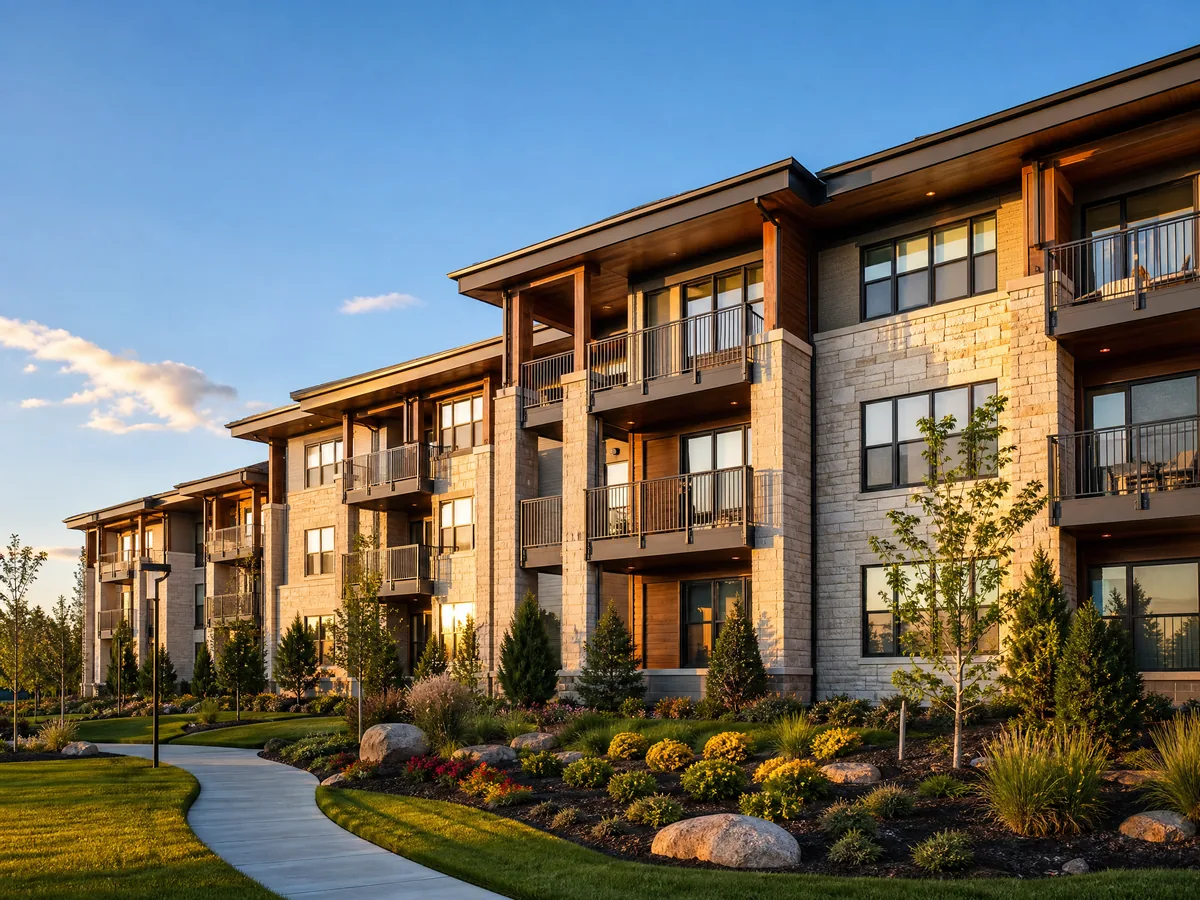
CRE Permanent in California from USA Mortgage
Agency
Fannie/Freddie
Long-term
fixed
Multifamily
& commercial
Wholesale
channels

Typical figures, subject to underwriting and market conditions. Not a commitment to lend.

How it works

For a stabilized asset ready for permanent debt, we shop your file across agency multifamily programs, insurance companies, and wholesale lenders, then place the structure that fits your hold. When a deal needs to stabilize first, we can bridge it and refinance into permanent debt later.

Who it's for
Stabilized multifamily 5+
Commercial and mixed-use
Agency permanent debt
Refi out of a bridge
Typical terms
PropertyStabilized commercial
ProgramsAgency, insurance, wholesale
TermLong-term permanent
RateMarket permanent rates
UseAcquisition or refinance
Best forLong-term holds
Apply now

*Typical terms, subject to underwriting and market conditions.

Run your CRE Permanent numbers.

Pressure-test the deal in seconds with our free cap rate calculator, no sign-up required.

Open the Cap Rate calculator
Local FAQ

CRE Permanent in California, answered.

Does Prop 13 help or hurt a long-term commercial hold in California?
It hurts at the closing table and helps every year after. Article XIII A caps the ad valorem tax at 1% of full cash value, sets full cash value at the appraised value when the property is purchased, newly constructed or changes ownership, and then lets the base rise by an inflationary rate not to exceed 2% a year. On acquisition that means the seller's assessed value, which on a long-held asset can be a fraction of your price, disappears and your price becomes the base. Underwrite year one at your purchase price and add the voter-approved debt levies that sit on top of the 1%. Over a ten-year permanent loan the same rule becomes an asset: the tax line grows at most 2% a year while market value and, with luck, rents do not have that ceiling. That is a genuinely different NOI trajectory from most states, and it is one reason California assets get held rather than traded. See Los Angeles for market detail.
What will transfer tax cost on a large California commercial closing?
The state base is trivial. The charter city on top of it can be the largest line at the table. Revenue and Taxation Code section 11911 lets counties impose 55 cents per $500, which is $1.10 per $1,000, so a $20,000,000 asset carries $22,000 at the base (20,000 x 1.10 = 22,000). Then the city. San Francisco runs a tiered tax reaching 5.5% for transfers of $10M to under $25M and 6% at $25M and above after a 2020 measure doubled the top tiers; a 2026 proposal to cut those tiers roughly in half had not passed when we last checked, so do not price it in. The City of Los Angeles runs $5.60 per $1,000 combined plus Measure ULA, which applies to all transfers over the threshold, commercial and apartment included, on the entire price. Other cities set their own rates and we publish no table we have not verified. Confirm the city rate before you sign an LOI.
Who runs the closing on a California permanent placement?
An escrow desk, not a lawyer's conference room. California is an escrow state and no attorney is required at closing. Independent escrow companies are licensed by the DFPI under the Escrow Law, while controlled escrows run by brokers, attorneys or title insurers operate under their own regulators' exemptions. Practice splits by region: in Northern California the title insurance company typically runs the escrow, while in Southern California a separate independent escrow company usually sits alongside the title insurer. California also does not set a single statewide title premium the way Texas does; rates are company-filed, so get more than one quote and pick on whether the company can handle your entity structure and an agency lender's document set. We will not describe the rate filing regime beyond that, because we have not verified it. See San Jose for that market's own picture.
How far does California tax reach a stabilized asset's returns?
Further than most states, and it reaches out-of-state owners too. California runs nine personal income tax brackets topping out at 12.3%, plus the 1% mental health services tax on taxable income above $1,000,000, for a 13.3% top marginal rate, and there is no lower state capital gains rate when you eventually sell. On the entity side, every LLC doing business in California owes the $800 annual tax under Revenue and Taxation Code sections 17941 and 23153(d), and section 17942 adds a gross receipts fee on total California income of $900, $2,500, $6,000 and $11,790 at successively higher tiers, topping out at $5,000,000 or more of total income. Total income is gross income plus cost of goods sold, so on a stabilized asset it keys off rents collected rather than net profit. An out-of-state LLC owning California property is doing business here on the same trigger. Have your California CPA price the entity layer before you close.
Will insurance be a constraint on a California commercial placement?
Treat it as a live underwriting item and get your broker in early. The residential market is the part with published numbers: the FAIR Plan had roughly 573,739 policies in force as of March 2025 and residential exposure around $696B by September 2025, and it writes basic named-peril dwelling fire coverage only, so anything placed there needs a companion policy. On the commercial side, we did not verify the FAIR Plan's commercial program limits, so we will not tell you what they are. What we can say is that the Sustainable Insurance Strategy lets carriers use forward-looking wildfire catastrophe models and a California-specific net cost of reinsurance in rate filings in exchange for writing at least 85% of their statewide market share in wildfire-distressed ZIP codes, and that availability is improving while premiums reprice upward. A long-term lender will want a bindable quote in the file, not an estimate.

More CRE Permanent questions, answered on the program page

Resources

Guides for CRE Permanent

Browse all guides
Compare

CRE Permanent vs. other options

More in California

Other programs in California

All California loan programs
About the local figures on this page

Local rules move. Every tax rate, fee, ordinance and market figure here comes from a primary source and carries the date we read it, and we correct them as the rules change. Where a number is mid-change or we could not verify it, we say so rather than guess. Before you commit a budget, confirm anything that drives it with the city or county, and talk to your attorney or CPA on questions of law or tax.

Published by USA Mortgage Funding, LLC, NMLS #152588. Researched from primary sources by our team, drafted with AI assistance, and every figure checked against its source before publishing. Where an answer rests on a public record, that record is linked under it. Figures read on 2026-08-12.

Funding California deals fast.

Get real terms, usually same day. No obligation, no hard credit pull to start.

Apply nowTalk to us