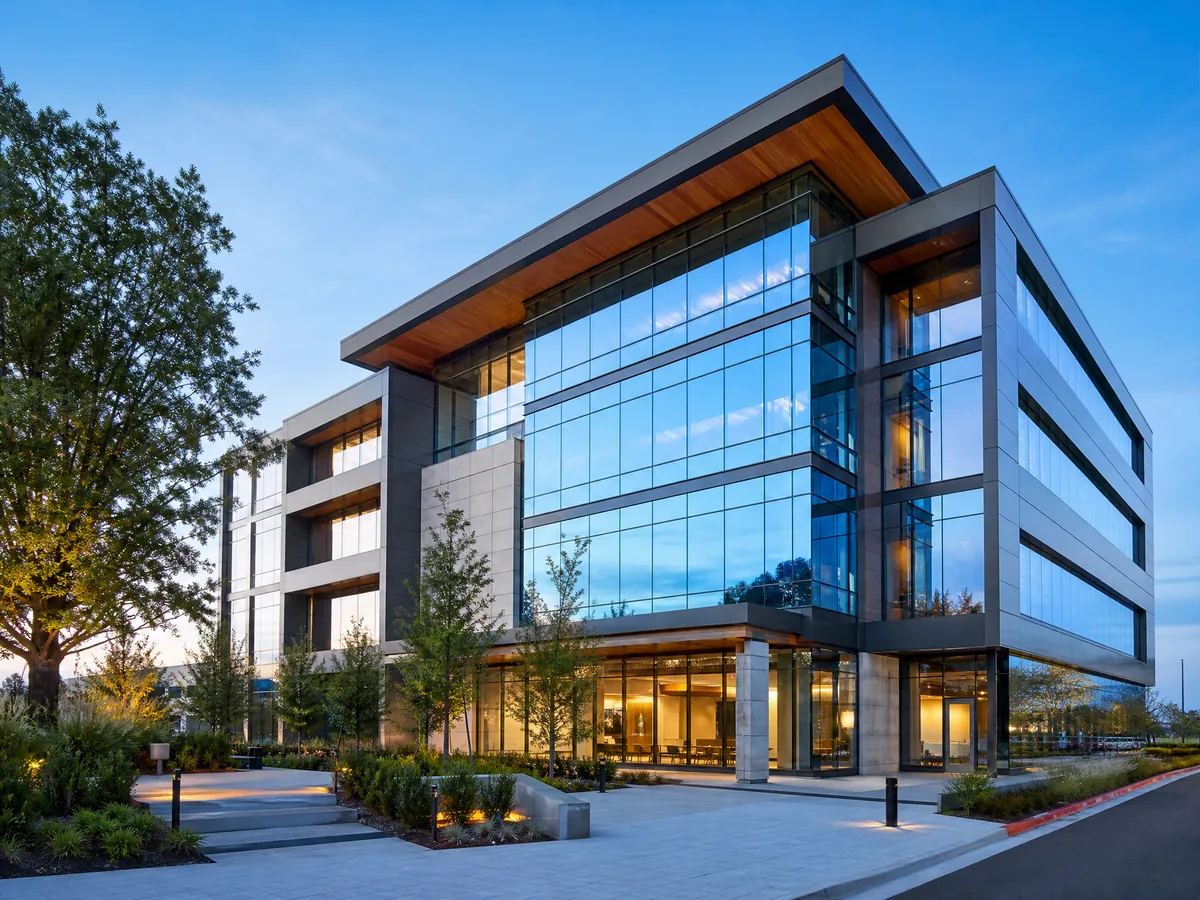
Commercial bridge loans across California property types.
Access equity or finance a project before permanent financing. Flexible commercial bridge across property types, up to $10M, interest-only, on terms up to 24 to 36 months. California's remedies statutes shape how these loans are structured. Business-purpose only, and every structure is set in underwriting.
Typical figures, subject to underwriting and market conditions. Not a commitment to lend.
How it works
Use bridge capital to reposition an asset, buy out a partner, or stabilize before a refinance. We move quickly on commercial deals that banks find too time-sensitive. When the asset is stabilized, we refinance you out of the bridge and into long-term permanent debt, which we also place in house, so you have a clear exit from day one.
Why do California lenders structure bridge debt so carefully?
Because two statutes take options off the table once a loan is secured by California real property. Code of Civil Procedure section 726(a) is the one-action rule: there can be but one form of action for the recovery of any debt secured by a mortgage on real property. A lender has to proceed against the security. It cannot sue on the note first and foreclose later. Then section 580d says that where the property has been sold by the trustee under a power of sale, no deficiency is owed or collected and no deficiency judgment may be rendered. That applies to all non-judicial sales, investor loans included, so choosing the fast trustee sale means giving up any deficiency claim against the borrower. The statute does not shield guarantors or other sureties. Judicial foreclosure preserves the deficiency claim at the cost of a lawsuit and a post-sale redemption period, three months if the sale satisfies the debt and one year if there is a deficiency. That trade explains a lot about how California deals get papered.
Does Measure ULA hit commercial and apartment deals, or just mansions?
It hits apartment buildings and commercial property, and it applies to the entire price. The "mansion tax" nickname has cost California investors real money. Measure ULA applies to all City of Los Angeles real property transfers above the threshold, at 4% above the lower threshold and 5.5% above the upper one, and it is charged on the full consideration, not the excess. Thresholds are inflation-adjusted annually, and for closings after June 30, 2026 they were reported at $5,400,000 and $10,900,000, up from $5,300,000 and $10,600,000. Verify the current figures with the LA Office of Finance before you underwrite them, because the primary source blocks automated checks. It sits on top of the $5.60 per $1,000 combined city and county base. San Francisco runs its own tiered tax reaching 5.5% for transfers from $10M to under $25M and 6% at $25M and above. On a bridge deal with a sale exit, that is an exit cost line. See Los Angeles CRE bridge for that market.
How long does it take to foreclose on California commercial property?
About four months at the statutory floor for a trustee sale. Civil Code section 2924(a) requires the notice of default to be recorded in the county where the property sits, and not less than three months must elapse before notice of sale may be given. Section 2924f(b) then requires publication once a week for three consecutive calendar weeks with first publication at least 20 days before the sale, posting in a public place and conspicuously on the property at least 20 days before, and recording at least 20 days before. Add them and the floor lands at roughly 111 to 120 days. We do not publish a typical real-world elapsed time, because no primary source supports one, and we do not publish judicial-track timelines for the same reason. Why it matters to a borrower: California gives a defaulted file a longer runway than a first-Tuesday state does, and it gives a lender a slower one, which is priced into every bridge deal in the state.
Does the California usury cap apply to a commercial bridge loan?
The cap reaches business-purpose loans, and the exemptions are what make private lending work here. Article XV, section 1 of the state constitution caps loans other than personal, family or household loans at the higher of 10% per year or 5% plus the Federal Reserve Bank of San Francisco advance rate on the 25th of the preceding month. Business-purpose real estate loans fall in that bucket, so the cap is not a consumer-only rule. Two exemptions carry the market: the Legislature preserved an exempt class for California Financing Law licensees under Financial Code section 22002, and Civil Code section 1916.1 disapplies the article XV restrictions to a loan made or arranged by a licensed real estate broker and secured by a lien on real property. That is the channel private trust deed capital moves through. Penalties for getting it wrong include forfeiture of all interest and treble the interest paid in the year before suit. Ask your counsel about your own file.
How does a purchase reset the tax line on a California commercial asset?
Completely, and the seller's bill tells you nothing. Article XIII A caps the ad valorem tax at 1% of full cash value and sets full cash value at the appraised value when a property is purchased, newly constructed or changes ownership, after which the base rises by an inflationary rate not to exceed 2% a year. On an asset that has been in one family for decades, the assessed value can be a small fraction of the price, and it reassesses to your price on close. That is a direct hit to NOI in year one, and on a bridge loan sized against stabilized income it can move your proceeds. Underwrite the tax line at your purchase price, add the county and district debt levies that sit on top of the 1%, and check the parcel rather than a countywide average. Market and asset class detail sits on the metro pages, for example Oakland.
What credit score do I need for a California bridge loan?
There is no minimum score on this program. Bridge is asset-based, so the file turns on the property, the business plan and the exit. We do run credit, and it carries far less weight than it would at a bank. Weaker credit is usually answered with lower leverage rather than a decline, and there is no hard credit pull to start. What we look at hardest is whether the plan that takes the bridge out is real and financeable. Subject to underwriting.
How much leverage can I get on a California bridge deal?
Up to 75% LTV, interest-only. On a $4,000,000 California value that is up to $3,000,000 from us and $1,000,000 of equity from you (4,000,000 x 75% = 3,000,000). Terms run up to 24 to 36 months, which is meant to cover a lease-up or a repositioning and the permanent financing behind it. Remember to carry the city transfer tax and a reassessed property tax bill in the model, since both land on you at close in California. Subject to underwriting.
How large a California bridge loan can you write?
Up to $10,000,000. That is the largest single-asset facility we write, and it covers most value-add multifamily, retail, industrial and mixed-use deals in the state. Structure is interest-only so the carry stays as light as the plan allows during the work. Above that number the conversation usually becomes a placement rather than a balance-sheet loan, and we will tell you that on the first call. Subject to underwriting.
More CRE Bridge questions, answered on the program page
Local rules move. Every tax rate, fee, ordinance and market figure here comes from a primary source and carries the date we read it, and we correct them as the rules change. Where a number is mid-change or we could not verify it, we say so rather than guess. Before you commit a budget, confirm anything that drives it with the city or county, and talk to your attorney or CPA on questions of law or tax.
Published by USA Mortgage Funding, LLC, NMLS #152588. Researched from primary sources by our team, drafted with AI assistance, and every figure checked against its source before publishing. Where an answer rests on a public record, that record is linked under it. Figures read on 2026-08-12.
Funding California deals fast.
Get real terms, usually same day. No obligation, no hard credit pull to start.