
Direct private lending in most states
Call us anytime at 512-617-9400
Apply now
Program 07

Conventional Investment in Missouri

Conventional financing for Missouri investment property loans.

Documented-income financing on non-owner-occupied Missouri property, up to 80% LTV with credit from 580. It is usually the lowest-cost long-term money once your file qualifies, in exchange for full documentation, and we compare it against DSCR so you take the structure that fits. Missouri's mortgage licensing definitions turn on the purpose of the loan, not on the property type. Business-purpose only, and every structure is set in underwriting.
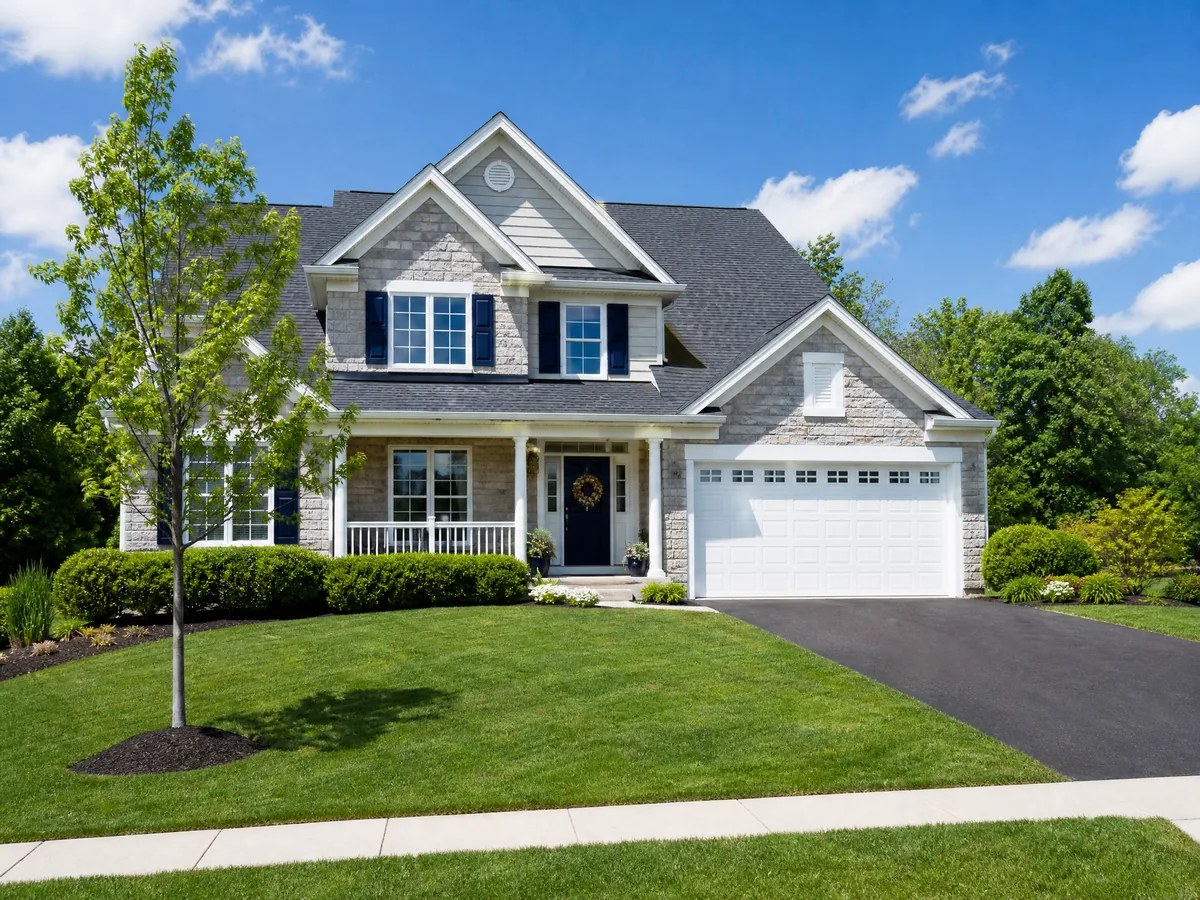
Conventional Investment in Missouri from USA Mortgage
Non-owner
occupied
30-yr
fixed avail.
80%
max LTV
Low
rates

Typical figures, subject to underwriting and market conditions. Not a commitment to lend.

How it works

For investors who qualify conventionally, this is usually the lowest-cost long-term money on a buy-and-hold. We help you weigh it against our DSCR and bank-statement programs so the loan matches your file and your goals.

Who it's for
Buy-and-hold investors
Non-owner-occupied 1-4 units
Borrowers who document income
Purchase or refinance
Typical terms
PropertyInvestment, non-owner-occ
Max leverageUp to 80% LTV
Term30-yr fixed / ARM
IncomeDocumented
CreditFrom 580
UsePurchase or refi
Apply now

*Typical terms, subject to underwriting and market conditions.

Run your Conventional Investment numbers.

Pressure-test the deal in seconds with our free dscr calculator, no sign-up required.

Open the DSCR calculator
Local FAQ

Conventional Investment in Missouri, answered.

Can the rate and fees on my Missouri conventional loan be negotiated freely if I borrow through an LLC?
Yes. Missouri's ten percent usury cap under RSMo 408.030 does not reach a loan to a corporation, general partnership, limited partnership, or limited liability company, or a loan made primarily for business purposes, or most real estate loans other than residential ones. RSMo 408.035 makes all three of those prongs disjunctive, and a business-purpose conventional loan to a Missouri LLC on non-owner-occupied property clears them. The agreement on rate, fees, and other terms has to be in writing to get that protection. This does not change the underwriting box on this program: it is a statement about what Missouri law allows the parties to agree to, not a promise of specific terms.
St. Louis has an unusual number of small multifamily buildings. Does conventional cover those, or do I need DSCR?
Conventional on this program covers non-owner-occupied 1-4 unit property, which is exactly the range where the question comes up. 2024 HMDA data shows St. Louis city's 2-4 unit share of 1-4 family mortgage lending running about six and a half times the Missouri statewide share, so a duplex or fourplex purchase is a genuinely common Missouri deal, not an edge case, especially there. If your income and credit document conventionally, this program is usually the lower-cost route on that duplex or fourplex; once you are past four units, or your income does not document cleanly, that is where our DSCR program, which qualifies on the property's rent, takes over. See DSCR rental loans.
Does Missouri's flat property tax classification change the conventional-versus-DSCR math here?
It helps both, but it helps DSCR more directly. RSMo 137.016.1(1) and RSMo 137.115.5 put a rental building of any size, a duplex through a large walk-up, in the residential subclass at 19 percent, with no step-up to the 32 percent commercial rate the way many states apply once a building crosses a unit-count line. On a $500,000 building that is $95,000 of assessed value at 19 percent against $160,000 at 32 percent, a base 68 percent higher (160,000 divided by 95,000 equals 1.68). Since our DSCR program qualifies directly off net rental cash flow, a lighter tax line there widens the DSCR math; on conventional, the same tax line is one input into your overall documented income and debt-to-income picture rather than the whole qualifying test. Either way, build the tax line off Missouri's residential ratio rather than the multifamily assumption another state would hand you.
In Missouri's lower-priced markets like Springfield, Columbia, or Joplin, is a conventional loan still worth the paperwork?
Often, but the answer shifts with loan size. Full documentation carries a fixed amount of work whether the loan is $120,000 or $1.2 million, so on a smaller secondary-market purchase that overhead is a larger share of the deal, and DSCR's simpler file frequently closes faster for a similar rate and leverage. In St. Louis and Kansas City, where purchase prices and loan sizes run higher, the same fixed documentation cost is a smaller share of the loan, and conventional's typically lower rate has more room to pay for itself. Missouri overall is a yield state rather than an appreciation state, so this tradeoff is being made on cash flow and cost of capital, not on a bet that price growth will bail out the wrong structure. Talk to us and we will run both.
Does Missouri add a transfer tax or mortgage recording tax to conventional closing costs?
No transfer tax on either your purchase or your eventual exit. Missouri Constitution article X section 25 permanently bars the state, counties, and every other political subdivision from imposing any new tax on the sale or transfer of real estate. Recording runs on a flat statutory base under RSMo 59.310, five dollars for the first page and three dollars per page after that, though your county recorder adds its own surcharges on top, so confirm the current county total before closing. No statewide mortgage registration or mortgage recording tax was located either, which is a real, quotable difference from a state like Oklahoma.
FAQ

Conventional Investment questions, answered.

What is a conventional investment property loan?
It is standard, competitively priced financing for a non-owner-occupied investment property, the long-term loan you take when your file fits the conventional box. It usually carries a lower rate than a bridge or DSCR loan, in exchange for full documentation.
How is it different from a DSCR loan?
A conventional loan qualifies on your documented personal income and credit, while a DSCR loan qualifies on the property's rent. Conventional pricing is often lower if you can document your income and you are within the limit on financed properties; DSCR is easier to scale and skips the income docs. We compare both and put you in the one that fits.
How much do I need to put down?
Plan on roughly 20% to 25% down on an investment-property purchase, with the best pricing at lower leverage and higher credit. Cash-out refinances are typically capped a bit lower than purchases.
What credit score do I need?
Conventional investment financing generally wants a credit score around 580 or higher, and your rate improves meaningfully as your score and reserves go up. We will tell you up front where your file lands.
What can I use it for?
Purchases, rate-and-term refinances, and cash-out refinances on non-owner-occupied 1-4 unit investment property. If you will live in the property, that is owner-occupied financing, which we refer to a trusted partner rather than originate here.
What documents are required?
Because it is fully documented, expect to provide income verification, tax returns, bank statements, and the standard conventional paperwork. If that documentation is a hurdle, our DSCR and bank-statement programs are the no-tax-return alternatives.
See all frequently asked questions
Resources

Guides for Conventional Investment

Browse all guides
More in Missouri

Other programs in Missouri

All Missouri loan programs
About the local figures on this page

Local rules move. Every tax rate, fee, ordinance and market figure here comes from a primary source and carries the date we read it, and we correct them as the rules change. Where a number is mid-change or we could not verify it, we say so rather than guess. Before you commit a budget, confirm anything that drives it with the city or county, and talk to your attorney or CPA on questions of law or tax.

Funding Missouri deals fast.

Get real terms, usually same day. No obligation, no hard credit pull to start.

Apply nowTalk to us