
Direct private lending in most states
Call us anytime at 512-617-9400
Apply now
Program 09

CRE Permanent in Missouri

Long-term permanent commercial financing for stabilized Missouri real estate.

Long-term, permanent financing for stabilized commercial real estate. We place it in house through agency multifamily channels (Fannie Mae and Freddie Mac), insurance funds, and other wholesale sources to land the structure that fits your hold. A Missouri asset's biennial reassessment cycle and constitutional bar on any new transfer tax make the debt-service math over a ten-year term unusually predictable. If your building has not stabilized yet, we can bridge it first and refinance into this permanent structure once it performs. Business-purpose only, and every deal is subject to underwriting.
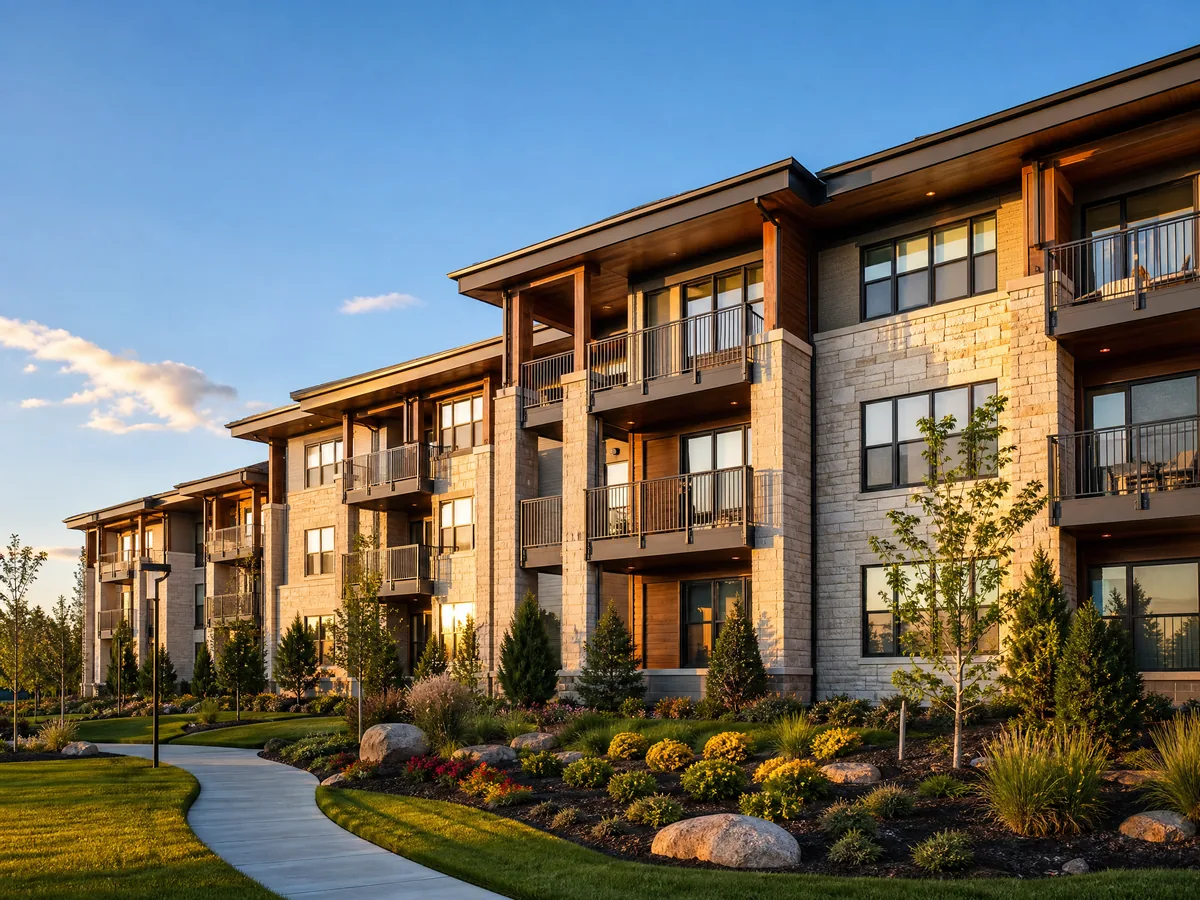
CRE Permanent in Missouri from USA Mortgage
Agency
Fannie/Freddie
Long-term
fixed
Multifamily
& commercial
Wholesale
channels

Typical figures, subject to underwriting and market conditions. Not a commitment to lend.

How it works

For a stabilized asset ready for permanent debt, we shop your file across agency multifamily programs, insurance companies, and wholesale lenders, then place the structure that fits your hold. When a deal needs to stabilize first, we can bridge it and refinance into permanent debt later.

Who it's for
Stabilized multifamily 5+
Commercial and mixed-use
Agency permanent debt
Refi out of a bridge
Typical terms
PropertyStabilized commercial
ProgramsAgency, insurance, wholesale
TermLong-term permanent
RateMarket permanent rates
UseAcquisition or refinance
Best forLong-term holds
Apply now

*Typical terms, subject to underwriting and market conditions.

Run your CRE Permanent numbers.

Pressure-test the deal in seconds with our free cap rate calculator, no sign-up required.

Open the Cap Rate calculator
Local FAQ

CRE Permanent in Missouri, answered.

How does Missouri classify a stabilized apartment building versus a true commercial property once it's on permanent debt?
Differently, and the gap is large. Missouri assesses real property under three subclasses: residential at 19%, agricultural at 12%, and everything else, including commercial, industrial and utility, at 32%. Under RSMo 137.016.1(1), "residential property" is any structure "used or intended to be used for residential living by human occupants," and there is no unit-count cutoff: a duplex, a fourplex, and a large multifamily building all sit in the 19% residential subclass. A stabilized multifamily asset going into permanent debt keeps that lower ratio. A true commercial or mixed-use building sits in the 32% subclass and, under RSMo 139.600, can also carry a county commercial surcharge that residential-subclass rentals do not pay. Know which subclass your collateral is in before you model the tax line.
How predictable is my Missouri property tax line over a ten-year permanent loan term?
More predictable than a state with annual mark-to-market reassessment. Missouri reassesses real property on a biennial cycle, with new values set as of January 1 of each odd-numbered year and carried into the following even year. On top of that, RSMo 137.073.2 requires taxing districts to roll back their levy rates so that, absent new construction, they collect "substantially the same amount of tax revenue as was produced in the previous year." A Missouri reassessment redistributes the tax burden across a district rather than automatically raising it, which is a different mechanic from states without a rollback requirement. Underwrite the odd-year reassessment dates into your ten-year projection rather than assuming a flat annual increase.
When can I appeal a Missouri property tax reassessment before it affects my permanent loan's debt service coverage?
Two windows, both statutory and neither extendable. The County Board of Equalization hears appeals by the second Monday in July. The State Tax Commission then takes appeals "on or before September 30 of the year of assessment, or within thirty days of the decision of the Board of Equalization, whichever is later," and the Commission states plainly that it "cannot extend" either filing deadline. If your Missouri asset is reassessed at a level that would move your coverage ratio, put both dates on the calendar the day the notice arrives.
What happens if a Missouri commercial borrower defaults on permanent debt secured by a deed of trust?
A non-judicial trustee's sale, with one condition that matters if the lender ends up owning the property. Missouri deeds of trust foreclose out of court, and RSMo 443.310 requires at least twenty days' notice of sale in the county where the property sits. If the lender or its nominee is the one who buys at that sale (a credit bid), RSMo 443.410 gives the grantor a one-year post-sale right of redemption, but only where the grantor also gave written notice of intent to redeem before the sale and posted a court-approved bond within twenty days after it. A sale to an unrelated third-party bidder carries no such redemption right. Nothing in the statute limits the right to owner-occupied property or to natural-person borrowers, and no Missouri case law applying it to an entity grantor was located, so plan around it rather than assume an LLC borrower sits outside it. This is a real REO-disposition consideration on a long-term permanent loan, not a lending disqualifier.
Does earthquake exposure matter when underwriting a long-term hold on Missouri commercial property?
It can, particularly in the southeast part of the state. Missouri's Department of Commerce and Insurance reports that earthquake insurance take-up in the New Madrid seismic region fell to 10.4% in 2024, and that fewer than 20% of residences in 101 of Missouri's 115 counties carry earthquake coverage on 2024 data. A standard Missouri landlord or commercial property policy does not include earthquake coverage by default. On a permanent loan with a long amortization schedule, confirm what the borrower's policy actually covers on southeast Missouri and St. Louis-area collateral rather than assuming it is included.
My Missouri building isn't stabilized yet. Can I still line up this permanent structure ahead of time?
Yes, that is the bridge-to-permanent path. We can finance the stabilization period on a bridge structure and refinance into this permanent placement once the property performs. One Missouri-specific timing detail to plan around: new construction and property improvements are valued as though completed as of January 1 of the preceding odd-numbered year, so a building that finishes stabilizing partway through a cycle does not land on the tax roll at its new value until the next odd-year assessment date. Build that lag into your carry-cost and refinance timeline.
FAQ

CRE Permanent questions, answered.

What is permanent commercial financing?
Permanent (or perm) financing is long-term debt on a stabilized commercial property, the loan you move into once a building is leased up and performing. It replaces short-term bridge or construction debt with a longer fixed term and a lower rate.
What channels do you place loans through?
We place permanent debt through agency multifamily programs (Fannie Mae and Freddie Mac), insurance companies, and other wholesale lenders. Because we shop multiple sources, we can match your asset to the program with the best long-term terms.
What properties qualify?
Stabilized multifamily of five units and up, plus mixed-use and other commercial assets with a solid operating history. Agency multifamily in particular looks for occupancy and cash flow that support long-term debt.
How is this different from your CRE bridge program?
The bridge program is short-term capital to acquire or reposition a property; permanent financing is the long-term exit once it is stabilized. Many investors use both in sequence, bridging to stabilize and then refinancing into permanent debt. We can line up both.
What rates and terms can I expect?
Permanent commercial rates run well below bridge pricing and move with the agency and wholesale market, on long fixed terms. The exact rate depends on the asset, the program, and current conditions, and we will walk you through the options.
How long does a permanent placement take?
Plan on several weeks, since agency and wholesale permanent loans require full underwriting, third-party reports, and lender approval. We manage the placement and keep one point of contact on your file from quote to close.
See all frequently asked questions
Resources

Guides for CRE Permanent

Browse all guides
Compare

CRE Permanent vs. other options

More in Missouri

Other programs in Missouri

All Missouri loan programs
About the local figures on this page

Local rules move. Every tax rate, fee, ordinance and market figure here comes from a primary source and carries the date we read it, and we correct them as the rules change. Where a number is mid-change or we could not verify it, we say so rather than guess. Before you commit a budget, confirm anything that drives it with the city or county, and talk to your attorney or CPA on questions of law or tax.

Funding Missouri deals fast.

Get real terms, usually same day. No obligation, no hard credit pull to start.

Apply nowTalk to us