
Direct private lending in most states
Call us anytime at 512-617-9400
Apply now
Program 10

SBA Financing in Missouri

SBA loans for Missouri business owners buying their own building.

SBA 7(a) and 504 loans finance owner-occupied commercial real estate, generally up to 90% of the purchase price, in amounts from $350,000 to $5,000,000 and beyond, on terms as long as 25 years. Missouri charges no transfer tax on the purchase, in any county, under a constitutional prohibition. A building your own business occupies is taxed here as commercial property, not as a rental, so occupancy and classification planning both matter before you close. Business-purpose only, and every structure is set in underwriting.
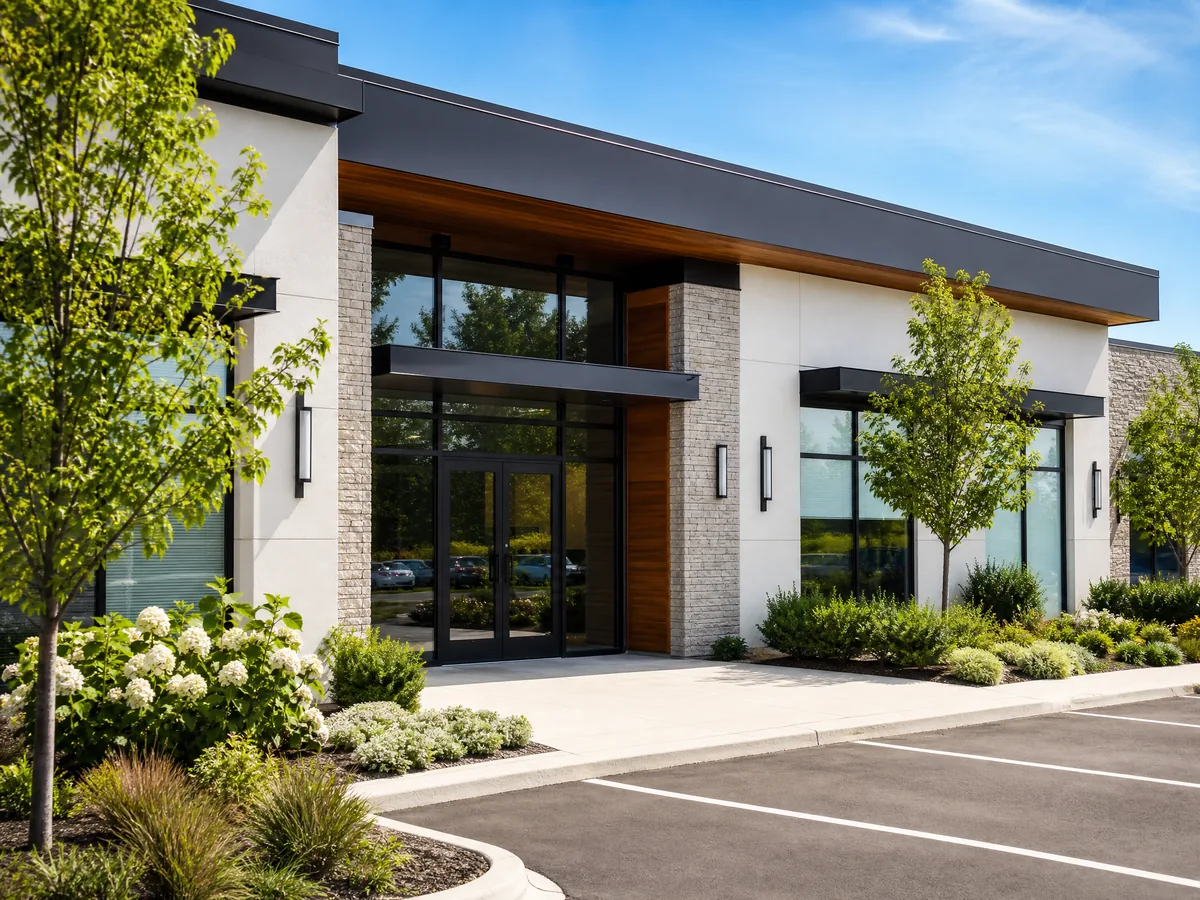
SBA Financing in Missouri from USA Mortgage
7(a) & 504
programs
90%
financing
25-yr
terms
20+
SBA lenders

Typical figures, subject to underwriting and market conditions. Not a commitment to lend.

How it works

SBA loans offer low down payments and long amortizations for owner-occupied property and business acquisition. USA Mortgage arranges and places SBA financing through our network of partner lenders; we are not ourselves an SBA lender. We shop your file across that network so you get the strongest approval.

Who it's for
Owner-occupied commercial RE
Business acquisition
Real estate plus equipment
Partner or stock buyout
Typical terms
Loan amount$350K to $5M+
FinancingUp to 90%
TermUp to 25 years
RateMarket SBA rates
PropertyOwner-occupied CRE
Programs7(a) and 504
Apply now

*Typical terms, subject to underwriting and market conditions.

Run your SBA Financing numbers.

Pressure-test the deal in seconds with our free sba loan calculator, no sign-up required.

Open the SBA Loan calculator
Local FAQ

SBA Financing in Missouri, answered.

How is my owner-occupied Missouri building taxed differently from a rental once I close my SBA loan?
Higher, and it is worth planning for before you sign. Under 13 CFR 120.131, an SBA loan on an existing building requires your business to occupy at least 51% of the space (new construction carries a 60% floor, with only 20% permanently leasable to others). A building your business occupies for its own operations is not "used or intended to be used for residential living," so it falls into Missouri's subclass 3 at a 32% assessment ratio, not the 19% residential rate that applies to rental housing. On a $1,000,000 building, that is $320,000 of assessed value at 32% versus $190,000 if it qualified as residential (1,000,000 x 0.32 = 320,000; 1,000,000 x 0.19 = 190,000), a difference of $130,000 in assessed value. Commercial-subclass property in Missouri can also carry a county surcharge under RSMo 139.600 that residential-subclass rentals do not pay.
What will Missouri add to closing costs on my SBA purchase?
No transfer tax at all. Missouri's constitution, article X section 25, permanently bars the state, counties, and every city from imposing any new tax on the sale or transfer of real estate. Recording runs on a flat statutory base under RSMo 59.310, five dollars for the first page and three dollars for each page after that, though counties add their own surcharges, so confirm the current total with your county recorder. Missouri is also a good-funds state: RSMo 381.412.1 requires a buyer, seller, or non-institutional lender to bring more than $2,500 to closing as certified funds, so plan to wire your equity contribution rather than write a check.
How much of my own money do I need to bring to a Missouri SBA closing?
Under 13 CFR 120.910, a 504 structure generally requires 10% down from the borrower, rising to 15% if the business has operated less than two years or the building is single-purpose, and 20% if both apply. Whatever the figure, Missouri's good-funds rule means that contribution has to land at the settlement agent as certified funds once it exceeds $2,500, under RSMo 381.412.1, and a title insurer cannot disburse against an ordinary check that has not cleared for at least ten days under RSMo 381.412.2. Wire your down payment; do not plan to write a check at the table.
Is there a cap on how large an SBA 504 loan I can get for a Missouri building?
Yes. Under 13 CFR 120.931, a 504 debenture is capped at $5,000,000 standard, rising to $5,500,000 only for small manufacturers or qualifying energy projects. Whatever size you land at, one Missouri mechanic works in your favor over the life of the loan: real property is reassessed on a biennial cycle, in odd-numbered years, and RSMo 137.073.2 requires taxing districts to roll back their levy rates so that, absent new construction, they collect "substantially the same amount of tax revenue as was produced in the previous year." That makes the property tax line on a 25-year SBA amortization schedule more predictable here than in a state with annual mark-to-market reassessment and no rollback.
Are SBA fees still waived if I close on my Missouri building this year?
No. SBA fees were reinstated for FY2026, covering loans approved between October 1, 2025 and September 30, 2026: 7(a) upfront guaranty fees run from 2% to 3.5% or more depending on loan size, and 504 debentures carry a 0.50% upfront fee plus a 0.209% annual fee. Small manufacturers get relief on both programs. On the state side, a Missouri operating company also pays 4% corporate income tax on its Missouri taxable income under RSMo 143.071, down from 6.25% before 2020, so price both the federal fee schedule and the state tax rate into your total cost of ownership before you close.
What happens to my Missouri building if my business defaults on an SBA loan?
A non-judicial trustee's sale, the same process that applies to every Missouri deed of trust. RSMo 443.310 requires not less than twenty days' notice of the sale in the county where the property sits. There is one wrinkle to know: if the lender or its nominee buys the property back at that sale on a credit bid, RSMo 443.410 gives the grantor a one-year post-sale right of redemption, but only where the grantor also gave written notice of intent to redeem before the sale and posted a court-approved bond within twenty days after it. A sale to an unrelated third-party bidder carries no such right. Nothing in the statute limits the right to natural-person borrowers, and no Missouri case law applying it to an entity grantor was located. This is a real consideration for how a defaulted SBA property gets disposed of, not a reason a well-underwritten loan should not close.
FAQ

SBA Financing questions, answered.

What is the difference between an SBA 7(a) and a 504 loan?
The 7(a) is the flexible, all-purpose SBA loan: owner-occupied real estate, business acquisition, partner buyouts, equipment, and working capital under one note. The 504 is purpose-built for owner-occupied commercial real estate and heavy equipment, with a long-term fixed rate and a low down payment. We place both and match your scenario to the right one.
How much can I borrow, and how much do I put down?
SBA loans go up to $5M, with larger total project sizes possible on the 504 since a bank funds part of the deal. Down payments are low, often around 10%, rising to 15% to 20% for startups or special-purpose properties. On the right deal we finance up to 90%.
What are the terms and rates?
Terms run up to 25 years for real estate, which keeps payments low. 7(a) rates are usually variable and tied to the Prime rate, while the 504 carries a long-term fixed rate on the CDC portion. Because we place your file across 20+ SBA lenders, we shop your scenario for the strongest terms.
Do I have to occupy the property?
Yes. SBA real estate loans require owner-occupancy, at least 51% of an existing building or 60% of new construction. That requirement is what separates SBA-eligible deals from pure investment property, which fits our other programs.
Do I have to personally guarantee an SBA loan?
Yes. The SBA requires a personal guarantee from anyone who owns 20% or more of the business, and on real-estate deals the loan is also secured by the property. This is standard on every SBA loan, not a sign of a weak file, and it is part of why SBA financing offers low down payments and long terms. We will walk you through exactly what you are signing before you commit.
How long does an SBA loan take to close?
SBA loans are slower than our bridge products, typically 30 to 90 days, because of the documentation and approval process. The tradeoff is a much lower long-term cost. If you need speed now, we can bridge the deal and refinance into SBA later.
What do you need to get started?
Generally two to three years of business and personal tax returns, business financials, a personal financial statement, and details on the property or business. We will tell you exactly what is needed and place your file with the best-fit lender in our network.
See all frequently asked questions
Resources

Guides for SBA Financing

Browse all guides
Compare

SBA Financing vs. other options

More in Missouri

Other programs in Missouri

All Missouri loan programs
About the local figures on this page

Local rules move. Every tax rate, fee, ordinance and market figure here comes from a primary source and carries the date we read it, and we correct them as the rules change. Where a number is mid-change or we could not verify it, we say so rather than guess. Before you commit a budget, confirm anything that drives it with the city or county, and talk to your attorney or CPA on questions of law or tax.

Funding Missouri deals fast.

Get real terms, usually same day. No obligation, no hard credit pull to start.

Apply nowTalk to us